lennon’s REVOLUTIONS 50 years on"]]>
“The blues are beautiful because it’s simpler and because it’s real. It’s not perverted or thought about: It’s not a concept, it is a chair; not a design for a chair but the first chair. The chair is for sitting on, not for looking at or being appreciated. You sit on that music.” (John Lennon to Jann Wenner, 21 January 1971)
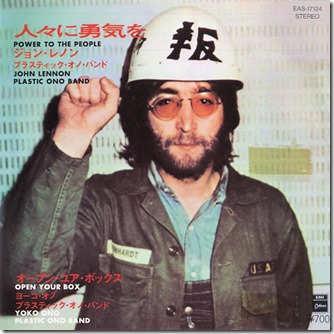 When Jack Hutton quit Melody Maker in 1970, to set up what became Sounds, he told Richard Williams, who stayed behind, that it would be a “left-wing Melody Maker”. Hutton’s no longer with us, so I suppose if I get the chance I’ll have to ask Williams one day what exactly was meant by “left-wing” here. My guess — based on what Sounds actually turned out like — is that Hutton meant the new paper would be centred on rock. Even though both papers covered rock and pop and everything else, MM’s moral centre was arguably still jazz at that point. Even though the jazz fan-base always had a left-wing in the UK, with old-school communists solid among its supporters and chroniclers, it was a music (or so many seemed to feel) whose time was past. Rock was new and rock was now, the very voice of youth — but beyond this, rock had had, for a while by then, a tangled relationship with politics, radical left politics in particular.
This tangle reached to the very top of the charts. In 1968, as the tremors spread from the May insurrection in Paris — when everything turned upside down, and pop became art and vice versa — three versions of the Beatles song ‘Revolution’ were recorded. The first and last (the long musique concrète Bonzo-skit sound poem ‘Revolution #9’) were on the White Album, which came out in November. The re-recorded version of the first came out a little earlier, in August, as the B-side of ‘Hey Jude’. Perfect for exploring street politics as a fact and a possibility, and post-split the song was still being picked over three years on, in editor Jann Wenner’s gargantuan two-part interview with John Lennon for Rolling Stone (some 36,000 words long in toto) and in Tariq Ali’s Red Mole. The former was exactly what “the Stone” had been devised to do. The existence of the latter, a serious-minded conference with actual frontline radical activists (Robin Blackburn joining Ali for the occasion) is more surprising, an index at the very least of how wild and mixed up the times actually were.
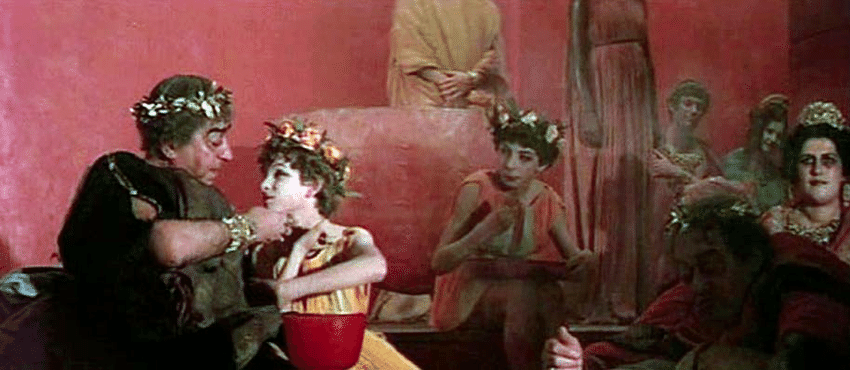
Wenner always saw his role as chief courtier to the big new voices in music, less cautious investigator than loyal amplifier : which means Lennon is nowhere pushed or tested. It also means he’s comfortable: he unwinds deep into confessional mode, hinting at the worst of the group’s untold stories. Clean-cut to all the world, the real Beatles on the rise were “bastards”, he says — “you can’t be anything else in such a pressurised situation” — and the tours were “like the Fellini film Satyricon”, orgies and “junk and whores and who-the-fuck-knows-what…”
This is no longer virgin terrain, of course. Freighted with his huge authority for rock-readers at this complicated, confusing moment, swathes of this much-cited interview have simply entered pop history’s DNA. “The dream is over,” he sang on John Lennon/Plastic Ono Band, his disenchantment with the counterculture at large growing as much anything out of his own personal exhaustion, and how we all feel when a relationship fails and a fellowship breaks. With Rolling Stone at the centre of how the music was started to understand itself critically and politically, Lennon’s many stances in this conversation were a deep permission as well a disenchanted retrenchment. Pre-Beatles rock and roll is the truest, best music, he now appeared to insist, and if we followed his charismatic lead, we’d be shunning McCartneyish Pepperish pop artifice on one side, proto-prog jazz-muso virtuosity on the other, ideally so as to re-enter a space of of undeluded unadorned therapeutic naturalism.
The most immediately startling thing about the Red Mole piece, from today’s perspective, is that it happened at all: startling that Lennon agreed to it, even more startling that the revolutionary organ of the International Marxist Group — a Trotskyist splinter maybe 1,000 strong at its peak — decided so publicly to engage with the thoughts of a colossally well off former frontman of a recently dissolved boyband-stroke-chartband. It’s a clue to how tiny and village-like the London scene still was, of course (despite Lennon’s recent relocation to New York) — but it’s also a clue to how much music and changes in the music mattered to the underground then, political or otherwise. Quotes from Beatles, Stones and Dylan songs routinely supplied headlines and speed-read slogans: this was a lingua franca and a badge of identity; not just a shared backdrop but a speed-read signal where you thought things were at, and the ways you belonged — or didn’t — to any relevant micro-constituency.
The Red Mole encounter began in late 1968 with anti-war activist John Hoyland’s disgruntled Beatles fan-letter (scroll down) to Black Dwarf (the paper Ali had helmed before Mole, which is to say before a micro-sectarian split in the relevant editorial). As a Beatles B-side. ‘Revolution’ was sour and suspicious and not at all in step with the movement: “if you’re talking about destruction/minds that hate/Chairman Mao… count me OUT!” Fanboy Hoyland was dismayed: a former idol was misperforming, the song closer to Mrs Dale’s Diary than to the Rolling Stones [Footnote 1]. Hitching from Keele to interview Lennon a few weeks later, students Maurice Hindle and Daniel Wiles show Lennon this letter, which clearly nettles him. He reads and rereads it more than once, shows it crossly to Ono, and in early 1969, he sends an angry reply (scroll down)…
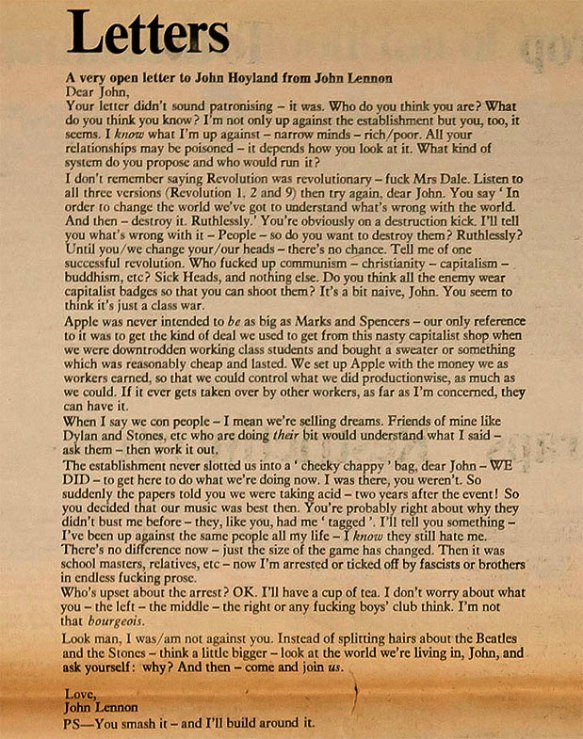
That set the stage: in the wake of the final two-year Beatles meltdown and then the Wenner juggernaut — which is cited in the opening Red Mole question — the showdown. No fireworks, though: Lennon handwaves his way around current world politics unchallenged (Ali earnestly corrects him on Yugoslavia and Tito, but tolerates his apparent renewed enthusiasm for Mao’s Cultural Revolution). As for shifts and values in music in recent years, Blackburn in particular pads gamely through the critical nostra of the day, and – as the seasoned professional in this area — Lennon doesn’t challenge him. Much of it is commonplace stuff, but — in among all the busted myths, unmoored generalisations, snap judgments, settled scores and dick moves — these two conversations platform a wounded musician busy quilting a revised aesthetic from the rubble.
How to sum it up? Pop is bad and you should feel bad: let’s get naked and rock and roll! Naked emotionally, naked intellectually and politically, naked, well, yes, kit off for the LP sleeves lads, and fuck the squares if this bothers them… Rock and roll, especially black rock and roll, speaks urgently to the white working classes precisely because it comes from a soulful place of unrepressed, undiluted honesty and self-knowledge free of all possible bullshit. We have forgotten to know ourselves and act accordingly; this music is revolutionary for teaching us to turn once more to both — and this is happening and that’s the way forward.
(Narrator’s voice: it was not and it was not.)
And yes, it’s very easy to mock all this now! And to read it as early mass-cultural steps — disguised as urgent critical recalibration — down the long road to centrist dadrock and the present-day so-called authentocrat hegemony blah blah. Blackburn’s and Ali’s credulity seems a bit of a shocker, from our wised-up times — but Amiri Baraka had not yet published his rueful tales of the Black Arts Movement, and the contradictions within cultural nationalism were still confusedly working themselves out in 1971. Black Power was still a concept that amazed and enthused people, white and black — and of course “Black is beautiful” remains a counterstrike today against disabling self-hatreds and self-erasures.
The excitement of the encounter with rock and roll had begun with the shock of realisation that you can learn as much or more from people far outside your own neighbourhoods: that cultures not your own are not by dint of this lesser than your own — a valuable discovery — and that it’s good to choose to be encouraged to enjoy life more and to be a better deeper person in your understanding and actions. But the inspiration had gradually congealed into a habit and even a religion, of the projection of the desired angelic image (of pleasure and depth and goodness) onto these same cultural others. It’s no fun at all to be trapped at the other end of this projection— made a cultural-political saviour without being asked — and doubly grim when the projection insists that being your natural self is the only acceptable forward-looking politics. This was the high era of the method-acting delusion, in which — unless truth comes from deep within your own personal pain— everything is just lies and fantasy.
Some of the time, Lennon knew better. And so, as long-time operators in the flyspeck viper-pit of far left politics, did Ali and Blackburn now and then. They knew that performative ambiguities are essential to coalition-making and keeping different interest groups onside together. But 60s revolutionary socialism was still very much under the moral spell of Sartre’s existentialism, a philosophy never especially smart about the value of drama and of fiction beyond simple agit-prop. Besides, British class identification in the borderlands between lower and middle class is the murkiest of kaleidoscopes at the best of time, and neither Blackburn nor Ali was well placed to gauge this, let alone push back [2]. When Lennon titles a song ‘Working Class Hero’ (and despite things he casually claims in both interviews), it’s as much angry disavowal as self-declaration, and in any case it’s ambiguous: is he a hero who’s working class himself, or a pop-star hero to the working class? (Ans acc.him = combination neither and both…)
Either way — despite his unimaginable wealth — it’s allowed to stand both times. And yet there’s so much here to ask hard questions about. As Wenner allows him to demonstrate, letting him talk on at such length without interruption, he’s anything but a natural soulful authentic angel undivided from himself and free of bullshit, but rather a torn and hurting mess of complexity, contradiction, evasive cunning, irony, play-acting and, well, self-misdirection. Free to explain himself, to present a self-portrait, he’s at once bolshy and timid, arrogant and bewildered, confident in his snap-summaries yet still beguiled by curiosity — and, like every bright pop-star, unendingly caught between the will to rile and the will to please (including pleasing revolutionaries who should be quicker to spot this).
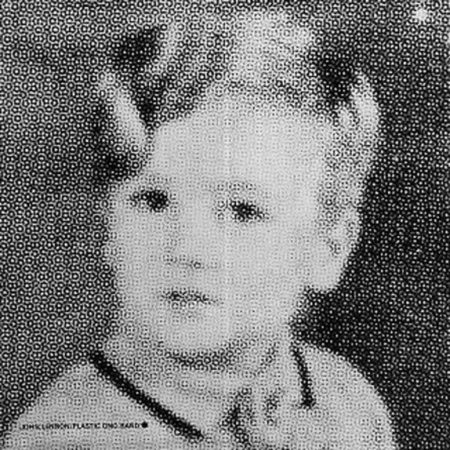 And stripped of all this, he might have been happier — except he’d also be unknown, not to mention poor. In an era when more people of working class background were entering tertiary education than ever, the Beatles counter-narrative was by contrast one of ferocious self-education and mastered expertise, very much an alternative and anti-official model for intellectual self-mobilisation. His dismissal of almost the entire trajectory as myth — we were best on-stage, he says, before we ever came into the studio — is also a kind of a disavowal of any of this possibility. And — as upper middleclass college kids themselves —his interlocutors seem to embrace it, though it’s surely strangely antipathetic to the politics of possibility they want him to sign on to, to manifest and broadcast. Again — profoundly unsure of what they want from the exchange — they decline to challenge him, to follow through where he’s half-pointing.
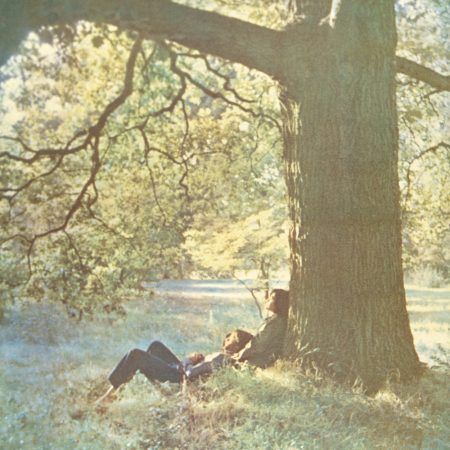 The Lennon/Ono LP ends, or nearly ends [3] with a list of things he no longer believes in — Jesus, Buddha, Elvis, Beatles — and the plain declaration: “I believe in me, Yoko and me, and that’s reality.” It’s like coming home, he tells Wenner: “I’ll never change much from this.” The leisure of space and time to become uncomplicatedly yourself, to feel and and believe in and know home this way, is afforded very few people — and this, if you like, is how a mark of how far his stratospheric wealth has taken him from his birth-town, his roots, his class. Meeting Yoko as the breakthrough key to self-discovery in this best of matching companionships — of course it’s a tell that she’ was from the other side of the world, the other side of the arts, from a comfortable Japanese family, well travelled, well schooled. The many claims don’t add up — and neither interview presses him on any of this.
Epilogue: An LP a year until 1975, and his collection of rock and roll standards, then a five-year sabbatical — long aeons in 70s pop time — before Lennon returned to recording in 1980. By now the conversation that began when Sounds split off from Melody Maker in 1970 had changed deeply (not least as a consequence of these exchanges). There’d been wide revolt against the the leisured, over-wealthy aristocrat entertainers who’d shaped the recent past and seemed to clog up the present: punk rock, the revolt was called. Radical politics still had a toe-hold in the pop press — but the critical factions closest to it mostly took the line rock is now bad and you should feel bad. The lingua franca was increasingly contested. Lennon was still welcome, unconfronted, in the pages of Rolling Stone, but his long absence from the UK conversation ensured few was overawed by his re-emergence. In the post-punk and new pop years, almost everything he had seemed in the early 70s to stand for would be questioned.
And then of course in December 1980 he was shot dead, by someone deep-lost in the labyrinth of a megastar’s unkeepable promises. Suddenly changeless in death and embalmed in grief-stricken nostalgia, he was removed from all useful reassessment, as everything round him went cold and congealed. Home, he’d said, but just as he set out once more, he was stopped. There are clues where he might have gone; how he might have evolved. His recording with Bowie, for instance — because he too was always a kind of proto-glam quick-change artist, forever negotiating the obstacle course his own throwaway comments had strewn before him. As for the blues, its potency was never of course a function of its unadorned primitive simplicity. Quite the opposite: it always involved reflection, and its energy and value came from the sheer layered density of all competing histories hurtling through it.
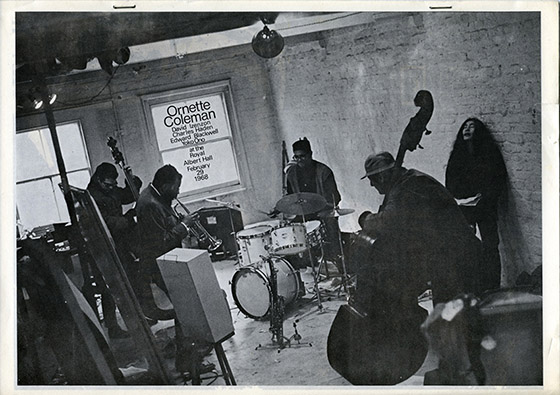 And of course there was the work Yoko had made with him in the late 60s, the be-ins and the bed-ins and the bag-ins, these high-visibility celebrity stunts whose purpose was to import go-slow bafflement and blockage into the flow of mass-media communication: the spectacle, but discursively on strike. The most heartening surprise twist in the Wenner conversation — in both conversations — is his belief in Yoko as artist-musician, his commitment to the idea that everyone should take proper note of her. Besides Warhol, that ineffable blank, he celebrates Fluxus and nods to Ornette Coleman as two unimpeachable stages in Yoko’s past, her rock and roll.
Warhol aside, the prankish avant garde before 1968 had seemed an individualised, out-of-reach luxury, supported by and therefore aimed at the wealthy and the over-educated. Pre-Beatles rock and roll is the truest, best music, he may have been arguing — but to say so and to foreground her, he has also to argue that she’s rock and roll — which complicates and expands the definition, to say the least. By refashioning the story to include her — even in a sense to re-begin with her — Lennon was quietly re-weaponising his art-school inventiveness and tossing it out into the wider world, the widest world thinkable, in topsyturvied form. He opened the doors of imagination and possibility even in the pop music trade press: no intellectual luxury is too good for the working class… this would after all be a pretty good motto for the toughest strands of post-punk…
Footnotes 1: It’s weird to recall how much of a free pass the Stones still had with the most rigorous 68-ers. Though of course they were carefully solicitous of this touchy part of the market: the song ‘Street Fighting Man’, about the May riots in Paris, was widely enough thought to refer to Tariq Ali himself that he brazenly named his memoirs for it.
2: Ali is from the higher-born Pakistani aristocracy, and extremely engaging and perceptive about it (subscription needed).
3: Actual closing song: 52 seconds of ‘My Mummy’s Dead’ sung down a telephone to a nursery-rhyme style tune (which isn’t ‘Three Blind Mice’ even though everyone for some reason says it is).
If you like this post, please support my PATREON which will help me write more! Also let other people know that you think might enjoy it…
]]>It began in 1977, at second-hand: I knew before I heard a note of it that I’d love Cecil Taylor’s music. In a jazz encyclopaedia I’d already read of a pianist “zipping and unzipping the keyboard” — but first contact came from a sideways leap out of bent chartpop. Across Bowie’s Aladdin Sane, Mike Garson’s cocktail piano clichés mutate towards cancerous splinters, which rock reviewer Charles Shaar Murray approvingly compared to Taylor. I needed to know more.

With other princes of the Utterly Out — Ornette, Coltrane, Beefheart — I was, I confess it, puzzled by how tame they seemed against the buzz of advance promo. But Cecil — on Black Lion/Freedom’s 1975 Silent Tongues, his 1974 Montreux Festival solo performance — did not disappoint. Perversely, far more subsequent time was spent addressing Coleman and the good Captain, battling to discover ways to hear their sound as deranged delight, learning tolerance for the well-meant overreactions of enthusiasts. And so my response to these others to this day sometimes seems suspect, post-fabricated out of a need to be wowed, or to seem weird; the pianoman, by contrast, I always knew I could trust, to swoop in, connect instantly, and transfigure. With Cecil, no need to fake it.
So I didn’t visit often, though I dallied with his less demanding children — Von Schlippenbach, Tippett, Crispell, Shipp — and all too soon I was taking him for granted. The affair turned second-hand again, and stalled. Modernism’s dirty secret: avant-garde work requires the survival of the order it first flared against, or its full radicalism no longer properly registers. Mind switched to low, just like those Black Cultural Nationalists who voiced concern about Taylor’s ‘European’ influences — because deep, deep beneath their political bluster, they doubted an African-American artform could wrestle white tradition and win — I projected my own baffled timidity, and even dismay, onto an oeuvre I was no longer regularly checking.
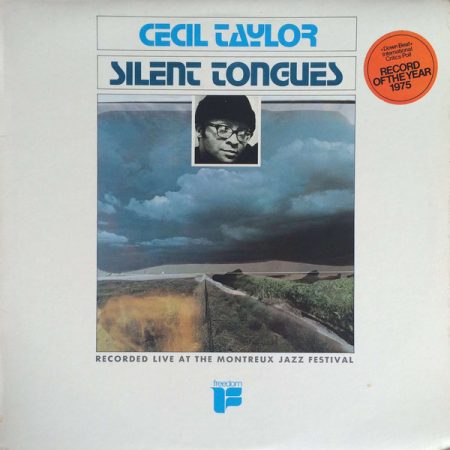
The counter-force epiphany for me came with a CD full of what Stefan Jaworzyn has described as “Teletubbies-style verbal gibberish”: Chinampas (Leo, 1987). At which point, things I’d known for years – but been too nervous to accept – came suddenly clear. Like so many sympathetic yet humour-free interviewers down the years, catching the edge of a Cecil tease but missed its meaning, I’d overlooked countless clues. The cover to Silent Tongues — featuring Cecil, winsome in glasses and woolly hat – I’ve now felt joy towards for some 20 years: in retrospect, the gulf between this absurdly cute sad-little-boy mugshot and the record itself expresses nothing if not irreverent glee. In the sleevenotes to Blue Note’s Unit Structures (1966), dry crypto-Darmstadt analysis mutates into cut-ups, and wicked Burroughsian war on grammar. On Soul Note’s small-orchestra set Winged Serpent (Sliding Quadrants) (1985), on A&M’s impishly superb In Florescence (1990), on Chinampas, Taylor invokes Aztec gods — gorgeous, jagged, murderous deities more outrageously unsuited to worship even than the much-bothered Egyptian pantheon. Their presence among the grunts, rumbles and oblique exclamations punctuating In Florescence suggest a musician whose absolute confidence in his work frees him to kid, to plant the worry that it’s a giant joke. Indeed, this is more than just flirtation — again and again he soars, eagle-god turned trickster gremlin, way out over the abyss of the possible put-on, and never more gloriously than with the high-fired aztèque concrète that makes up the piano-free Chinampas.
Of course, the ‘whitest’ concert-hall piano virtuosos – and the composers that encouraged them – have courted official unrespectability when they became too flamboyant, too romantically individual, too inhumanly extreme or unplayable, from Liszt to Xenakis, from robot-lover Nancarrow to Glenn übernerd Gould. But when piano-play turns into self-absorbed callisthenic work-outs, when the musician presents as some superfit but otherwise daffy street-person, mazed into his own asides, gestures and solo dances, when the compositions are like architectural design-brainstorm sessions for the living city-of-the-future, and this unlikely idiot-savant dervish is busily, dizzily solving every urban conundrum there could ever be, we may begin to realise why most orthodox Cecil-crit favours lulling solemnity. For art-fraud on so titanic a scale – so vastly vivid, so elaborately detailed, so whirlingly learned – is no less startling than the ‘straight’ work it seems to send up. Indeed, it’s far more staggering, and even scary, in its implications — what kind of madman devotes his entire life-energies to the merely unserious? For me, the only works in the avant-garde canon that match Taylor’s serene, omniscient cheek are Finnegans Wake, and Vexations, Satie’s vast day-long hymn to absolute simpleton repetition.
As it was, Coltrane, all bruised earnestness and cosmic quest, became the poster-child for the New Thing, the model for what ‘being taken seriously’ would come to mean. Nobility? Self-denial? Avant-garde transformation as a solemn, lonely, painful, search? Well, yes — yet a glance at the lives of most known questers (knights errant, polar explorers) reveals quests as monuments to anti-domestic panic, with most seekers fleeing as much personal duty as they’re pursuing. All across the slopes of art’s Everests, a great deal of immature selfishness continues to mistake itself for the austere sublime. Much celebrated (rightly celebrated), Coltrane’s natural grace of spirit and vast generosity served mostly to obscure (A) how little imitated this was in Cultural Nationalist circles, and (B) how repressed, repressive and reactionary the CultNat version of radicalism quickly became.
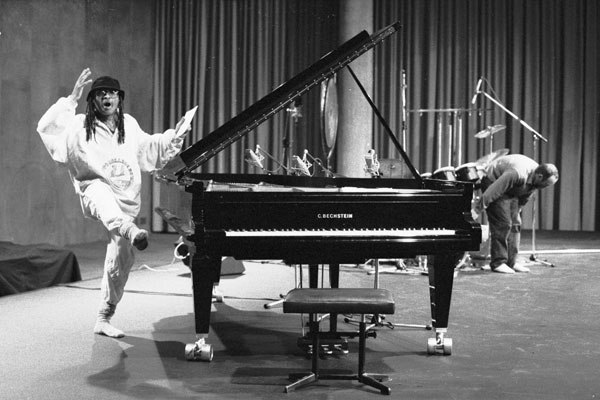
By temperament, Taylor had chosen Out before Ayler, Coltrane or even Coleman, playing free years before this became the term for the play, his example encouraging each of them to take similar steps. He was always already Out; it was always already Play. His work — in its mischief-making badboy totality — has from the outset been not a quest but a masque, wherein the daunting modernist massif and its pervasively silly, naughty, niggling parody coincide. I love this music because it makes me happy — and it makes me happy because it refuses to sidestep, to underrate or even to disrespect the tireless teasing perversity at the core of human behaviour, because even if it wanted to shill for pompous fraudulence, self-seriousness or fast-track fake enlightenment, it just couldn’t.
]]>This is a list of resources for migrants and refugees in the UK and Europe, and related organisations, originally crowd-sourced and storified on twitter by the redoubtable Daniel Trilling (@trillingual) and various excellent people in his timeline. It seems like a helpful moment to put the information into a user-friendly form. Some are charities, some are activist non-profits: quite apart from all the people who desperately need help, the official laws, techniques and institutions being developed to police borders and harm refugees and migrants will be quickly be exported to the rest of society, the poor and the vulnerable in particular, the establishment of border-patrol politics at all levels of daily life.
Order is alphabetic, in sections: UK-wide first, then UK local, then a scattering of Europe-wide orgs and some US ones too. Some are self-explanatory, some I’ve given a very brief description. It’s nowhere near exhaustive, obviously — just a start. I’ll probably give it a page of its own shortly — this is just my blog after all — but it seemed the common-sense place to start. If you can, donate or give your time and energy. And circulate this.
UK NATIONAL
Against Borders for Children, against border regimes within schools @Schools_ABC
Association of Visitors to Immigrant Detainees @AVIDdetention
Asylum Aid, @AsylumAid
Asylum Support Appeals Project helps people appeal their cases, get housing, avoid destitution
Bail for Immigration Detainees
Christian/Muslim refugee initiatives, local and national
City of Sanctuary network (UK & Ireland), encouraging communities to welcome refugees, branches nationwide (see below for a few of them) @cityofsanctuary
Counterpoints Arts, engaging with refugee and grant experiences @CounterArts
Detention Action supports people in UK immigration detention @DetentionAction
Doctors of the World: campaigning for refugees in UK to access healthcare, @DOTW_UK
Help Refugees UK @HelpRefugeesUK
Homes Not Borders @Homesnotborders
Homes for Syrians @homesforsyrians
Hope for the Young (formerly OMID International) @hopefortheyoung
Hope not Hate @hopenothate
Housing Rights (not just migrants and refugees)
How to ask your MP to expand UK refugee resettlement
Lesbians and Gays Support the Migrants
Lorraine Ayensu Refugee Arts fund @LARAfund
Médecin Sans Frontières @MSF, @MSF_Sea, @MSF_uk
Medical Justice: health rights for UK immigration detainees @MedicalJustice
Migrants’ Law Project offers strategic litigation against immigration detention @MigrantsLawProj
Migrant Voice, for migrant voices to be heard in the UK media @MigrantVoiceUK
Movement for Justice By Any Means Necessary @followMFJ
Music in Detention @MIDdetention
PlatformaArts and Refugee Network @PlatformaArts
Red Cross UK refugee support @britishredcross
Refugee Action @RefugeeAction
Refugees at Home, seeking hosts for refugees and asylum seekers in the UK @RefugeesAtHome,
Refugee Council @refugeecouncil
Safe Passage works to bring vulnerable refugees in Europe to Britain @Safepassageuk
UK Lesbian and Gay Immigration Group @uklgig
We Are Chatterbox: language and cultural training service by refugees @wearechatterbox
Women for Refugee Women campaigns (Yarl’s Wood and elsewhere) @4refugeewomen
Yarl’s Wood Befrienders @YWBefrienders
UK LOCAL
A useful map for local links @RefugeeWeek
London:
Croydon and NW London:
Young Roots: supporting young refugees and asylum seekers @weareyoungroots
East London:
Refugee and Migrant Forum of Essex and London @RAMFELcharity
Greenwich:
Greenwich Migrant Hub @GreenwichMH
Hackney:
Akwaaba social centre for asylum seekers, refugees and other migrants @akwaabahackney
Haringey:
Haringey Migrant Support Centre haringeymsc.org
Islington:
Islington Centre for Refugees and Migrants: English lessons, support, workshops, hot meals @IslingtonCentre
Lewisham:
Action for Refugees in Lewisham @Afril
North East London:
North East London Migrant Action: people left destitute by local council policies @NELMAcampaigns
Walthamstow:
Walthamstow Migrants’ Action Group
London-wide:
English for Action: English lessons in London @EFALondon
New North London Synagogue Drop-In Centre for Destitute Asylum Seekers
Praxis: advice, support, meeting place for migrants and refugees
Refugee Connection: helping refugees and Londoners get to know one another @RefConnection
Support network for people stranded in London by the #MuslimBan
Bradford:
Bradford City of Sanctuary @bradfordCoS
Brighton, Sussex and Surrey:
Brighton Voices in Exile @brightonvoices
Brighton Migrant Solidarity @BriMigSol
Bristol:
Bristol Refugee Rights @bristolrefugeer
Huddersfield:
Destitute Asylum Seekers Huddersfield
Hull:
Hull Help for Refugees @hullforrefugees
Leeds:
Leeds Asylum Seekers Support Network @lassnleeds
Leeds No Borders @leedsnoborders
Positive Action for Refugees and Asylum Seekers @PAFRAS_Leeds
Leicester:
After 18, a resource for migrants, refugees and asylum seekers entering adulthood @after18uk
Liverpool and Merseyside:
Asylum Link @asylumlink
Manchester:
Boaz Trust, serving destitute asylum seekers
Manchester Refugee Support Network
Newcastle:
Action Foundation provides housing and language support @actionFdn
Notts:
Nottingham and Nottinghamshire Refugee Forum @NNRF1
Oxford:
Asylum Welcome @asylumwelcome
Reading:
Reading Refugee Support Group
South Yorkshire:
South Yorkshire Migrants and Asylum Action Group @SYMAAG
Sheffield:
Assist Sheffield: challenging asylum destitution
Tyneside:
Newcastle Law Centre @NewcastleLC
North of England Refugee Service @NERSRefugee
West End Refugee Service
York:
Refugee Action York @refactyork
NORTHERN IRELAND:
Housing4All campaigns against destitution in Belfast @h4allni
Northern Ireland Community of Refugees & Asylum Seekers @NICRAScharity (refugee-led)
Horn of Africa People’s Aid Northern Ireland @HAPANI1 (refugee-led)
SCOTLAND:
Edinburgh:
Edinburgh City of Sanctuary @edinCoS
Welcoming Edinburgh @WelcomingEdi
Refugee Action Scotland: delivering aid to migrants freezing in the Balkans: @re_act_scotland
Glasgow:
Refuweegee: “we’re all fae somewhere”
Glasgow Unity Centre, which monitors and challenges deportations: @unitycentreglas
Positive Action: accommodation for destitute refugees @PositiveActionH
WALES:
Swansea:
Unity in Diversity: helping refugees and asylum seekers @uidswansea
REPUBLIC OF IRELAND:
Migrant Rights Centre Ireland @MigrantRightsIR
Contact your TD to ask them to oppose Trump’s ban
EUROPE
European Council of Refugees and Exiles @ecre
Welcome 2 Europe: information and contact lists country by country
Advice on Individual Rights in Europe @AIRECentre
Refugee Community Kitchen: food for migrants and the homeless in Dunkirk, Paris, Calais, London @RefugeeCkitchen
Refugee Rights Data Project @refugeedata
Red Cross EU @RedCrossEU
Caritas, “the helping hand of the Catholic Church” @iamcaritas
Food for migrants in the Balkans HERE and HERE
Connect Refugee: Phone credit for refugees in Europe, vital lifeline, sometimes literally
UNITED STATES
American Civil Liberties Union @ACLU
Southern Poverty Law Centre @splcenter
]]>“During the Conservative government of Edward Heath there were five declarations of emergency under this Act [viz the Emergency Powers Act 1920], by far the most any government. The first was in July 1970 over a dockers strike, the second in December 1970 over an electricians strike, the third in February 1972 over a miners strike, the fourth in August 1972 over another dockers strike and the fifth time in October 1973, which lasted for four months”
 So for last 18 months, my plan had been to launch the kickstarter for the book of the conference I ran at Birkbeck on the politics of UK rockwriting (1968-85). That’s a mock-up of the cover on the left (illustrations by the marvellous Savage Pencil): you can click on it to see a larger version, but if you don’t the title and subtitle read A HIDDEN LANDSCAPE ONCE A WEEK: how UK music-writing became a space for unruly curiousity, in the words of those who made it happen. Originally I had the kickstarter launch scheduled for May, exactly 12 months on from the symposium itself — but there were a lot of things to get ready, and, well, events intervened (it went live on Monday 27 June, just four days after the results of the eurovote sent everything in the UK into spiralling chaos). No one’s said so directly — most people have been very supportive — but if someone were to suggest it was frivolous or decadent or impertinent to be promoting such a project during such a crisis, well, I wouldn’t be entirely startled. And I wouldn’t feel they were entirely wrong.
 Despite this, I still think it’s right to carry on: and here’s why. The book will be an anthology — meaning that a variety of voices will speak (it will contain extracts from the panels on the day, with additional essays from those involved). It is a regathering of people involved in an informal, improvised cultural space that came into being at some point in the 60s (perhaps even earlier), coalescing around 1970 out the counterculture and other existing sources, some radical, some fannish — which existed in real time for some years, with ripples that continued to travel long after that. In its multiform, provocative, naive way, it was something that stood somewhat athwart the grim turbulences of the 70s, even if (from time to time) it also reacted to them and expressed them. It was about possibility, and about community: about how a community gets to define itself and to move out into the wider world.
The kickstarter is here: and what I say about it on that page is this (click through for further detail, and to support it to make it happen):
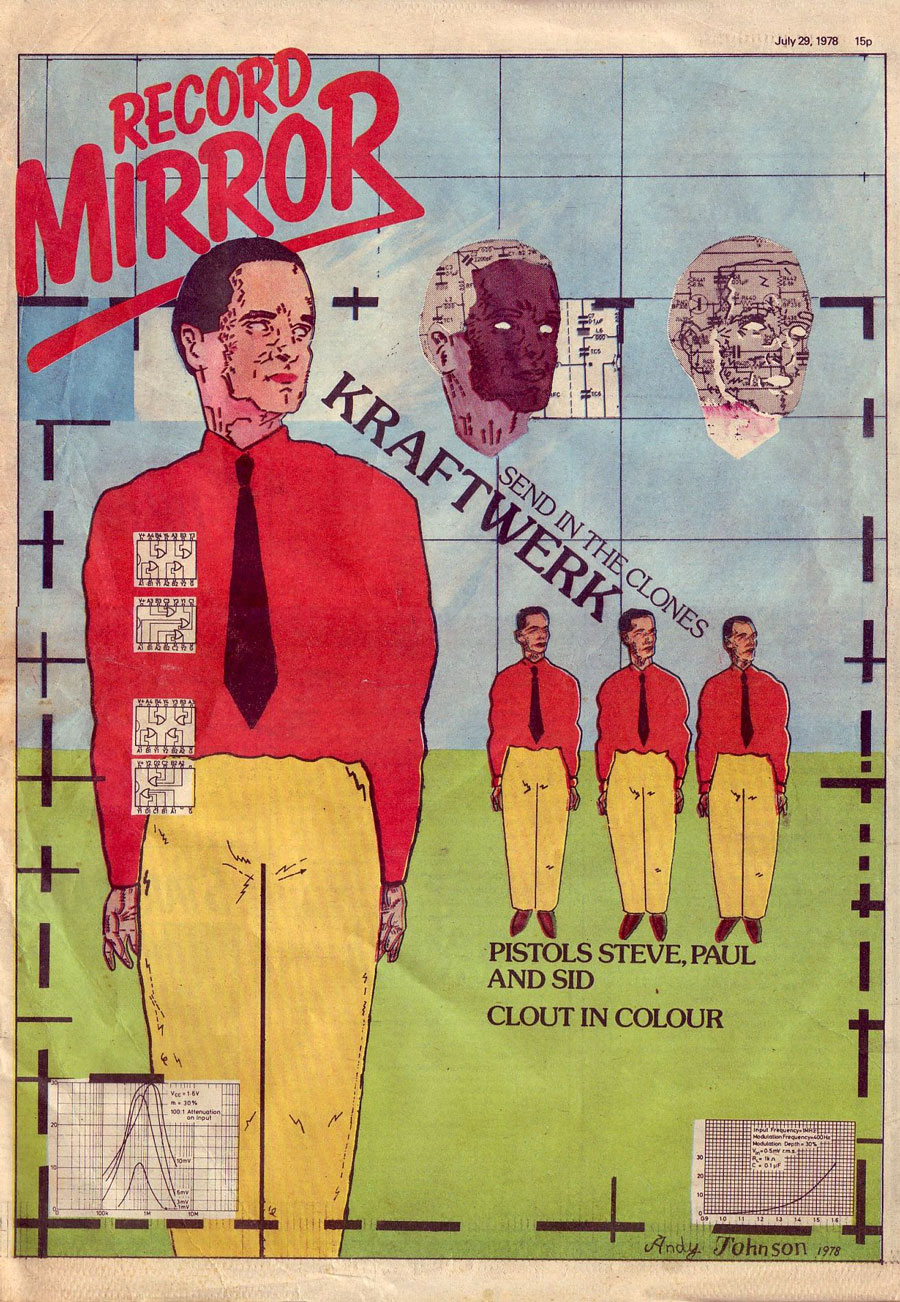
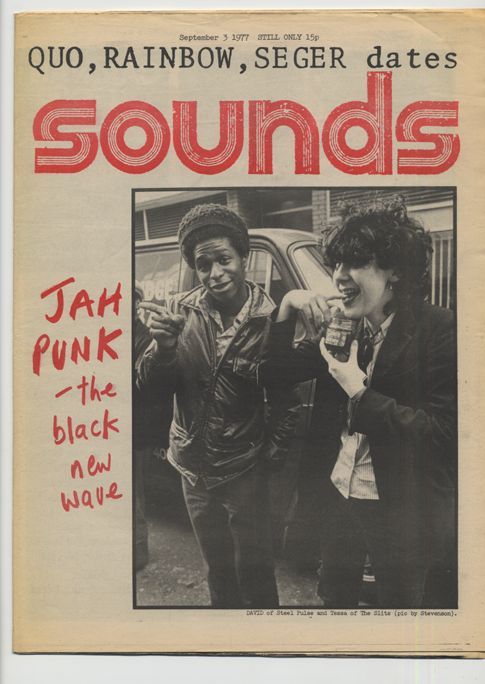
Once upon a time — for a surprisingly long time— the UK music-press was a lot more than just the place to catch up with singles or album release news, with interviews with chart-topping figures and the antics of gobby rockstars. Week on week in its heyday — the mid 60s to the early 80s — a young reader could also go to it to find out about everything from comics to cult films to radical politics, as well as an extremely wide range of non-chart musics from all over the world. Hiding in plain sight, it was the communal improvisation of ways to process an unprecedented tumult from every quarter, of new sounds and dances, startling ideas and visions all battling for attention. It took place in such high-street titles as NME, Melody Maker, Sounds, Record Mirror, Echoes, Street Life, Let It Rock, Zigzag, Black Music; but it had fermented in the undergrounds — Oz, IT, Frendz, Ink — and a significant alt/free/listings press including Time Out, City Limits, the anti-racist agit-prop paper Temporary Hoarding, and the redoubtable feminist magazine Spare Rib. As well, from the mid-70s, there was a burgeoning underfelt of fanzines, notably Nick Kimberley and Penny Reel’s legendary reggae zine Pressure Drop, plus Bam Balam, Sniffin’ Glue, Ripped and Torn, London’s Burning, London’s Outrage, Out There, and many many more.
 It would be absurd to argue that its ideals — insofar as it even understood them clearly — have come to be irrevocably enacted: incorrect, if sometimes tempting, in the late 90s; simply fatuous in the light of recent weeks, when everything that it was not has broken back hard against it. It was always fragile: a serendipity, a moment. I want to argue that it was something more. That something useful to us right now can be drawn out of it. I’m not even sure yet what this is — I have ideas, which I might write more about, but for now I just want to make it possible to re-open the conversation.
]]>“To articulate what is past does not mean to recognize ‘how it really was’. It means to take control of a memory, as it flashes in a moment of danger… The only writer of history with the gift of setting alight the sparks of hope in the past, is the one who is convinced of this: that not even the dead will be safe from the enemy, if he is victorious. And this enemy has not ceased to be victorious.”
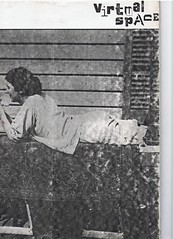 It was called Virtual Space and there was just one issue, “issue zero: place-kicks”. We made less than 20 copies, mostly by hunting round town for a photocopier with an A2 bed. It was an experiment, a mockup for a magazine, and it had no date appearing anywhere on its pages. (But it was early 1989, I’d just quit NME and wasn’t on-staff yet at The Wire.) We were serious: we went looking for funding. The other of the two being designer Paul Elliman, who’d just left The Wire. (Note to self: I haven’t seen Paul in an age and must call him up.)
The media momentum in the mid-80s was very much towards the elective affinity niche: people who took themselves to be anti-system dissenters* had pioneered the communication micro-cluster as a supposed zone of resistance (the indie label, the avant-garde movements, the specialist journal, the theoretico-critical discipline), but the system they declared they were resisting was actually not at all unhappy with this development. Self-balkanised geometries relocate (and quickly muffle) dissent. Freedoms of choice; freedoms of association: knowledge and intelligence arrive and evolve as a consequence — of course — of a degree of unfreedom in both choice and association. There was a knot here, a contradiction inside a conflict inside a conundrum: fuzzily but very strongly, I wanted start from the established reactive niche to push in another, much wider direction, against the encroaching self-quarantine around me; to shake up all the little comfort zones of specialisation. What would a magazine look like that covered everything, from every perspective? What would its production routines and technical shortcuts be? How would this ethos shape its editorial tactics and strategies?
(I should write this whole story up properly. Actually I have been writing it up properly, in the guise of a review of a record no one likes, including me and its makers. Read it when I finish it aka THE INDEFINITE FAR FUTURE dot dot sigh #smh)
Anyway, like Paul I too left The Wire, my project not at all finished — luckily with a few professional skills I could barter into a (much less ambitious) working life. For a decade or so, from c.2000, I had been giving a good part of my time — and surely more significantly my emotional energy — to my parents’ welfare: they were increasingly old and increasingly ill, and I owed them the best of me. Now that this duty is properly discharged, I’ve been returning to the projects of my youth, and wondering again — pretty ludicrously, given all the changes in media and how you get paid — about running some kind of magazine. Knowing full well that I have neither the resources (time/money) nor (in certain basic ways) the temperament, lessons I learnt the hard way the first time round. What should I be doing instead? The internet very much suits my temperament and habits, in good and bad ways. How can I shape these into a thing that’s useful — or anyway beguiling — for others (as I like to believe I briefly did, long ago, in the aftermath of Virtual Space issue zero, which helped get me an editorial role at The Wire).
At a minimum, I’d like to be pointing readers to the various writers that I routinely turn to, and see what transpires. If I could even get people squabbling debating in the comments-threads here, and attract traffic as a consequence of the smell of blood in the water quality of the discussion…
Have fun starting arguments? Light the blue touchpaper and lean in? No: those may have been my mottos at The Wire more than 20 years ago, but I don’t think they helpfully apply any more. Firestarting is hardly the problem on the internet: it’s how to bring together mutually inflammatory material and not set off exhausting flamewars. It’s something patiently grown-up, not something cheekily adolescent. Grown-up but enticing; catching, even. Hmmmm.
Let’s pick a scatter of who I might mean, and you the reader can do the math. Bearing in mind that my attentions will shift from month to month — I read a lot, and I likeread more a lot more than I hateread (though as you’ll see this somewhat means I merely hateread vicaroiously). I’m a magazine journalist: by definition I honour my boredom as hidden critique. If the butterfly-brained refusal to settle is the manifestation of one kind of symptom, incessant re-appearance at the same spot is another. This would be a very rough sketch of a possible ground; let’s just say that, and not pay attention to the clangour of everything that isn’t here.
• Marcello Carlin (here being nice about me). We are pals, of course. Whatever the thing is that I’m building, it can’t be hostile to fellowship or intimacy; and so must take into account the issues that can arise from this.
• Frank Kogan: here with an oldie that adverts to a tradition of writing and thinking which is not so distant from what I have in mind. Aside from the late Richard Cook, the two figures whose aesthetic I most wanted to fuse at The Wire (or clatter against each other, as a way to talk about all kinds of music) were Greil Marcus and Frank. I wasn’t really there long enough (and also hadn’t entirely had my head round Frank’s thinking, I suspect).
• Seth Edenbaum, and a PDF of a work-in-progress. In some form this should already have been a published book (for several years). As with Marcello and Frank, a friend — and I feel a slight squirmy degree of embarassment that I’ve haven’t been able to do more to draw proper attention to his work, and to him. I used to be good at this; or at least, I once briefly had a platform I hoped to do this kind of broadcasting with. Which some people remember fondly.
(Already we possibly recognise an underlying question: what is wrong with the cultural world we face, that these three are all basically outlier minds, their marginality less a function of their own often daunting rigour than of the failure of what — further up — I termed the routines and shortcuts and tactics and strategies of editorial practice and production?)
Plus some more (rather younger) names: outsider I’d guess more by choice than unspoken decree.
• Alex Harrowell, the Yorkshire Ranter.
• That Tasmanian Devil of prose Hazel Robinson (who is also my extremely close friend off the net as well as on).
• isabelthespy, writing a streak on Britney just before xmas.
And for now I’m stopping at just six. Because I’m imagining even just these guys in a room, debating I don’t know what, and I can no longer hear myself think >:D >:D >:D Though the project would certainly also include the blog I started with Tallita Dyllen, if we work out a way to encompass doing it while living in London and Beirut respectively; and any material that Victoria DeRijke writes, once she frees herself from the horrible clutches of academia. sadface emoticon.
I’d only want to do it — but do what? I literally have no idea how to realise this practicably — if it could be a space bending towards curiosity, generosity, mischief and so on. Is it doable? Is it something you’d like to see, or be part of?
]]>
I’m multiply reposting this bcz it pleases me greatly.
(Via Tom at Blue Lines: more here.)
 For a while now I’ve been wondering about the feasibility and the need for a project: which for want of a better term I’ve been calling the “co-operative archive”. When my friend Martin Skidmore died last year, his wish was that those who knew and loved him gathered at his flat and divided up whatever of his collections — of comics, records, books, art catalogues and more — that we variously wanted. It struck most of us that day, I think, that there was something more than just sad about splitting up what he’d put together so carefully, over many years: he was a highly intelligent man, a scholar, in fact, especially when it came to comics. Was there a way this archive could be maintained?
But there wasn’t time: the practicalities — where could we find to store it all? — intervened. His colleagues in the comics world were adamant that his comics be rescued as an important resource, but much of the rest, inevitably, was scattered to wherever unwanted books and CDs go.
Anyone my age, in my trade, will have experienced something similar, I imagine, when that friend passed on who’d filled his flat or house with curiosities, sometimes going back decades. And sometimes it’s a collection that’s focused and specific enough that official institutions — museums, libraries, universities — can be persuaded to take it, preserve it, make it available for future study; especially if the collector was an artist or author or anyway a “person of note” whose work will likely generate research. But these institutions are all under enormous funding pressure — public libraries especially — and what I suppose I’m getting at anyway is material that would tend to fall outside an ordinary museum’s or library’s archival remit. Or — to put it slightly more polemically — would possibly stretch the institutional or bureaucratic imagination beyond its (fund-finding) limits.
One person I chatted with was semi-seriously wondering if his large collection of obscure films taped off the telly wasn’t a resource — and of course it probably is. Yes we live in a time of apparent cultural plenty, with “everything” in instant reach — but it really ISN’T everything, quite a lot has quietly been left out of the easy-access cornucopia. And the cornucopia is only possible through quite rigorous formatting and pre-emptive categorisation, and both these can strip out historical context and (for want of a better term) the traces of social curation; the why of the original gather, the principles of use-value in the first quirky instance. And it’s the latter that nags at me: that put in mind the idea of the co-operative archive. Of some sort of resource of this kind of material, “curated” — in the sense of gathered together and kept safely, somewhere where it could be accessed when needed — in some kind of (yes, massive handwave here) crowd-sourced fashion.
The basic problem for orthodox public archiving is space: suitable buildings are expensive, and need extensive staffing. Because space and funding is limited, there’s a constant process of triage — things not being selected, things being deselected, prey to exactly the streamlining decisions, about value to the public and such, that will cull the material I’m imagining being archived. My tentative proposal is what’s already having to happen be what’s further encouraged and enabled: that these collections, though they have to be dispersed physically, will be moved into spaces owned by friends, colleagues, admirers, and looked after there.
But they will all also remain linked on a centrally maintained database: which contains details of the original collector, what’s being held and where. The masterlist of items would be public searchable and accessible — the specific details of where held perhaps to subscribers, along with message-boards for information exchange and discussion, and potential for enquiry and suggestion — ways people can be put in touch with one another. There’d be a cost to maintaining it, certainly — accurate inputting is dreary and timeconsuming and should be appropriately reimbursed, but this cost is nothing to the problem of housing the material. There’d be issues of security for some items perhaps — though the point I’d stress here is that this is largely (by self-selection) material which has value in the setting provided, but very little once split away from it.
Could this be kickstarter-funded? Would it be a charity? How would it work? Could it work? Does it already exist? What haven’t I thought of? Who would be interested in participating? Do people know of material that might fit this? (Tell me in comments!) I see it as a map of eccentric passions, a crowd-sourced network of minor wunderkammern — inevitably incomplete, partial, skewed towards the relevant interests of those likely to become involved (the self-documenting classes?) but this would be a strength rather than a weakness. Not excluding records or books or quite ordinary items, if there was something interesting about the mind behind the collection, and that mind’s world, that’s apparent in the collection. Is there something to this?
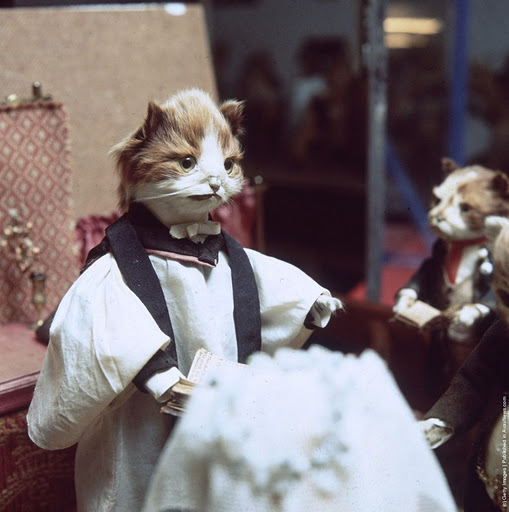 (Kitten’s Wedding (detail), from eccentric Victorian taxidermist Walter Potter’s Museum of Curiosities: my friend Dr Vick took me to this in Cornwall a few months before it was closed, its items unexpectedly split up and sold off — Damien Hirst had wanted to buy the whole collection and keep it in one piece, but for reasons both melancholy and unclear this didn’t happen.)
 Quick unedited notes the morning after (on just 4 hrs sleep)
1: the road-testing of the citizens united decision has not developed entirely to the 1%’s advantage
2: TRUMPBOT SMASH *trumpbot falls over on face in puddle of someone else’s vomit*
3: no one ever got rich betting against the continued stupidity of the US pundit class, but — and usually like emerson I am pro creative-transformative intuition and against the soulless bead-counting technocrat where’er he be — but Team Silver has surely helped ding the the current pundit-layer’s crappy jalopy, in a way that a mere unpredicted shock dem win would not have done
4: ratfuck report (relevant internal repug warfare): husted knew — because he could see on his master screen, the one with the knob that technologically flipped the votes — that ohio was gone beyond critical *before* the point where technological vote-flipping could be brought in to save the day; he told the Fox deciders and went home; he pointedly didn’t tell rove bcz FUCK TURDBLOSSOM
First posted at Unfogged, further thoughts at B&T (I had Caro on LBJ in mind here, and the fact that many voting machine companies are Repub-owned): note the Ranter’s response, in particular — my takeaway — the fact that all you need to depress the other guy’s voting (and voters) is for your claim to hold all the cards to be plausible. The loss of this plausibility can be the puncture in the balloon: the hole is small but it doesn’t self-heal. To over-estimate the scope of their control — I think of this as an anarchist failing, but that may just be my age and prejudice showing — is very much to hobble our own options.
]]>