(behind the clean door)"]]>
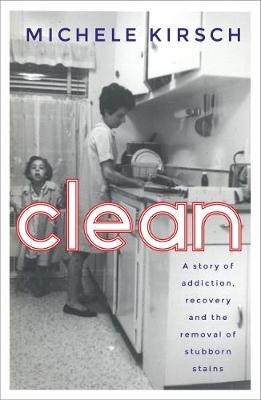
Reviewing “Clean –– One woman’s story of addiction, recovery and the removal of stubborn stains”, by Michele Kirsch (Short Books, ISBN 978-78072-381-5)
Several years back I was grousing to a pal about a new book by a clever and successful mutual acquaintance, a history that encroaches on territory I had one day hoped to stake out (but of course I have done nothing about this, since my pop timing is always terrible). My gripe is this: music writers endlessly re-interview the wrong people — or more precisely, never enough of the right people. Revisit the original moves and shakers and they mainly double down on what went over well the first the time, especially conceptually. Which is the way a moment of open possibility get congealed back into cliché. “If you want to know what a radical scene’s actually about,” I airily declared to my chum, “you should talk to the club’s hat-check girl.”
(The book in question did extremely well critically and commercially –– presumably because its targeted readers knew better than me what they wanted to read about this particular radical scene… )
Anyway, what’s valuable and lovely about Michele Kirsch’s Clean, I think, is how little attention it pays to the various movers and shakers she’s encountered, as a music writer in the 80s and after –– and how quite early on it turns out she WAS a hat-check girl, at a happening Boston punk club. As well as working in shops, on a switchboard, as a supply teacher, and latterly (per one meaning of the title) cleaning the flats and houses of exactly the kinds of comfortably successful people that pop stars and music writers mostly aspire to be (and now and then succeed). They stay largely off-stage as Michele tackles the grime in their very varied bathrooms, as anonymised sketches punctuating the narrative.
Which is instead an unsettling tale, deceptively wittily told, of unremitting anxiety since childhood, of grief as an unreliable lodestar, of industrial quantities of prescription Valium sometimes amplified by alcohol and other drugs –– and how (per another meaning of the title) you should quit all this, if you can. Since I first knew her 30-odd years ago, Michele has been a writer from her core to her fingertips –– and yet as an autobiography it’s not really about this at all. It begins with her childhood and youth, but says nothing of what she was reading then, or when she first picked up a pen, always pushing back into messier spaces, the ones often kept tidied away behind the pleasant nods to inspiration and aspiration. Around the time of the London Olympics, her decades as an addict had finally pulled both her chosen profession and a pleasant family domesticity out of her reach –– and the book’s framework is her learning to make a minimally liveable living as a cleaner.
At the NME in the mid-late 80s, Michele wrote funny, lively stories that arrived from odd angles –– odd because (to get them placed at all) they generally began life as this week’s promo pretext: pop stars (amusing, difficult, even –– whisper it –– dull) and what as writers we could make our tales of time spent with them. There was a tension here, and thus the chance to discover something about the forces shaping our world. And NME then still just about held a space open for anomaly, for curiosity, for voices and approaches not yet professionalised or routinised or market-narrowed out of their own sense of the shape of the world.
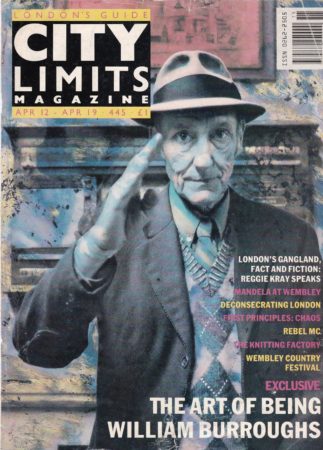
But this space was closing. Magazines were increasingly run by badly formed surveys about what readers felt they liked to read. And as writers and editors we had little idea, most of us, how to resist the pressures this created. By the late 80s, Michele was writing a column called ‘Mama K’s True Stories’ and it was of course terrific. And not like anything else at the time, at least in the UK (somewhere I have a folder full of cuttings from it). This was in the London listings magazine City Limits, a haven for the denizens of the closing space –– if anything under even more pressure to submit to market forces, to be more saleable than awkward, to drop what it had been (which had mattered so much) and to become what idiots thought it had to become.
Jump now to 1992: I’m re-fashioning The Wire from my predecessor Richard Cook’s template, into the kind of magazine I felt could survive without losing what had been so valuable. I got some things right –– the magazine did survive, and still does –– but why did I not see that ‘True Stories’ (which I loved!) fitted perfectly into this ambit and project? I wanted a greater diversity of writers! City Limits was in death spiral, there was much personnel overlap –– why didn’t I pick up the phone and ask Michele if she wanted to relocate? (We likely paid even less than CL, mind you… ) [Footnote 1]
Thinking this through (rueful and shamefaced that I didn’t realise before beginning this review) I realise it’s still a matter of what’s so good about this book, which was then much harder to see clearly (certainly harder for me, but surely not just me). And it goes back to congealment and concealment, who does what in the undiscussed spaces, what gets foregrounded and what gets left out when you’re making an argument in favour of something. Music is something Michele loves and knows about and finds invaluable in her life, and so what she writes about is her life. I was at that time mainly gathering writers who approached music as a series of battles (or as some would say, a history) of competing theories of value, popular vs vanguard vs past vs future vs rock vs rap vs jazz vs noise vs niche vs vector to the totality blah blah blah. Michele seemed untroubled by the routinised feuds and grand historical-definitional UK music-mag controversies of those times, at least in the usual feuding-freelancer-elbows-for-mannerist-space kind of a way — and this is exactly why I loved her writing. I wanted a mini-world in which less armoured voices could hold their own course, to thrive as an irreplaceable part of the whole, as respite from all the dramas of the central cultural cockpit and the theory-divas fighting for the largest slice of the attention available…
But such spaces and such voices are by nature and inclination tricky to weaponise, which is to say tricky to monetise –– and back then I wanted the battles at The Wire on the page (because I felt many of them were being crowded off everyone else’s pages) and also I wanted The Wire not to be losing so much money (lol). Obviously I’m delighted and gratified the magazine still with us — not least as a platform for small scenes that also just scrape by, as times get ever-tougher and spaces elsewhere just carry on blinking out. But all the available media models back then were flawed and flimsy, precarious and unsustainable, and they were all also about to get worse –- three accelerating decades of worse, seriously. The settlement some of us made with this –- the names some of us made -– came at a cost. There was no safety net and there were casualties…
… and by the time of the 2012 Olympics the comfortably successful people mostly left off-stage in this book are having their houses cleaned by those without voices, mostly, and without page-count. Those who found themselves slipping away back downwards after all [2], and those who never saw a way they’d be allowed up: who, trapped from the outset, never entertained ambitions professional or artistic, or set themselves transformative goals. There’s a tension often unexplored in the more stridently meritocratic versions of the tale of those who make it out (or back out, for rehab lit): that to reach the best realisations of yourself as author or artist, you’ve had to leave something behind and lock someone out. And so there’s a guilt alongside the relief –- and in fact a guilt either way. Because if your own flight is unsuccessful, you’re a failure too. These are the corrosive dooms we are constantly asked to internalise, the ideological impositions few entirely free themselves from.
What makes Kirsch such a funny writer is that just these conflicts play out as a kind of lucidly evasive dizziness, a constant misapprehension that’s very (as the internet would put it) “relatable”. She blames no one but herself for how things turned out, and makes a terrific comedy of self-deprecation: spaces left looking worse for her attempts to clean them, things she turned her hand to (professional journalism, parenting) as an obstacle race of absurdist unsuccess. It’s all often also an apology — to family and friends, most of them unnamed — and it’s charming and it makes you laugh, even the tough parts, and her voice remains light and clear, and this is excellent. But not everything in it needs any apology.
As one of the most readable of narrative forms, the classic puritan autobiography sees the present coinciding with the redemption, the means of rescue: we move through and down into the catastrophe, and back up out again. But despite a lightly skirted 12-steppish pass into religion, the redemptive circle in Clean doesn’t quite close — this is not that kind of autobiography. The most rewarding community way-station in her quest towards sobriety is when she becomes a cook in a little local East End café: the fond way this is described lets us know that Kirsch knows that re-arriving as a cap-W Writer is not going to be on a par with this, reward-wise.
The shadow-side of Kirsch’s journey has been a succession of jobs that mostly can’t be careers: hat-check girl, shopgirl, switchboard girl. And there’s a dismissive feel to this list (as I make it) precisely because they’re jobs that often go unnoticed, the stories historians too often don’t ask about. In this book, they take place within hat-checking distance of the movers and shakers we pay most of our attention to, to write about and argue about — and when youth and tactical dizziness hadn’t shut off any of Kirsch’s future mobility, across the counter as it were. You can line them up as “girlish” — as if this means impermanent or ornamental or frivolous — even as you conspire not to spot when they become the whole of the hard livings some have to make, and much too much of the life some have always to live. Even in the late 80s, such mobility still seemed plausible –– and writers still shared an impulse to be keeping doors open, or anyway to share glimpses of what this might still mean. But what if personal transformational achievement only takes decisive shape when the doors are closed? Your inspirational, aspirational triumph is only a broader political or a moral triumph if you can bring with you the best of what made you. The gentle strength of this book is the sense it leaves us with, of the caked-on dirt behind our sense of lifesaving self-rescue, of where the slamming doors may be, of what’s on the other side that we should never be forgetting…
FOOTNOTES:
1: For a recent reboot of Mama K’s True Stories, go here
2: At the book launch for Clean, I was told — to my great sadness — of the likely death last year of another colleague from back in the still-open days. I won’t name them because the internet doesn’t yet confirm the news, and I very much hope it’s untrue. The fact they’re more or less invisible on the internet is part of the story, though.
[If you like this post, please support my PATREON which will help me write more! Also let other people know that you think might enjoy it… ]
]]>lennon’s REVOLUTIONS 50 years on"]]>
“The blues are beautiful because it’s simpler and because it’s real. It’s not perverted or thought about: It’s not a concept, it is a chair; not a design for a chair but the first chair. The chair is for sitting on, not for looking at or being appreciated. You sit on that music.” (John Lennon to Jann Wenner, 21 January 1971)
 When Jack Hutton quit Melody Maker in 1970, to set up what became Sounds, he told Richard Williams, who stayed behind, that it would be a “left-wing Melody Maker”. Hutton’s no longer with us, so I suppose if I get the chance I’ll have to ask Williams one day what exactly was meant by “left-wing” here. My guess — based on what Sounds actually turned out like — is that Hutton meant the new paper would be centred on rock. Even though both papers covered rock and pop and everything else, MM’s moral centre was arguably still jazz at that point. Even though the jazz fan-base always had a left-wing in the UK, with old-school communists solid among its supporters and chroniclers, it was a music (or so many seemed to feel) whose time was past. Rock was new and rock was now, the very voice of youth — but beyond this, rock had had, for a while by then, a tangled relationship with politics, radical left politics in particular.
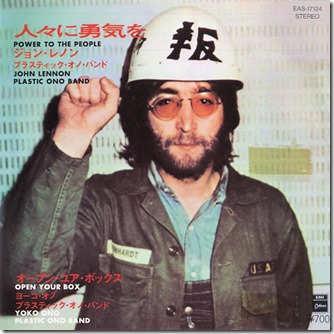
This tangle reached to the very top of the charts. In 1968, as the tremors spread from the May insurrection in Paris — when everything turned upside down, and pop became art and vice versa — three versions of the Beatles song ‘Revolution’ were recorded. The first and last (the long musique concrète Bonzo-skit sound poem ‘Revolution #9’) were on the White Album, which came out in November. The re-recorded version of the first came out a little earlier, in August, as the B-side of ‘Hey Jude’. Perfect for exploring street politics as a fact and a possibility, and post-split the song was still being picked over three years on, in editor Jann Wenner’s gargantuan two-part interview with John Lennon for Rolling Stone (some 36,000 words long in toto) and in Tariq Ali’s Red Mole. The former was exactly what “the Stone” had been devised to do. The existence of the latter, a serious-minded conference with actual frontline radical activists (Robin Blackburn joining Ali for the occasion) is more surprising, an index at the very least of how wild and mixed up the times actually were.
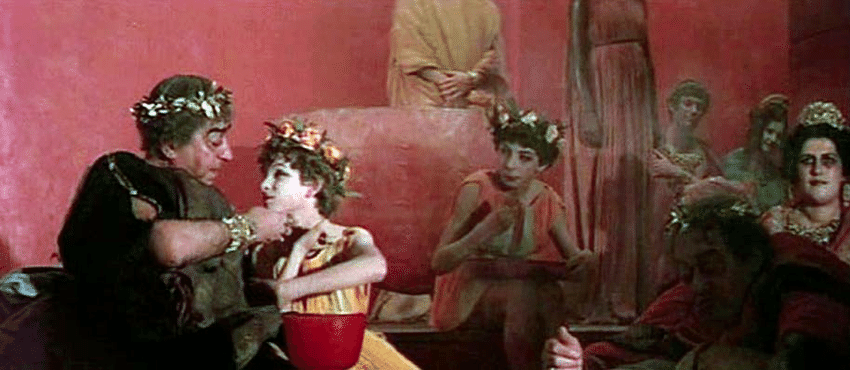
Wenner always saw his role as chief courtier to the big new voices in music, less cautious investigator than loyal amplifier : which means Lennon is nowhere pushed or tested. It also means he’s comfortable: he unwinds deep into confessional mode, hinting at the worst of the group’s untold stories. Clean-cut to all the world, the real Beatles on the rise were “bastards”, he says — “you can’t be anything else in such a pressurised situation” — and the tours were “like the Fellini film Satyricon”, orgies and “junk and whores and who-the-fuck-knows-what…”
This is no longer virgin terrain, of course. Freighted with his huge authority for rock-readers at this complicated, confusing moment, swathes of this much-cited interview have simply entered pop history’s DNA. “The dream is over,” he sang on John Lennon/Plastic Ono Band, his disenchantment with the counterculture at large growing as much anything out of his own personal exhaustion, and how we all feel when a relationship fails and a fellowship breaks. With Rolling Stone at the centre of how the music was started to understand itself critically and politically, Lennon’s many stances in this conversation were a deep permission as well a disenchanted retrenchment. Pre-Beatles rock and roll is the truest, best music, he now appeared to insist, and if we followed his charismatic lead, we’d be shunning McCartneyish Pepperish pop artifice on one side, proto-prog jazz-muso virtuosity on the other, ideally so as to re-enter a space of of undeluded unadorned therapeutic naturalism.
The most immediately startling thing about the Red Mole piece, from today’s perspective, is that it happened at all: startling that Lennon agreed to it, even more startling that the revolutionary organ of the International Marxist Group — a Trotskyist splinter maybe 1,000 strong at its peak — decided so publicly to engage with the thoughts of a colossally well off former frontman of a recently dissolved boyband-stroke-chartband. It’s a clue to how tiny and village-like the London scene still was, of course (despite Lennon’s recent relocation to New York) — but it’s also a clue to how much music and changes in the music mattered to the underground then, political or otherwise. Quotes from Beatles, Stones and Dylan songs routinely supplied headlines and speed-read slogans: this was a lingua franca and a badge of identity; not just a shared backdrop but a speed-read signal where you thought things were at, and the ways you belonged — or didn’t — to any relevant micro-constituency.
The Red Mole encounter began in late 1968 with anti-war activist John Hoyland’s disgruntled Beatles fan-letter (scroll down) to Black Dwarf (the paper Ali had helmed before Mole, which is to say before a micro-sectarian split in the relevant editorial). As a Beatles B-side. ‘Revolution’ was sour and suspicious and not at all in step with the movement: “if you’re talking about destruction/minds that hate/Chairman Mao… count me OUT!” Fanboy Hoyland was dismayed: a former idol was misperforming, the song closer to Mrs Dale’s Diary than to the Rolling Stones [Footnote 1]. Hitching from Keele to interview Lennon a few weeks later, students Maurice Hindle and Daniel Wiles show Lennon this letter, which clearly nettles him. He reads and rereads it more than once, shows it crossly to Ono, and in early 1969, he sends an angry reply (scroll down)…
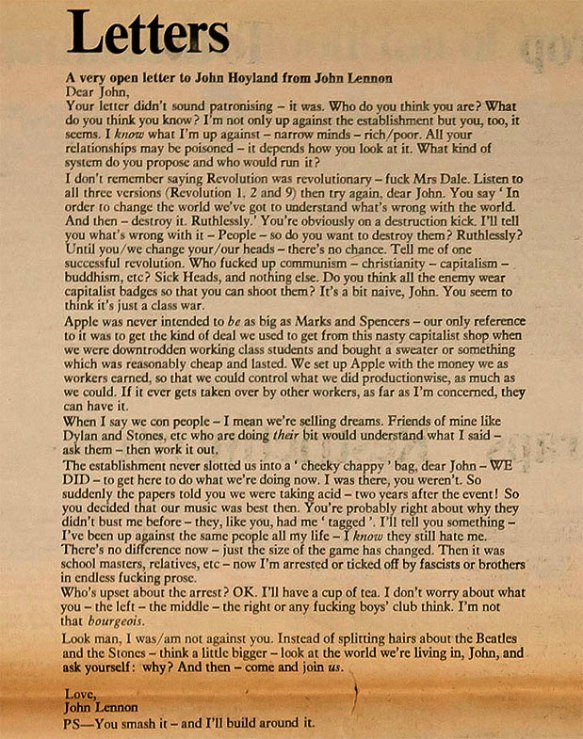
That set the stage: in the wake of the final two-year Beatles meltdown and then the Wenner juggernaut — which is cited in the opening Red Mole question — the showdown. No fireworks, though: Lennon handwaves his way around current world politics unchallenged (Ali earnestly corrects him on Yugoslavia and Tito, but tolerates his apparent renewed enthusiasm for Mao’s Cultural Revolution). As for shifts and values in music in recent years, Blackburn in particular pads gamely through the critical nostra of the day, and – as the seasoned professional in this area — Lennon doesn’t challenge him. Much of it is commonplace stuff, but — in among all the busted myths, unmoored generalisations, snap judgments, settled scores and dick moves — these two conversations platform a wounded musician busy quilting a revised aesthetic from the rubble.
How to sum it up? Pop is bad and you should feel bad: let’s get naked and rock and roll! Naked emotionally, naked intellectually and politically, naked, well, yes, kit off for the LP sleeves lads, and fuck the squares if this bothers them… Rock and roll, especially black rock and roll, speaks urgently to the white working classes precisely because it comes from a soulful place of unrepressed, undiluted honesty and self-knowledge free of all possible bullshit. We have forgotten to know ourselves and act accordingly; this music is revolutionary for teaching us to turn once more to both — and this is happening and that’s the way forward.
(Narrator’s voice: it was not and it was not.)
And yes, it’s very easy to mock all this now! And to read it as early mass-cultural steps — disguised as urgent critical recalibration — down the long road to centrist dadrock and the present-day so-called authentocrat hegemony blah blah. Blackburn’s and Ali’s credulity seems a bit of a shocker, from our wised-up times — but Amiri Baraka had not yet published his rueful tales of the Black Arts Movement, and the contradictions within cultural nationalism were still confusedly working themselves out in 1971. Black Power was still a concept that amazed and enthused people, white and black — and of course “Black is beautiful” remains a counterstrike today against disabling self-hatreds and self-erasures.
The excitement of the encounter with rock and roll had begun with the shock of realisation that you can learn as much or more from people far outside your own neighbourhoods: that cultures not your own are not by dint of this lesser than your own — a valuable discovery — and that it’s good to choose to be encouraged to enjoy life more and to be a better deeper person in your understanding and actions. But the inspiration had gradually congealed into a habit and even a religion, of the projection of the desired angelic image (of pleasure and depth and goodness) onto these same cultural others. It’s no fun at all to be trapped at the other end of this projection— made a cultural-political saviour without being asked — and doubly grim when the projection insists that being your natural self is the only acceptable forward-looking politics. This was the high era of the method-acting delusion, in which — unless truth comes from deep within your own personal pain— everything is just lies and fantasy.
Some of the time, Lennon knew better. And so, as long-time operators in the flyspeck viper-pit of far left politics, did Ali and Blackburn now and then. They knew that performative ambiguities are essential to coalition-making and keeping different interest groups onside together. But 60s revolutionary socialism was still very much under the moral spell of Sartre’s existentialism, a philosophy never especially smart about the value of drama and of fiction beyond simple agit-prop. Besides, British class identification in the borderlands between lower and middle class is the murkiest of kaleidoscopes at the best of time, and neither Blackburn nor Ali was well placed to gauge this, let alone push back [2]. When Lennon titles a song ‘Working Class Hero’ (and despite things he casually claims in both interviews), it’s as much angry disavowal as self-declaration, and in any case it’s ambiguous: is he a hero who’s working class himself, or a pop-star hero to the working class? (Ans acc.him = combination neither and both…)
Either way — despite his unimaginable wealth — it’s allowed to stand both times. And yet there’s so much here to ask hard questions about. As Wenner allows him to demonstrate, letting him talk on at such length without interruption, he’s anything but a natural soulful authentic angel undivided from himself and free of bullshit, but rather a torn and hurting mess of complexity, contradiction, evasive cunning, irony, play-acting and, well, self-misdirection. Free to explain himself, to present a self-portrait, he’s at once bolshy and timid, arrogant and bewildered, confident in his snap-summaries yet still beguiled by curiosity — and, like every bright pop-star, unendingly caught between the will to rile and the will to please (including pleasing revolutionaries who should be quicker to spot this).
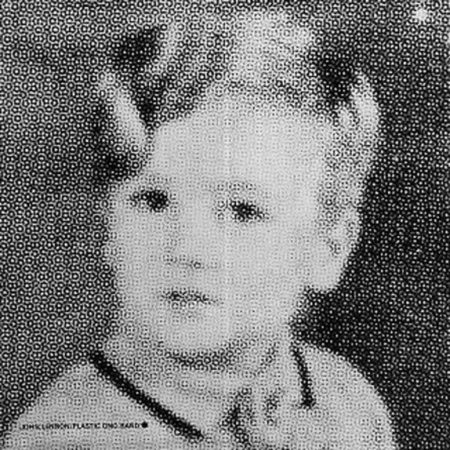 And stripped of all this, he might have been happier — except he’d also be unknown, not to mention poor. In an era when more people of working class background were entering tertiary education than ever, the Beatles counter-narrative was by contrast one of ferocious self-education and mastered expertise, very much an alternative and anti-official model for intellectual self-mobilisation. His dismissal of almost the entire trajectory as myth — we were best on-stage, he says, before we ever came into the studio — is also a kind of a disavowal of any of this possibility. And — as upper middleclass college kids themselves —his interlocutors seem to embrace it, though it’s surely strangely antipathetic to the politics of possibility they want him to sign on to, to manifest and broadcast. Again — profoundly unsure of what they want from the exchange — they decline to challenge him, to follow through where he’s half-pointing.
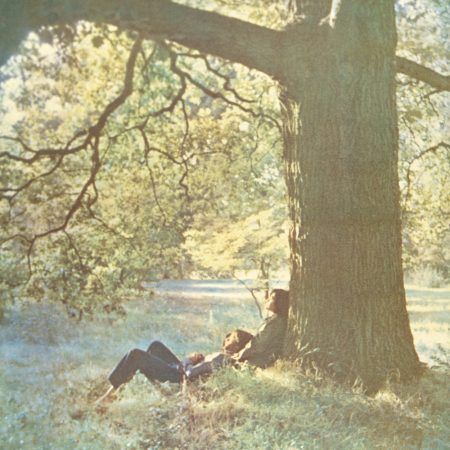 The Lennon/Ono LP ends, or nearly ends [3] with a list of things he no longer believes in — Jesus, Buddha, Elvis, Beatles — and the plain declaration: “I believe in me, Yoko and me, and that’s reality.” It’s like coming home, he tells Wenner: “I’ll never change much from this.” The leisure of space and time to become uncomplicatedly yourself, to feel and and believe in and know home this way, is afforded very few people — and this, if you like, is how a mark of how far his stratospheric wealth has taken him from his birth-town, his roots, his class. Meeting Yoko as the breakthrough key to self-discovery in this best of matching companionships — of course it’s a tell that she’ was from the other side of the world, the other side of the arts, from a comfortable Japanese family, well travelled, well schooled. The many claims don’t add up — and neither interview presses him on any of this.
Epilogue: An LP a year until 1975, and his collection of rock and roll standards, then a five-year sabbatical — long aeons in 70s pop time — before Lennon returned to recording in 1980. By now the conversation that began when Sounds split off from Melody Maker in 1970 had changed deeply (not least as a consequence of these exchanges). There’d been wide revolt against the the leisured, over-wealthy aristocrat entertainers who’d shaped the recent past and seemed to clog up the present: punk rock, the revolt was called. Radical politics still had a toe-hold in the pop press — but the critical factions closest to it mostly took the line rock is now bad and you should feel bad. The lingua franca was increasingly contested. Lennon was still welcome, unconfronted, in the pages of Rolling Stone, but his long absence from the UK conversation ensured few was overawed by his re-emergence. In the post-punk and new pop years, almost everything he had seemed in the early 70s to stand for would be questioned.
And then of course in December 1980 he was shot dead, by someone deep-lost in the labyrinth of a megastar’s unkeepable promises. Suddenly changeless in death and embalmed in grief-stricken nostalgia, he was removed from all useful reassessment, as everything round him went cold and congealed. Home, he’d said, but just as he set out once more, he was stopped. There are clues where he might have gone; how he might have evolved. His recording with Bowie, for instance — because he too was always a kind of proto-glam quick-change artist, forever negotiating the obstacle course his own throwaway comments had strewn before him. As for the blues, its potency was never of course a function of its unadorned primitive simplicity. Quite the opposite: it always involved reflection, and its energy and value came from the sheer layered density of all competing histories hurtling through it.
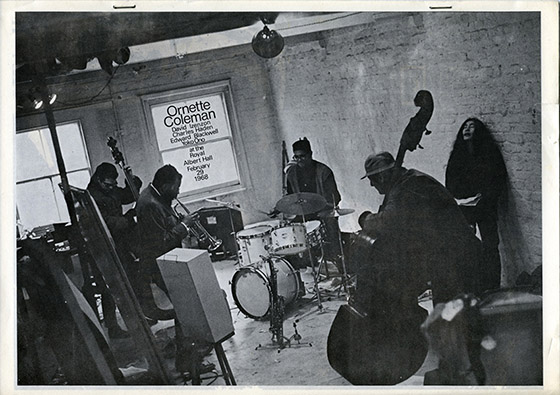 And of course there was the work Yoko had made with him in the late 60s, the be-ins and the bed-ins and the bag-ins, these high-visibility celebrity stunts whose purpose was to import go-slow bafflement and blockage into the flow of mass-media communication: the spectacle, but discursively on strike. The most heartening surprise twist in the Wenner conversation — in both conversations — is his belief in Yoko as artist-musician, his commitment to the idea that everyone should take proper note of her. Besides Warhol, that ineffable blank, he celebrates Fluxus and nods to Ornette Coleman as two unimpeachable stages in Yoko’s past, her rock and roll.
Warhol aside, the prankish avant garde before 1968 had seemed an individualised, out-of-reach luxury, supported by and therefore aimed at the wealthy and the over-educated. Pre-Beatles rock and roll is the truest, best music, he may have been arguing — but to say so and to foreground her, he has also to argue that she’s rock and roll — which complicates and expands the definition, to say the least. By refashioning the story to include her — even in a sense to re-begin with her — Lennon was quietly re-weaponising his art-school inventiveness and tossing it out into the wider world, the widest world thinkable, in topsyturvied form. He opened the doors of imagination and possibility even in the pop music trade press: no intellectual luxury is too good for the working class… this would after all be a pretty good motto for the toughest strands of post-punk…
Footnotes 1: It’s weird to recall how much of a free pass the Stones still had with the most rigorous 68-ers. Though of course they were carefully solicitous of this touchy part of the market: the song ‘Street Fighting Man’, about the May riots in Paris, was widely enough thought to refer to Tariq Ali himself that he brazenly named his memoirs for it.
2: Ali is from the higher-born Pakistani aristocracy, and extremely engaging and perceptive about it (subscription needed).
3: Actual closing song: 52 seconds of ‘My Mummy’s Dead’ sung down a telephone to a nursery-rhyme style tune (which isn’t ‘Three Blind Mice’ even though everyone for some reason says it is).
If you like this post, please support my PATREON which will help me write more! Also let other people know that you think might enjoy it…
]]>“During the Conservative government of Edward Heath there were five declarations of emergency under this Act [viz the Emergency Powers Act 1920], by far the most any government. The first was in July 1970 over a dockers strike, the second in December 1970 over an electricians strike, the third in February 1972 over a miners strike, the fourth in August 1972 over another dockers strike and the fifth time in October 1973, which lasted for four months”
 So for last 18 months, my plan had been to launch the kickstarter for the book of the conference I ran at Birkbeck on the politics of UK rockwriting (1968-85). That’s a mock-up of the cover on the left (illustrations by the marvellous Savage Pencil): you can click on it to see a larger version, but if you don’t the title and subtitle read A HIDDEN LANDSCAPE ONCE A WEEK: how UK music-writing became a space for unruly curiousity, in the words of those who made it happen. Originally I had the kickstarter launch scheduled for May, exactly 12 months on from the symposium itself — but there were a lot of things to get ready, and, well, events intervened (it went live on Monday 27 June, just four days after the results of the eurovote sent everything in the UK into spiralling chaos). No one’s said so directly — most people have been very supportive — but if someone were to suggest it was frivolous or decadent or impertinent to be promoting such a project during such a crisis, well, I wouldn’t be entirely startled. And I wouldn’t feel they were entirely wrong.
 Despite this, I still think it’s right to carry on: and here’s why. The book will be an anthology — meaning that a variety of voices will speak (it will contain extracts from the panels on the day, with additional essays from those involved). It is a regathering of people involved in an informal, improvised cultural space that came into being at some point in the 60s (perhaps even earlier), coalescing around 1970 out the counterculture and other existing sources, some radical, some fannish — which existed in real time for some years, with ripples that continued to travel long after that. In its multiform, provocative, naive way, it was something that stood somewhat athwart the grim turbulences of the 70s, even if (from time to time) it also reacted to them and expressed them. It was about possibility, and about community: about how a community gets to define itself and to move out into the wider world.
The kickstarter is here: and what I say about it on that page is this (click through for further detail, and to support it to make it happen):
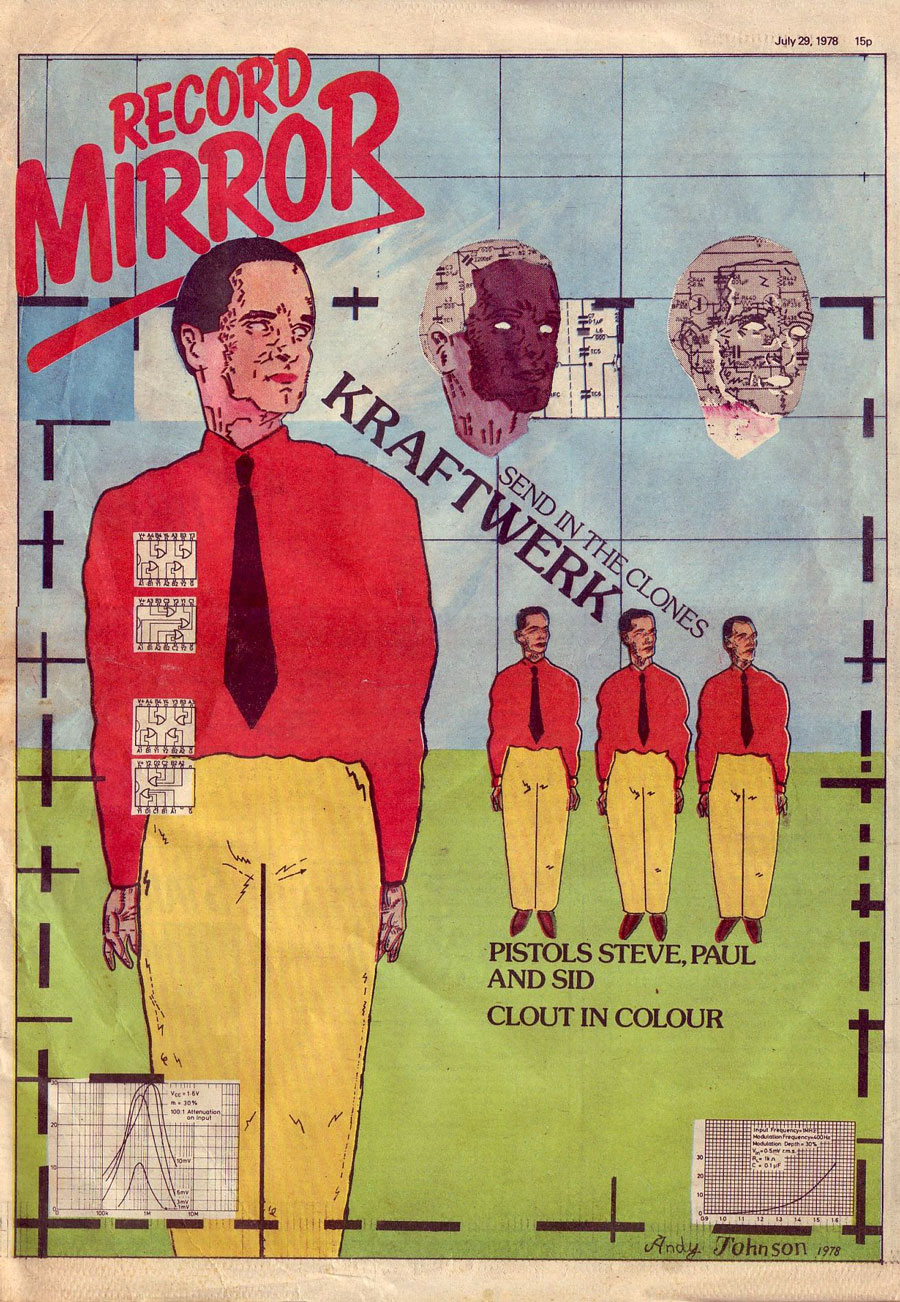
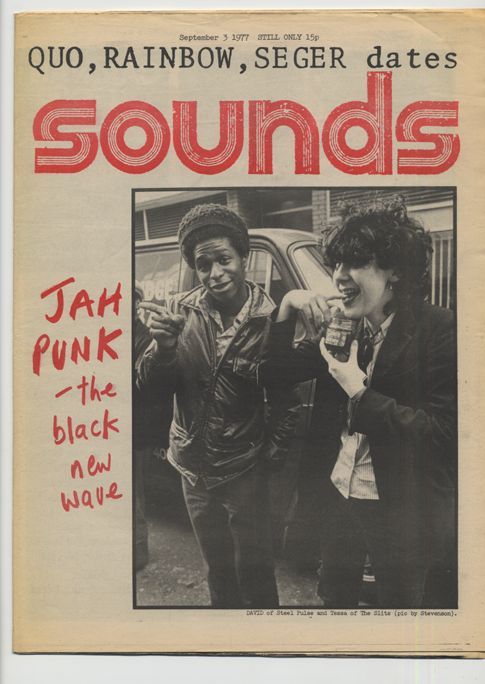
Once upon a time — for a surprisingly long time— the UK music-press was a lot more than just the place to catch up with singles or album release news, with interviews with chart-topping figures and the antics of gobby rockstars. Week on week in its heyday — the mid 60s to the early 80s — a young reader could also go to it to find out about everything from comics to cult films to radical politics, as well as an extremely wide range of non-chart musics from all over the world. Hiding in plain sight, it was the communal improvisation of ways to process an unprecedented tumult from every quarter, of new sounds and dances, startling ideas and visions all battling for attention. It took place in such high-street titles as NME, Melody Maker, Sounds, Record Mirror, Echoes, Street Life, Let It Rock, Zigzag, Black Music; but it had fermented in the undergrounds — Oz, IT, Frendz, Ink — and a significant alt/free/listings press including Time Out, City Limits, the anti-racist agit-prop paper Temporary Hoarding, and the redoubtable feminist magazine Spare Rib. As well, from the mid-70s, there was a burgeoning underfelt of fanzines, notably Nick Kimberley and Penny Reel’s legendary reggae zine Pressure Drop, plus Bam Balam, Sniffin’ Glue, Ripped and Torn, London’s Burning, London’s Outrage, Out There, and many many more.
 It would be absurd to argue that its ideals — insofar as it even understood them clearly — have come to be irrevocably enacted: incorrect, if sometimes tempting, in the late 90s; simply fatuous in the light of recent weeks, when everything that it was not has broken back hard against it. It was always fragile: a serendipity, a moment. I want to argue that it was something more. That something useful to us right now can be drawn out of it. I’m not even sure yet what this is — I have ideas, which I might write more about, but for now I just want to make it possible to re-open the conversation.
]]>“To articulate what is past does not mean to recognize ‘how it really was’. It means to take control of a memory, as it flashes in a moment of danger… The only writer of history with the gift of setting alight the sparks of hope in the past, is the one who is convinced of this: that not even the dead will be safe from the enemy, if he is victorious. And this enemy has not ceased to be victorious.”
 Notes on Adam Ant (the “paper” I gave at EMP in Seattle this year) and the Spice Wars (feat.Russ Meyer and Buffy and the Powerpuff girls and early ilx); a long note on Lady Di and the old weird England in the Popular thread on Elton John and Candle in the Wind ’97 — and the beginnings of a response to the various questions Frank Kogan asked in comments on the Oasis post, a response which is VERY LONG (9000+ words) and RUMINATIVE and SEMI-THOUGHT-THROUGH, and covers Burke, Keats, Wallace Stevens, the internalised bureaucracies of the institutionalised intellect (and where music fits into them); and what we mean by the words “thinking” and “clarity”.
]]>
Notes on Adam Ant (the “paper” I gave at EMP in Seattle this year) and the Spice Wars (feat.Russ Meyer and Buffy and the Powerpuff girls and early ilx); a long note on Lady Di and the old weird England in the Popular thread on Elton John and Candle in the Wind ’97 — and the beginnings of a response to the various questions Frank Kogan asked in comments on the Oasis post, a response which is VERY LONG (9000+ words) and RUMINATIVE and SEMI-THOUGHT-THROUGH, and covers Burke, Keats, Wallace Stevens, the internalised bureaucracies of the institutionalised intellect (and where music fits into them); and what we mean by the words “thinking” and “clarity”.
]]>