(behind the clean door)"]]>
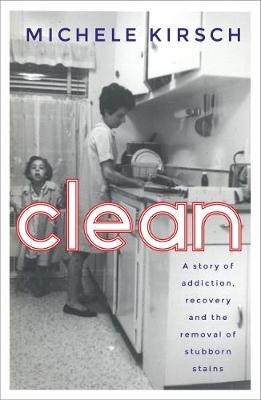
Reviewing “Clean –– One woman’s story of addiction, recovery and the removal of stubborn stains”, by Michele Kirsch (Short Books, ISBN 978-78072-381-5)
Several years back I was grousing to a pal about a new book by a clever and successful mutual acquaintance, a history that encroaches on territory I had one day hoped to stake out (but of course I have done nothing about this, since my pop timing is always terrible). My gripe is this: music writers endlessly re-interview the wrong people — or more precisely, never enough of the right people. Revisit the original moves and shakers and they mainly double down on what went over well the first the time, especially conceptually. Which is the way a moment of open possibility get congealed back into cliché. “If you want to know what a radical scene’s actually about,” I airily declared to my chum, “you should talk to the club’s hat-check girl.”
(The book in question did extremely well critically and commercially –– presumably because its targeted readers knew better than me what they wanted to read about this particular radical scene… )
Anyway, what’s valuable and lovely about Michele Kirsch’s Clean, I think, is how little attention it pays to the various movers and shakers she’s encountered, as a music writer in the 80s and after –– and how quite early on it turns out she WAS a hat-check girl, at a happening Boston punk club. As well as working in shops, on a switchboard, as a supply teacher, and latterly (per one meaning of the title) cleaning the flats and houses of exactly the kinds of comfortably successful people that pop stars and music writers mostly aspire to be (and now and then succeed). They stay largely off-stage as Michele tackles the grime in their very varied bathrooms, as anonymised sketches punctuating the narrative.
Which is instead an unsettling tale, deceptively wittily told, of unremitting anxiety since childhood, of grief as an unreliable lodestar, of industrial quantities of prescription Valium sometimes amplified by alcohol and other drugs –– and how (per another meaning of the title) you should quit all this, if you can. Since I first knew her 30-odd years ago, Michele has been a writer from her core to her fingertips –– and yet as an autobiography it’s not really about this at all. It begins with her childhood and youth, but says nothing of what she was reading then, or when she first picked up a pen, always pushing back into messier spaces, the ones often kept tidied away behind the pleasant nods to inspiration and aspiration. Around the time of the London Olympics, her decades as an addict had finally pulled both her chosen profession and a pleasant family domesticity out of her reach –– and the book’s framework is her learning to make a minimally liveable living as a cleaner.
At the NME in the mid-late 80s, Michele wrote funny, lively stories that arrived from odd angles –– odd because (to get them placed at all) they generally began life as this week’s promo pretext: pop stars (amusing, difficult, even –– whisper it –– dull) and what as writers we could make our tales of time spent with them. There was a tension here, and thus the chance to discover something about the forces shaping our world. And NME then still just about held a space open for anomaly, for curiosity, for voices and approaches not yet professionalised or routinised or market-narrowed out of their own sense of the shape of the world.
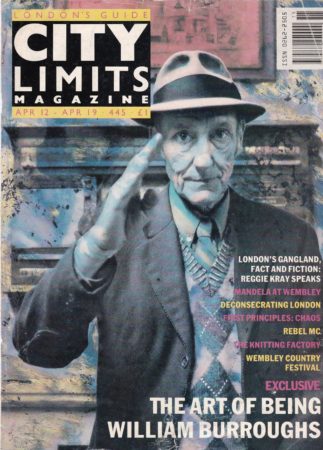
But this space was closing. Magazines were increasingly run by badly formed surveys about what readers felt they liked to read. And as writers and editors we had little idea, most of us, how to resist the pressures this created. By the late 80s, Michele was writing a column called ‘Mama K’s True Stories’ and it was of course terrific. And not like anything else at the time, at least in the UK (somewhere I have a folder full of cuttings from it). This was in the London listings magazine City Limits, a haven for the denizens of the closing space –– if anything under even more pressure to submit to market forces, to be more saleable than awkward, to drop what it had been (which had mattered so much) and to become what idiots thought it had to become.
Jump now to 1992: I’m re-fashioning The Wire from my predecessor Richard Cook’s template, into the kind of magazine I felt could survive without losing what had been so valuable. I got some things right –– the magazine did survive, and still does –– but why did I not see that ‘True Stories’ (which I loved!) fitted perfectly into this ambit and project? I wanted a greater diversity of writers! City Limits was in death spiral, there was much personnel overlap –– why didn’t I pick up the phone and ask Michele if she wanted to relocate? (We likely paid even less than CL, mind you… ) [Footnote 1]
Thinking this through (rueful and shamefaced that I didn’t realise before beginning this review) I realise it’s still a matter of what’s so good about this book, which was then much harder to see clearly (certainly harder for me, but surely not just me). And it goes back to congealment and concealment, who does what in the undiscussed spaces, what gets foregrounded and what gets left out when you’re making an argument in favour of something. Music is something Michele loves and knows about and finds invaluable in her life, and so what she writes about is her life. I was at that time mainly gathering writers who approached music as a series of battles (or as some would say, a history) of competing theories of value, popular vs vanguard vs past vs future vs rock vs rap vs jazz vs noise vs niche vs vector to the totality blah blah blah. Michele seemed untroubled by the routinised feuds and grand historical-definitional UK music-mag controversies of those times, at least in the usual feuding-freelancer-elbows-for-mannerist-space kind of a way — and this is exactly why I loved her writing. I wanted a mini-world in which less armoured voices could hold their own course, to thrive as an irreplaceable part of the whole, as respite from all the dramas of the central cultural cockpit and the theory-divas fighting for the largest slice of the attention available…
But such spaces and such voices are by nature and inclination tricky to weaponise, which is to say tricky to monetise –– and back then I wanted the battles at The Wire on the page (because I felt many of them were being crowded off everyone else’s pages) and also I wanted The Wire not to be losing so much money (lol). Obviously I’m delighted and gratified the magazine still with us — not least as a platform for small scenes that also just scrape by, as times get ever-tougher and spaces elsewhere just carry on blinking out. But all the available media models back then were flawed and flimsy, precarious and unsustainable, and they were all also about to get worse –- three accelerating decades of worse, seriously. The settlement some of us made with this –- the names some of us made -– came at a cost. There was no safety net and there were casualties…
… and by the time of the 2012 Olympics the comfortably successful people mostly left off-stage in this book are having their houses cleaned by those without voices, mostly, and without page-count. Those who found themselves slipping away back downwards after all [2], and those who never saw a way they’d be allowed up: who, trapped from the outset, never entertained ambitions professional or artistic, or set themselves transformative goals. There’s a tension often unexplored in the more stridently meritocratic versions of the tale of those who make it out (or back out, for rehab lit): that to reach the best realisations of yourself as author or artist, you’ve had to leave something behind and lock someone out. And so there’s a guilt alongside the relief –- and in fact a guilt either way. Because if your own flight is unsuccessful, you’re a failure too. These are the corrosive dooms we are constantly asked to internalise, the ideological impositions few entirely free themselves from.
What makes Kirsch such a funny writer is that just these conflicts play out as a kind of lucidly evasive dizziness, a constant misapprehension that’s very (as the internet would put it) “relatable”. She blames no one but herself for how things turned out, and makes a terrific comedy of self-deprecation: spaces left looking worse for her attempts to clean them, things she turned her hand to (professional journalism, parenting) as an obstacle race of absurdist unsuccess. It’s all often also an apology — to family and friends, most of them unnamed — and it’s charming and it makes you laugh, even the tough parts, and her voice remains light and clear, and this is excellent. But not everything in it needs any apology.
As one of the most readable of narrative forms, the classic puritan autobiography sees the present coinciding with the redemption, the means of rescue: we move through and down into the catastrophe, and back up out again. But despite a lightly skirted 12-steppish pass into religion, the redemptive circle in Clean doesn’t quite close — this is not that kind of autobiography. The most rewarding community way-station in her quest towards sobriety is when she becomes a cook in a little local East End café: the fond way this is described lets us know that Kirsch knows that re-arriving as a cap-W Writer is not going to be on a par with this, reward-wise.
The shadow-side of Kirsch’s journey has been a succession of jobs that mostly can’t be careers: hat-check girl, shopgirl, switchboard girl. And there’s a dismissive feel to this list (as I make it) precisely because they’re jobs that often go unnoticed, the stories historians too often don’t ask about. In this book, they take place within hat-checking distance of the movers and shakers we pay most of our attention to, to write about and argue about — and when youth and tactical dizziness hadn’t shut off any of Kirsch’s future mobility, across the counter as it were. You can line them up as “girlish” — as if this means impermanent or ornamental or frivolous — even as you conspire not to spot when they become the whole of the hard livings some have to make, and much too much of the life some have always to live. Even in the late 80s, such mobility still seemed plausible –– and writers still shared an impulse to be keeping doors open, or anyway to share glimpses of what this might still mean. But what if personal transformational achievement only takes decisive shape when the doors are closed? Your inspirational, aspirational triumph is only a broader political or a moral triumph if you can bring with you the best of what made you. The gentle strength of this book is the sense it leaves us with, of the caked-on dirt behind our sense of lifesaving self-rescue, of where the slamming doors may be, of what’s on the other side that we should never be forgetting…
FOOTNOTES:
1: For a recent reboot of Mama K’s True Stories, go here
2: At the book launch for Clean, I was told — to my great sadness — of the likely death last year of another colleague from back in the still-open days. I won’t name them because the internet doesn’t yet confirm the news, and I very much hope it’s untrue. The fact they’re more or less invisible on the internet is part of the story, though.
[If you like this post, please support my PATREON which will help me write more! Also let other people know that you think might enjoy it… ]
]]>or how the puffin club
turned me into a punk rocker"]]>
This is a lightly edited extract from a piece I wrote for Frank Kogan’s fanzine WHY MUSIC SUCKS (#11, pub.June 1997). The topic was “My First Record”; some of the tone is me not quite sure at that time who I am as a writer any more, especially in this context. All the square-bracket interpolations and footnoted annotations are new.
[…] The first LP I bought was almost certainly Slapp Happy’s Slapp Happy [in 1976]. It was on bargain offer in a local shop, and I remember the grins on the faces of the shop girls when I took it off their hands. But it was very nearly – which would have been hilarious – Metal Machine Music, which was in the same bargain bin. For some reason I decided against MMM. I think that I decided it was too popular: or – since this makes no sense – that someone I knew would have bought it, so I didn’t need to.
Between these points [i.e. 1967-76], ten years of what? [Footnote 1] Growing up in the depths of England’s rural midlands, isolated from kids my own age [2]. My parents aren’t puritans; I was forbidden nothing [3]; but living in the deep country I had no access, except to books, and no idea of what I was missing. I spent my time reading reading reading, till places like Narnia and Moominvalley seemed real and familiar, and the outside world grey, pale, without energy.
[When I got to secondary school] and began to hang out with kids who talked about rock, my solution to not being up to speed was straight out of Alien Nation [4]. The off-worlder studies the host culture’s ways diligently, committing all trivia to memory, just in case. Soon he can pass as human: or will some ridiculous detail be his downfall?
I bought a book in 1977: The NME Book of Rock, a chubby little pulp-encyclopaedia of pop [5], and read it cover to cover, committed it to memory, and turned myself into a little book-based expert [i.e. on records and in music I wouldn’t actually hear for years]. More importantly, though, I read in it that a man called Tony Palmer (a British TV director in the 60s) who’d heard no rock until 1967, when he read about Sgt Pepper in The (London) Times, had asked a friend for Ten Essential Albums, and become a professional national rock critic within the year. [6]
I decided to do the same. But I went further, polling maybe 30 people. NOT all in my immediate gang, and several not even close to being friends. I ended up with a list of maybe 100 records [7]: all LPs (a fact of significance, though I didn’t yet know this). I had no record player, but my sister did have a little tape-recorder/cassette player. Everyone played tapes then anyway – it was the era of the portable cassette-machine. I borrowed tape after tape, writing careful critical notes — subjective? ignorant? innocent? pure? — marking everything out of five. When they played stuff at school on their little machines, it had to be quiet (it was school). At home, I played things even more quietly. Some of this rock stuff sounded very nice; very little hit me particularly hard (all those touches of classical imitation). Three exceptions: Patti’s Horses, 666 by Aphrodite’s Child, Camembert Electrique by Gong.
Mainly there was a central cluster of Progressive Rock: the gang’s median taste, its mainstream: Pink Floyd, Yes, Genesis, Purple, Rainbow, ELP, Barclay James Harvest, Wishbone Ash. I was also now listening to John Peel – very very quietly – every night (on a tiny little radio, under the bedcovers), and reading the weekly rock papers, as assiduously as Talmud. There were then four in the UK: NME, Melody Maker, Sounds, and Record Mirror [8].
[From the four weeklies and Peel] I learnt that prog rock had gone out of fashion, very suddenly, about six months before I began this project. Just as I began my big daft quest, punk had invaded. Though mostly younger than me, the gang I had till then imagined hipper than me were already beached by history — and I was beginning to exchange this briefly desired companionship, of those to hand at my school, for the idea of a gang I knew was better. A virtual gang, an imagined community: a mass movement without local representatives (except for me, of course). This was easier than it may sound. [9]
Rock-paper language was just then full of praise for punk because it spoke “ordinary language” about “everyday, relevant things”. But urban rage wasn’t ordinary or relevant to my initial gang — nor to me [10]. This was a rhetoric my to-hand gang resisted: you could even say they saw through it. ’ But I loved it for its non-ordinariness, and bought straight into it. I entirely convinced myself that, as Simon Frith would say, reality was what happened elsewhere. [11]
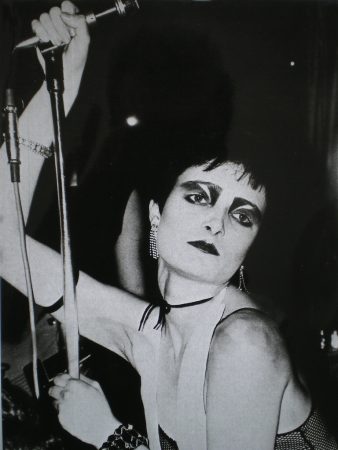
My secret reason for finding punk both comforting and alluring was its yen for absolute moral conflict: when I gazed at grainy photos of dark rooms full of odd-looking people and occasional shiny gleaming things (guitars, mike stands, Siouxsie Sioux’s eyes), I was thrown straight back into a world I was already perfectly familiar with, and happy in. Children’s books are thick with absolute moral conflict, odd-looking people, occasional shiny gleaming things (swords, stars, Lúthien Tinúviel’s eyes).
I loved the idea that somewhere in the world, far away, were people whose “ordinary everyday” shared tone and texture with my utterly personal totally bookish world of moral quest and the innocent but determined defeat of evil, of small bands of small folks against the dark forces. Goblins didn’t exist, but Johnny Rotten did. I might even meet him [12].
However this gang-transfer did not happen immediately. [13] It was preceded, or in fact accompanied, by a failed transfer into a rival virtual community. One established less by reading than by listening; but again one that demanded I gravitate to the real, familiar energy of the imagined, and retreat from the pale grey failure of my immediate surroundings. [14]
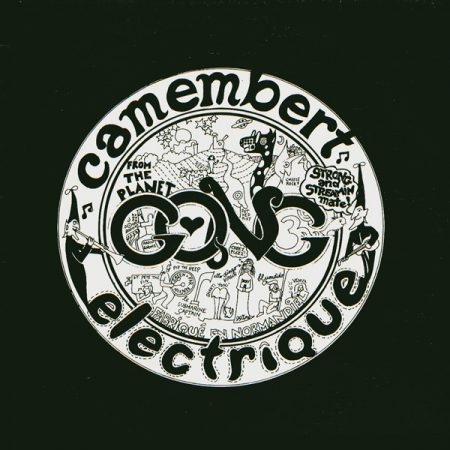
The poll returns that intrigued me most even then were the ones that failed to fall into any pattern, the replies of those without group allegiance, the bands who the rock papers seemed to have little or no [current] attitude towards. Lone votes for Sabbath, Tull, Bethnal [15], Rory Gallagher, the Groundhogs. And beyond this, the eccentric – because so casual and so ill-considered – votes of a guy called Peter, who everyone called Tool. [16] He’d voted for the only three records he knew. He brought them to school, but he didn’t own them; they were his sister Nora’s: In Hearing of by Atomic Rooster, 100 Ton Chicken by Stan Webb’s Chicken Shack, Camembert Electrique by Gong. The first two were very minor BritBluesBoom groups, just as it began shading into Prog Rock (Christine Mcvie, then Christine Perfect, later of Fleetwood Mac, sang for Shack; co-founded by Carl Palmer, Rooster were an offshoot of The Crazy World of Arthur Brown, though Palmer had left for ELP by Hearing-time).
But Gong were completely different. For a while (c. 1971-72) France’s most popular avant-garde free-rock group, they were pluperfect Euro-hippy anarchists, playing disorderly spacerock that would have been jazz-rock if they hadn’t been so out of it. (Indeed, the more time passed, the duller and more jazzrocky Gong became.) They lived in a chateau-commune in rural France (there was a picture on the sleeve: it looked like a shabby mountain farm). They gave themselves cartoon names (sax and fluteplayer Didier Malherbe was Bloomdido Bad de Grasse: the only one I can remember), and there was some elaborate though never-explained mythology involving the moon, Tantric sex, weed, teapots, pixies, and the poet John Donne. Their bossman was an already aging Australian ur-beatnik called Daevid Allen, who had been buddies with minimalist tape-looper Terry Riley and also a founder of Soft Machine. This particular record you could find all over the place in those days: it sold for 99p only, when LPs were £3.99 or £4.99. I didn’t buy it at the time: we just played Pete’s copy (including playing frisbee with it and walking on it).
I never met Pete’s sister Nora. Her taste intrigues me.
With its black-and-white hand-drawn sleeve, handwritten song titles, fuzz of marginal jokes, Camembert Electrique was a fabulous detailed microworld to me: an explosive little 1968 in my own heart. It wasn’t the drug references, which meant nothing to me: it was the sense that this cartoon world was extended and internally consistent (as subsequent exploration proved it wasn’t) [17], that you could leave the beckoning dreary straight world, and make off into this alternative space. I wanted to hang around and do nothing and grow my hair really long and have a funny cartoon name in a Chateau in France. Under the paving stones, the Chateau.
Most of the record was formless, shapeless, draggy wandering, with funny little sound effects (a sort of chuggy clockwork object panned slowly across the stereo-image at one point). Allen couldn’t sing – he kind of spoke ‘poetry’ in a mimsy way. But there was also this one perfectly simple, hypnotic, unforgettable bassline, which I loved then, and love now (everyone loved it who heard it). I gave the record five out of five. No one seemed to understand why. (Even Pete didn’t like it that much. He voted for it because it was his, not because it was good.) I know why, now: I knew that one day I would love and understand as much as I did that bassline all the bits of the record that irritated and puzzled me. I wasn’t ready: but with study this understanding would come.
If people thought this polling project was weird at the time, they never said so. Of course, for years, I thought it was: I never spoke about it, never liked to think about it. It was proof that my rock roots were none too deep, and startlingly inauthentic. [18] The getting of wisdom demands that the mechanism of its attainment be rejected. […]
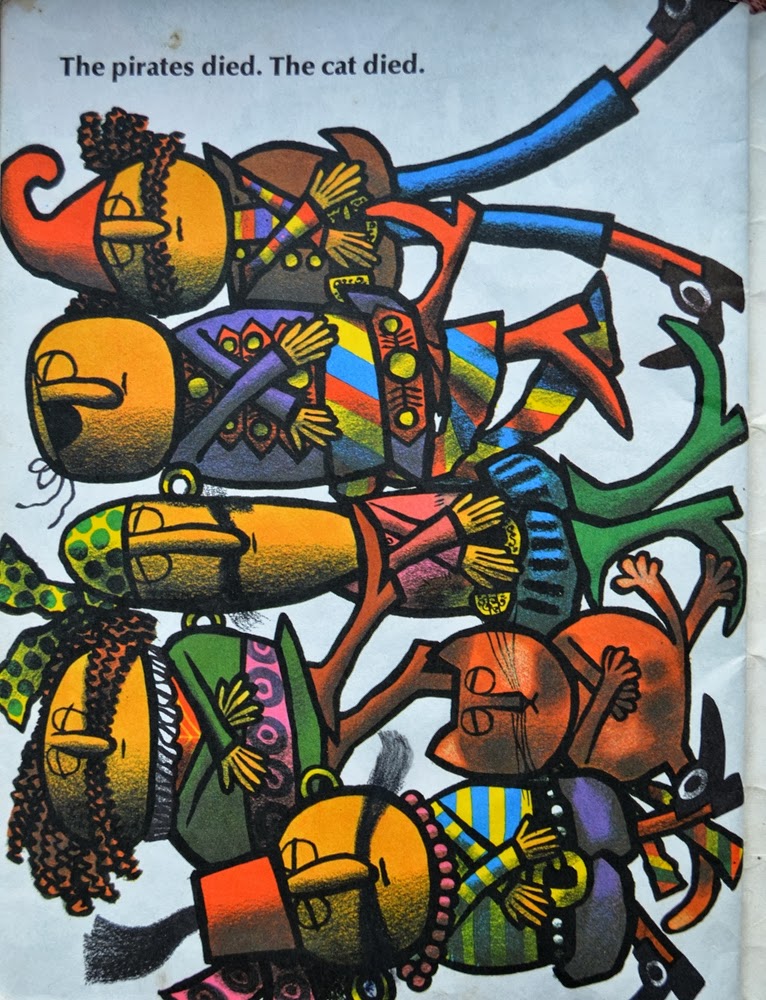
FOOTNOTES:
1: The 10-ish years covered the time from the first LP that mattered to me, though bought by my dad for my mum: Sergeant Pepper. Here’s a post on that.
2: Isolated by geography, not temperament: welcome to the countryside, where your closest schoolfriend lives 10 miles away.
3: This seems an odd thing to say: like they always inatantly bought me a pony and a sportscar and every double album I desired. What I mainly meant was they they didn’t at any point seem to disapprove of my interests and sense of life-direction as a writer. (And for “aren’t” read “weren’t”: mum died in 2005, dad in 2010, and I miss them.)
4: lol does anyone even remember this TV series, once salient and much-discussed? Probably a more exact reference for the thing I’m talking about is The Man Who Fell to Earth — at least people have actually seen it in living memory.
5: There were three editions of the NME Book of Rock: 1975 (Star Books, ed.Nick Logan and Bob Finnis); Feb.1977 (Star, ed.Logan and Bob Woffinden); Nov.1977 (Salamander, large format, ed.Logan and Woffinden). I own the second and third, now in terrible condition (no covers, some outer pages vanished). The late Bob Woffinden had a fascinating and exemplary second act to his career as a rock journalist.
6: Tony graciously agreed to participate in my Birkbeck conference in 2015, on an entertaining panel with Jonathon Green and Mark Pringle about how well or badly mainstream media tackled rock culture in the 1960s.
7: I wish I still had the documentation that went with this poll, not to mention the results, but it went missing long ago. A hundred seems a lot!
8: Those four weeklies in order of my engagement with them:
A: NME every week from August 1977 — I ended up writing for it and only stopped when I angrily quit in 1988 (a story I’ll tell properly another time) .
B: Sounds most weeks 1977-79: I was driven off by reviewers who seemed not to get post-punk, as it wasn’t yet called: mainly Garry Bushell and his quasi-political thuggishness, then still nominally leftwing, but also Dave McCullough’s bad review of the first Raincoats LP (grrrr). McCullough was actually an interesting writer, generally simpatico with things I liked then — The Fall — and I often wonder what became of him.
C: Melody Maker: dipped in for a while in 1977, only very occasionally thereafter. It was regarded as the most grown-up and serious, but to be honest (aged 17) I found it a bit of a chore, and its page design was pretty terrible. Bascially it had a bad punk wars and I largely missed its late 70s reflowering under Richard Williams.
D: Record Mirror: this by contrast I felt at the time was a little young for me and hardly ever looked at, which I now regret.
9: If this essay has a moral, it’s that this kind of identification can be much deeper, and more life-shaping, than the impact of the seemingly more immediate world around you (your school, your town).
10: We were rural or small-town middle-class kids. Not all my friends were middle-class — but the ones that weren’t mostly weren’t at that school.
11: This phrase was from memory, and as a result misquoted in this piece. It’s the final sentence of Simon Frith’s ‘Playing with Real Feeling: Making Sense of Jazz in Britain’ (collected in both Music for Pleasure and Taking Popular Music Seriously). The full passage is worth quoting: “To understand why (and how) the worlds of jazz (and rock) are young men’s worlds we have, for example, to understand what it means to grow up male and middle-class; the understand the urgency to ‘authenticity’ we have to understand the strange fear of being ‘inauthentic’. In this world, American music — black American music — stands for a simple idea: that everything real is happening elsewhere.” I knew this quote (and was alluding to it, even if I got it slightly wrong) because Frank Kogan had explored it in an earlier issue of Why Music Sucks. Versions of this discussion can be found in his book Real Punks Don’t Wear Black: Music Writing by Frank Kogan, in the three-page essay ‘The Trouble with the Sociology of Pop’ but also at the start of the epic 47-page (nearing 30,000-word) essay-memoir ‘Roger Williams in America / The What Thing’. Where too many present-day music-writers jump to scorn the notion of authenticity (as risible goal and reliable index of bad music), Kogan explores how the fear could be social and artistically useful and fruitful, and hence not “strange” all. There’s a reason we can’t shed it as a topic, and a reason it seems constantly to return in new form (see also footnote 18).
12: So far I never met him.

13: Since age 10 I had been a member on the distant edges of the Puffin Club. If I now began scouring NME and Sounds for details of how punk worked as group I belonged to, I was simply switching my habit away from Puffin Post, a magazine run by a children’s publisher, a monthly full of interviews and stories and competitions you could enter, and club picnics for members (which never took place in Shropshire). There was an extensive reviews section, in which insider kids got to detail in print the upcoming paperbacks they’d been given to enthuse about. I very badly wanted to be one of these insiders, and tell the world why a book I liked was good.
14: “pale grey failure…” With hindsight I’m a bit out of sympathy with this back-projecting sorry-for-myself flourish. I didn’t feel a failure as a teenager at all — I was excited and stubborn and quietly driven — and now I distrust this attempt at self-deprecation. I want to say that the late 90s is when I most felt a failure: certainly much more than the mid-70s. Probably I’ll change my mind about this too though.
15: Bethnal were a low-tier, now-forgotten pop-punk band, featuring one George Csapo on vocals and violin. Pete Townshend-approved, they made two LPs, Dangerous Times and Crash Landing. The voter in my poll also played violin.
16: This sounds mean, and how I continued it in the original makes it worse: “(because he was one”). In fact he was a sweet friendly somewhat dozy kid whose main defence mechanism was playing the clown. He was teased ruthlessly and seemed not to mind. I hope he actually genuinely didn’t mind.
17: In other words the kind of conceptual continuity that pulls people into Zappa’s world, or Pedro Bell’s cartoons on the Parliament and Funkadelic sleeves — though I never warmed to Zappaworld when I later encountered it.
18: “Startlingly inauthentic”. But startling to who? Inauthentic how? Looking back — halfway across my writing life, I guess — it’s maybe telling that this is the phrase I wave uneasily: “lol authenticity, lol young me?” What exactly is bundled up into it? What was the “unrealness” of musical and/or writerly understanding that I was claiming to find about my early anxious self, in this late-90s stab at describing my mid-80s anxieties about my 70s (teenage) self.
To wander off into a minefield of thinking aloud, it’s two things: the extent of my knowledge, and the mode of its arrival — as in, do writers ever actually understand anyone else?
(A): Was I the kind of obsessive record-collecting scholar I was surrounded by in the mid-80s? Well, no (impostor syndrome klaxon): I knew a lot, almost all gained by reading.
(B): how was this way into and what it means not just entirely at odds with the world of the cap-p Proper pop or rock or soul or jazz fan (black or white). Who had surely somehow directly absorbed the relevant language from their own local community or anyway their older siblings, or else from some bewitched engagement with “the music itself” on radio or (sometimes) TV? Or via obsessive gathering of 45s and 33s (despite 33s at this juncture being somewhat deprecated) 33?
In fact, of course (C): most strong music writers come to writing by reading. By my late teens something about it — the access it gave to something, something I still haven’t quite worked out — it had evolved into a passion, a commitment I couldn’t and didn’t sidestep. Aged 20 or so, it seemed all too belated, but being slow to get things (or to accept things?) isn’t something I’m faking, that’s for sure. In small doses with big gaps and often poor access, I’ve been listening to pop all my life.
As a teen, I wanted to know what it was about music that bound my acquaintances into groups, and could it work for me? In retrospect running a poll seems to me like a pretty smart way of tackling the not-knowing-much aspect — and as a one-off also not the worst stab at critical practice. Evidence if any were needed that being some sort of analyst of matters pop-cultural was already baked in — that it was actually what I was always meant to be. If I felt I was the wrong kind of person from the wrong kind of place back then, I stopped thinking this long ago: this is just who I am.
(D): The key for me here and now is the degree to which music-listening (and collecting and whatever other interaction is involved) bumps sideways into a world shaped by words and refashions it. A lot, a little? Does it challenge it or firm it up? Thee days I prefer always to argue for the former — the disjunction is what a critic shd be hunting for — but the latter remains common (because it seems more normal?) and this (for non-writers?) functions as “the real”. Of course Kogan’s argument here would be the value of the feeling of fakeness — the worry that as a rockwriter I’m not a real rockwriter — is that wrestling with it is what helps drive you towards superior work.
How real is “superior work” though?
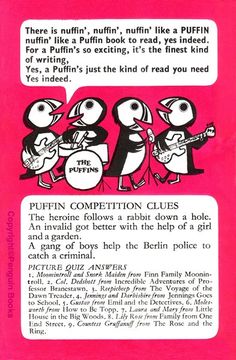
No amount of politics or philosophy or theory or backstory or practical musical experience — knowing how to play the changes for ‘Giant Step’s, knowing what they “mean” — are going to resolve the issue of the Correctness the Mix you hit on realness (the genuine emotional or intellectual effects) versus imagined cosplay potential, in yr stance or method or self-presentation. After all punk really did exist, albeit not as I hoped, and ditto Gong and the puffineers. And they’d gone by the time I arrived on any relevant scene. But my dream version stuck around long after, affecting all kinds of other stuff. The abiding panic that you’re getting the mix WRONG is what helps the writer to be smarter or better or deeper or more _ or more _
(Puffin Club artwork and lettering is largely and very memorably by the late Jill MacDonald… )
[If you like this post, please support my PATREON which will help me write more! Also let other people know that you think might enjoy it… ]
]]>lennon’s REVOLUTIONS 50 years on"]]>
“The blues are beautiful because it’s simpler and because it’s real. It’s not perverted or thought about: It’s not a concept, it is a chair; not a design for a chair but the first chair. The chair is for sitting on, not for looking at or being appreciated. You sit on that music.” (John Lennon to Jann Wenner, 21 January 1971)
 When Jack Hutton quit Melody Maker in 1970, to set up what became Sounds, he told Richard Williams, who stayed behind, that it would be a “left-wing Melody Maker”. Hutton’s no longer with us, so I suppose if I get the chance I’ll have to ask Williams one day what exactly was meant by “left-wing” here. My guess — based on what Sounds actually turned out like — is that Hutton meant the new paper would be centred on rock. Even though both papers covered rock and pop and everything else, MM’s moral centre was arguably still jazz at that point. Even though the jazz fan-base always had a left-wing in the UK, with old-school communists solid among its supporters and chroniclers, it was a music (or so many seemed to feel) whose time was past. Rock was new and rock was now, the very voice of youth — but beyond this, rock had had, for a while by then, a tangled relationship with politics, radical left politics in particular.
This tangle reached to the very top of the charts. In 1968, as the tremors spread from the May insurrection in Paris — when everything turned upside down, and pop became art and vice versa — three versions of the Beatles song ‘Revolution’ were recorded. The first and last (the long musique concrète Bonzo-skit sound poem ‘Revolution #9’) were on the White Album, which came out in November. The re-recorded version of the first came out a little earlier, in August, as the B-side of ‘Hey Jude’. Perfect for exploring street politics as a fact and a possibility, and post-split the song was still being picked over three years on, in editor Jann Wenner’s gargantuan two-part interview with John Lennon for Rolling Stone (some 36,000 words long in toto) and in Tariq Ali’s Red Mole. The former was exactly what “the Stone” had been devised to do. The existence of the latter, a serious-minded conference with actual frontline radical activists (Robin Blackburn joining Ali for the occasion) is more surprising, an index at the very least of how wild and mixed up the times actually were.
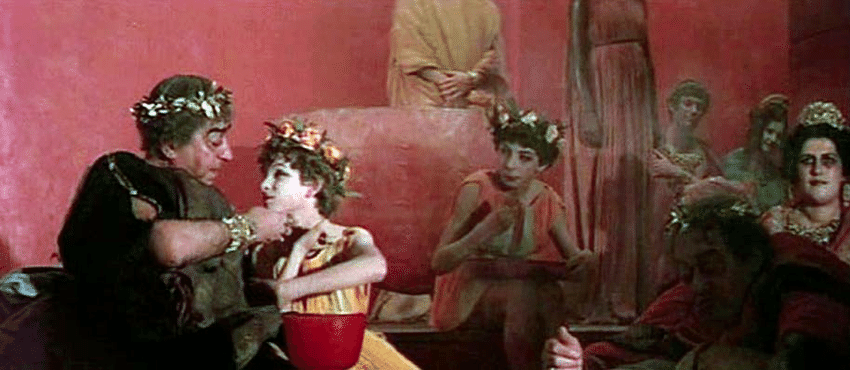
Wenner always saw his role as chief courtier to the big new voices in music, less cautious investigator than loyal amplifier : which means Lennon is nowhere pushed or tested. It also means he’s comfortable: he unwinds deep into confessional mode, hinting at the worst of the group’s untold stories. Clean-cut to all the world, the real Beatles on the rise were “bastards”, he says — “you can’t be anything else in such a pressurised situation” — and the tours were “like the Fellini film Satyricon”, orgies and “junk and whores and who-the-fuck-knows-what…”
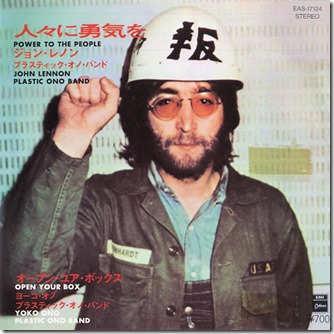
This is no longer virgin terrain, of course. Freighted with his huge authority for rock-readers at this complicated, confusing moment, swathes of this much-cited interview have simply entered pop history’s DNA. “The dream is over,” he sang on John Lennon/Plastic Ono Band, his disenchantment with the counterculture at large growing as much anything out of his own personal exhaustion, and how we all feel when a relationship fails and a fellowship breaks. With Rolling Stone at the centre of how the music was started to understand itself critically and politically, Lennon’s many stances in this conversation were a deep permission as well a disenchanted retrenchment. Pre-Beatles rock and roll is the truest, best music, he now appeared to insist, and if we followed his charismatic lead, we’d be shunning McCartneyish Pepperish pop artifice on one side, proto-prog jazz-muso virtuosity on the other, ideally so as to re-enter a space of of undeluded unadorned therapeutic naturalism.
The most immediately startling thing about the Red Mole piece, from today’s perspective, is that it happened at all: startling that Lennon agreed to it, even more startling that the revolutionary organ of the International Marxist Group — a Trotskyist splinter maybe 1,000 strong at its peak — decided so publicly to engage with the thoughts of a colossally well off former frontman of a recently dissolved boyband-stroke-chartband. It’s a clue to how tiny and village-like the London scene still was, of course (despite Lennon’s recent relocation to New York) — but it’s also a clue to how much music and changes in the music mattered to the underground then, political or otherwise. Quotes from Beatles, Stones and Dylan songs routinely supplied headlines and speed-read slogans: this was a lingua franca and a badge of identity; not just a shared backdrop but a speed-read signal where you thought things were at, and the ways you belonged — or didn’t — to any relevant micro-constituency.
The Red Mole encounter began in late 1968 with anti-war activist John Hoyland’s disgruntled Beatles fan-letter (scroll down) to Black Dwarf (the paper Ali had helmed before Mole, which is to say before a micro-sectarian split in the relevant editorial). As a Beatles B-side. ‘Revolution’ was sour and suspicious and not at all in step with the movement: “if you’re talking about destruction/minds that hate/Chairman Mao… count me OUT!” Fanboy Hoyland was dismayed: a former idol was misperforming, the song closer to Mrs Dale’s Diary than to the Rolling Stones [Footnote 1]. Hitching from Keele to interview Lennon a few weeks later, students Maurice Hindle and Daniel Wiles show Lennon this letter, which clearly nettles him. He reads and rereads it more than once, shows it crossly to Ono, and in early 1969, he sends an angry reply (scroll down)…
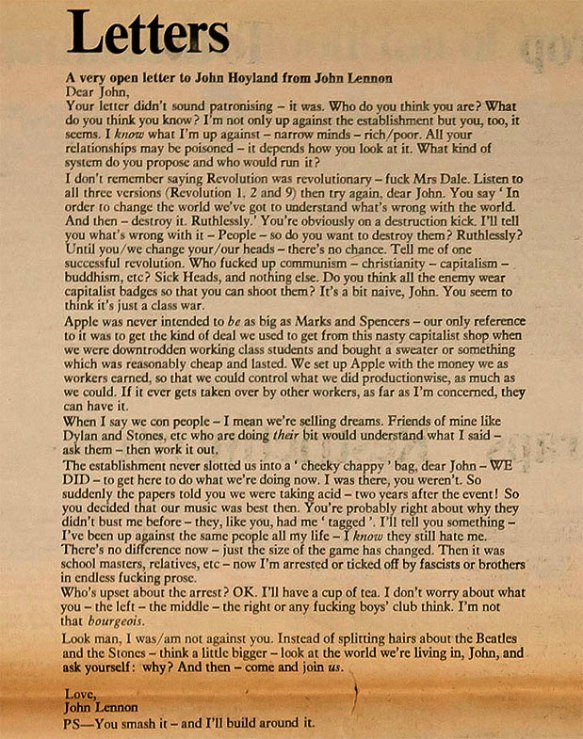
That set the stage: in the wake of the final two-year Beatles meltdown and then the Wenner juggernaut — which is cited in the opening Red Mole question — the showdown. No fireworks, though: Lennon handwaves his way around current world politics unchallenged (Ali earnestly corrects him on Yugoslavia and Tito, but tolerates his apparent renewed enthusiasm for Mao’s Cultural Revolution). As for shifts and values in music in recent years, Blackburn in particular pads gamely through the critical nostra of the day, and – as the seasoned professional in this area — Lennon doesn’t challenge him. Much of it is commonplace stuff, but — in among all the busted myths, unmoored generalisations, snap judgments, settled scores and dick moves — these two conversations platform a wounded musician busy quilting a revised aesthetic from the rubble.
How to sum it up? Pop is bad and you should feel bad: let’s get naked and rock and roll! Naked emotionally, naked intellectually and politically, naked, well, yes, kit off for the LP sleeves lads, and fuck the squares if this bothers them… Rock and roll, especially black rock and roll, speaks urgently to the white working classes precisely because it comes from a soulful place of unrepressed, undiluted honesty and self-knowledge free of all possible bullshit. We have forgotten to know ourselves and act accordingly; this music is revolutionary for teaching us to turn once more to both — and this is happening and that’s the way forward.
(Narrator’s voice: it was not and it was not.)
And yes, it’s very easy to mock all this now! And to read it as early mass-cultural steps — disguised as urgent critical recalibration — down the long road to centrist dadrock and the present-day so-called authentocrat hegemony blah blah. Blackburn’s and Ali’s credulity seems a bit of a shocker, from our wised-up times — but Amiri Baraka had not yet published his rueful tales of the Black Arts Movement, and the contradictions within cultural nationalism were still confusedly working themselves out in 1971. Black Power was still a concept that amazed and enthused people, white and black — and of course “Black is beautiful” remains a counterstrike today against disabling self-hatreds and self-erasures.
The excitement of the encounter with rock and roll had begun with the shock of realisation that you can learn as much or more from people far outside your own neighbourhoods: that cultures not your own are not by dint of this lesser than your own — a valuable discovery — and that it’s good to choose to be encouraged to enjoy life more and to be a better deeper person in your understanding and actions. But the inspiration had gradually congealed into a habit and even a religion, of the projection of the desired angelic image (of pleasure and depth and goodness) onto these same cultural others. It’s no fun at all to be trapped at the other end of this projection— made a cultural-political saviour without being asked — and doubly grim when the projection insists that being your natural self is the only acceptable forward-looking politics. This was the high era of the method-acting delusion, in which — unless truth comes from deep within your own personal pain— everything is just lies and fantasy.
Some of the time, Lennon knew better. And so, as long-time operators in the flyspeck viper-pit of far left politics, did Ali and Blackburn now and then. They knew that performative ambiguities are essential to coalition-making and keeping different interest groups onside together. But 60s revolutionary socialism was still very much under the moral spell of Sartre’s existentialism, a philosophy never especially smart about the value of drama and of fiction beyond simple agit-prop. Besides, British class identification in the borderlands between lower and middle class is the murkiest of kaleidoscopes at the best of time, and neither Blackburn nor Ali was well placed to gauge this, let alone push back [2]. When Lennon titles a song ‘Working Class Hero’ (and despite things he casually claims in both interviews), it’s as much angry disavowal as self-declaration, and in any case it’s ambiguous: is he a hero who’s working class himself, or a pop-star hero to the working class? (Ans acc.him = combination neither and both…)
Either way — despite his unimaginable wealth — it’s allowed to stand both times. And yet there’s so much here to ask hard questions about. As Wenner allows him to demonstrate, letting him talk on at such length without interruption, he’s anything but a natural soulful authentic angel undivided from himself and free of bullshit, but rather a torn and hurting mess of complexity, contradiction, evasive cunning, irony, play-acting and, well, self-misdirection. Free to explain himself, to present a self-portrait, he’s at once bolshy and timid, arrogant and bewildered, confident in his snap-summaries yet still beguiled by curiosity — and, like every bright pop-star, unendingly caught between the will to rile and the will to please (including pleasing revolutionaries who should be quicker to spot this).
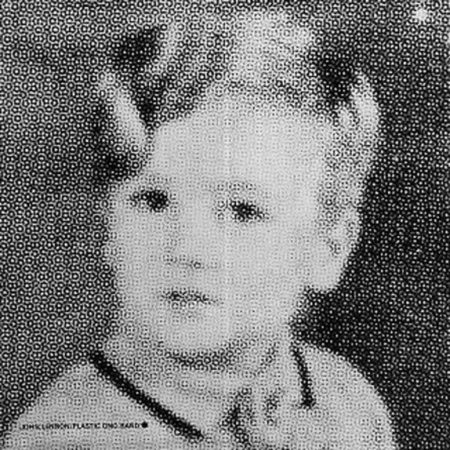 And stripped of all this, he might have been happier — except he’d also be unknown, not to mention poor. In an era when more people of working class background were entering tertiary education than ever, the Beatles counter-narrative was by contrast one of ferocious self-education and mastered expertise, very much an alternative and anti-official model for intellectual self-mobilisation. His dismissal of almost the entire trajectory as myth — we were best on-stage, he says, before we ever came into the studio — is also a kind of a disavowal of any of this possibility. And — as upper middleclass college kids themselves —his interlocutors seem to embrace it, though it’s surely strangely antipathetic to the politics of possibility they want him to sign on to, to manifest and broadcast. Again — profoundly unsure of what they want from the exchange — they decline to challenge him, to follow through where he’s half-pointing.
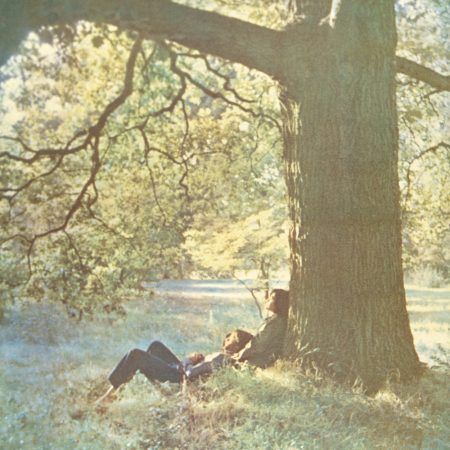 The Lennon/Ono LP ends, or nearly ends [3] with a list of things he no longer believes in — Jesus, Buddha, Elvis, Beatles — and the plain declaration: “I believe in me, Yoko and me, and that’s reality.” It’s like coming home, he tells Wenner: “I’ll never change much from this.” The leisure of space and time to become uncomplicatedly yourself, to feel and and believe in and know home this way, is afforded very few people — and this, if you like, is how a mark of how far his stratospheric wealth has taken him from his birth-town, his roots, his class. Meeting Yoko as the breakthrough key to self-discovery in this best of matching companionships — of course it’s a tell that she’ was from the other side of the world, the other side of the arts, from a comfortable Japanese family, well travelled, well schooled. The many claims don’t add up — and neither interview presses him on any of this.
Epilogue: An LP a year until 1975, and his collection of rock and roll standards, then a five-year sabbatical — long aeons in 70s pop time — before Lennon returned to recording in 1980. By now the conversation that began when Sounds split off from Melody Maker in 1970 had changed deeply (not least as a consequence of these exchanges). There’d been wide revolt against the the leisured, over-wealthy aristocrat entertainers who’d shaped the recent past and seemed to clog up the present: punk rock, the revolt was called. Radical politics still had a toe-hold in the pop press — but the critical factions closest to it mostly took the line rock is now bad and you should feel bad. The lingua franca was increasingly contested. Lennon was still welcome, unconfronted, in the pages of Rolling Stone, but his long absence from the UK conversation ensured few was overawed by his re-emergence. In the post-punk and new pop years, almost everything he had seemed in the early 70s to stand for would be questioned.
And then of course in December 1980 he was shot dead, by someone deep-lost in the labyrinth of a megastar’s unkeepable promises. Suddenly changeless in death and embalmed in grief-stricken nostalgia, he was removed from all useful reassessment, as everything round him went cold and congealed. Home, he’d said, but just as he set out once more, he was stopped. There are clues where he might have gone; how he might have evolved. His recording with Bowie, for instance — because he too was always a kind of proto-glam quick-change artist, forever negotiating the obstacle course his own throwaway comments had strewn before him. As for the blues, its potency was never of course a function of its unadorned primitive simplicity. Quite the opposite: it always involved reflection, and its energy and value came from the sheer layered density of all competing histories hurtling through it.
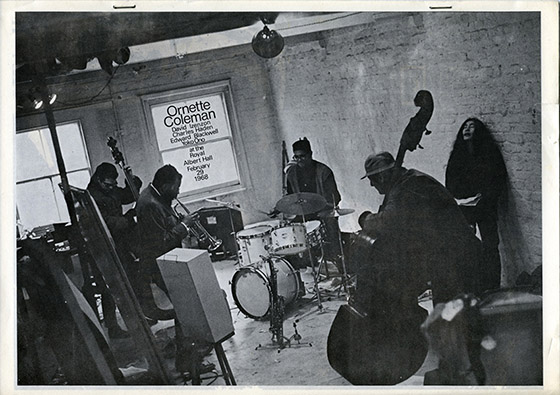 And of course there was the work Yoko had made with him in the late 60s, the be-ins and the bed-ins and the bag-ins, these high-visibility celebrity stunts whose purpose was to import go-slow bafflement and blockage into the flow of mass-media communication: the spectacle, but discursively on strike. The most heartening surprise twist in the Wenner conversation — in both conversations — is his belief in Yoko as artist-musician, his commitment to the idea that everyone should take proper note of her. Besides Warhol, that ineffable blank, he celebrates Fluxus and nods to Ornette Coleman as two unimpeachable stages in Yoko’s past, her rock and roll.
Warhol aside, the prankish avant garde before 1968 had seemed an individualised, out-of-reach luxury, supported by and therefore aimed at the wealthy and the over-educated. Pre-Beatles rock and roll is the truest, best music, he may have been arguing — but to say so and to foreground her, he has also to argue that she’s rock and roll — which complicates and expands the definition, to say the least. By refashioning the story to include her — even in a sense to re-begin with her — Lennon was quietly re-weaponising his art-school inventiveness and tossing it out into the wider world, the widest world thinkable, in topsyturvied form. He opened the doors of imagination and possibility even in the pop music trade press: no intellectual luxury is too good for the working class… this would after all be a pretty good motto for the toughest strands of post-punk…
Footnotes 1: It’s weird to recall how much of a free pass the Stones still had with the most rigorous 68-ers. Though of course they were carefully solicitous of this touchy part of the market: the song ‘Street Fighting Man’, about the May riots in Paris, was widely enough thought to refer to Tariq Ali himself that he brazenly named his memoirs for it.
2: Ali is from the higher-born Pakistani aristocracy, and extremely engaging and perceptive about it (subscription needed).
3: Actual closing song: 52 seconds of ‘My Mummy’s Dead’ sung down a telephone to a nursery-rhyme style tune (which isn’t ‘Three Blind Mice’ even though everyone for some reason says it is).
If you like this post, please support my PATREON which will help me write more! Also let other people know that you think might enjoy it…
]]>(I wrote this up to place somewhere grown-up and get some traction, but no joy for one reason or another — the Camelot theme not entirely inapposite, esp.if you’ve read The Once and Future King. Kickstarter is still and closes Wednesday 27 July at 4.26pm UK time.)
We have an idea of the UK music press in the 70s — a notion of great names engaged in earthy debate about rock and pop, of fearless mockery of foolish or pretentious stars, of a generation of self-taught giants walking the earth in those golden black-and-white days. We can list names: Murray and Kent, Parsons and Burchill, Penman and Morley, Danny Baker, Garry Bushell, Jon Savage… With satisfaction (or amusement), we note that some of them have clambered up to the sustainably rewarded end of public chatter — which if nothing else suggests that their first professional gigs must have been an effective proving ground.
 It’s a picture distorted with hindsight, though. At the time, it was for the most part a much wider, quieter, almost invisible world. A cluster of titles that you engaged with as an intense subcultural doorway away from the routines of life: yes, there’d be a pop-star on the cover, major or rising or weird, but inside… well, inside you found all kinds of things. It reached a lot of people — sometimes as many as a million a week — and, unlike official culture, it didn’t shut them out. As writer-agitator and one-time label boss Liz Naylor puts it on one of the promo vids, “It was very difficult to access information in the 70s! The music press was my education…”
 The four weeklies were NME, Melody Maker, Sounds and Record Mirror. Echoes (sometimes Black Echoes) was a bi-weekly for black music — especially good on soul and reggae. There were several monthlies: Zigzag and Let It Rock and the superb, short-lived, much-lamented Street Life: precursors of Q or Mojo, you could say, but much much more than just this. Because — aside from the endless underfelt of free and alt.listings magazines — the music press had been where the spirit of the underground press had ended up: the brief strange countercultural spark of Oz, IT, Frendz, Ink, when late 60s youth had revolted against war and the technocracy, against racism, against timidity and prudishness, and for unfettered (yes chaotic, yes naive) expression. Writers and editors and designers — some extremely talented, but without a hope of rising far in the then-mainstream media — had crossed over out of this fervid, para-political subculture into the music press, partly because rock was the soundtrack of the counterculture, so that to make sense of rock you had to grasp the language and ideals and utopias of this teenage revolt, if only to wrangle with them, to rescue the good from the bad. And as a consequence this was a world full of curiosity about comics and cult films, liminal and radical politics, about musics and activities of communities and undergrounds from all over the world, America, the Caribbean, Europe, Africa — about everything in the world you couldn’t routinely access, which television skimped and normal newspapers didn’t remotely understand.
 Last year I ran a conference at Birkbeck, to explore some of this crossover and how it turned out, called Underground Overground: The Changing Politics of UK Music-Writing 1968-85 (scroll down for more). This year I’m running a kickstarter for a book called A Hidden Landscape Once a Week (subtitle “How UK music-writing became a space for unruly curiosity, in the words of those who made it happen”), which will anthologise extracts from last year’s panels with critical essays exploring issues raised — including the day-to-day practical backroom aspect of putting such a paper together. Panellists and contributors include Charles Shaar Murray, Val Wilmer, Richard Williams, Paul Gilroy, Paul Morley, Simon Frith, David Toop, Cynthia Rose and Penny Reel — people from a wide variety of backgrounds and perspectives and obsessions, which bohemian mix was key to the sensibility in question; “a conversation,” to quote the kickstarter blurb, “that musician, writer and reading fan all joined… a cheerful collective wrangling that echoes the crackles of dissent and tension in the songs it explores: the disputatiousness as well as the joy.” Alongside the hype and silliness, there was always a care and a fascination with possibility, with portals into all manner of other spaces hinted at in the music, and beyond it. For a decade and more, in a wider culture of stifled parochialism, this was a world of serendipity and surprise encounter. This will be a book that explores this world’s values and flaws, how it was established and maintained, and where its echoes can be found today — or rebuilt, in a very different, noisier, information-saturated context.
[ADDING: the “warring flaws” sub-head wasn’t on the piece I submitted — it didn’t have a heading at all — and only popped into my mind as I was fiddling with a framing to go here. What exactly do I mean by it (since it probably changes the tone and even the meaning of what follows)? Something like this: that what I think became dispersed — by all kinds of pressures, some extremely hard to fight — was a cast of mind in editing, which was, for a while, able to corral the impatience and rivalry and cattiness and worse that you always find among talented writers, into something unexpectedly collectively rich and generous. The mystery of where this came from — whose the design was, if design there was, and what the accident was, if it was accident — is one of the mysteries that brings me back to the subject. The Arthurian image implies that its virtues and its flaws are intextricably tangled: but I don’t know that this is actually so… ]
]]> Quite apart from anything else, the past — even the very recent past, maybe especially the very recent present — is a mass of detail that’s hard to take in and process (not least because you have to push away the immediate present to do so). My conference produced a little over 12 hours of conversation in one large (often quite hot, by the end quite airless) room, and the discussion has continued elsewhere, in nearby pubs or bars after the two days of debates; also here at ilm, here at Freaky Trigger, and here and here on tumblr. Resonance 104.4FM broadcast it nearly in full on 25 May and have put the eight extracts up on their mixcloud site here (I don’t know how long for).
If I say the commentaries so far have been partial, I mean three things. First, that several of the commentators (Tom Ewing and Hazel Southwell in particular) are very good friends, co-conspirators even; they’re partial to me! Second, that with a couple of exceptions, almost no one commenting attended the whole thing: I actually agree with plenty Laura Snapes says, but she was only in attendance for her own session; purely as a description her account can only reflect that final 100 or so minutes (and the fact that she definitely had the pointy end of the Q&A, in the jaded final minutes of a long tiring day). And third, so much seemed to be touched on over the two days that wasn’t pursued, as is the nature of these events; certainly it’s going to take me a long time to dig down into what I actually now feel, less about the conference than about the era it claimed to explore, what this era meant and means, and why (or indeed if) it still matters at all. On the whole, I’m enormously pleased with how it turned out, just because I think such a lot has been gathered together and set down for future scholars and scoundrels to play with. (Transcripts of the panels are to be gathered into a book along with further memoir and commentary by those who attended and those who couldn’t: this is the plan, anyway. Though I’m taking a bit of a break first.)
Here’s an extract from the report I wrote for Birkbeck:
Underground/Overground:
The Changing Politics of UK Music-Writing 1968-85
This was a two-day symposium (15-16 May) at London’s Birkbeck Institute for the Humanities, consisting of panel discussions and Q&As. Run by Mark Sinker, former editor of The Wire, it brought together writers, editors and readers of the underground and trade music presses of the 1970s and 80s, to explore their own experiences academics and other media commentators. The first day looked at the period when UK rockwriting emerged out of the conflict between a rising generation’s counterculture and the embattled establishment in the late 60s and early 70s. Through the witness testimony of participants, and the overview of historians of the era, panels examined the evolution of a critical outsider voice in the UK, as inflected through the rock papers between these dates. We learned what the underground press felt like to write for, how the mainstream press responded to rock music and its social penumbra, and how the trade press reached out for some of these writers — notably Charles Shaar Murray, who had written for the notorious schoolkids issue of Oz as a schoolkid — and what it was like moving over to the trade press. We heard from those in the editorial backroom about what it felt like being on a weekly responding to stories in pop and politics, how decisions were made and what the pressures were: Cynthia Rose noted that this was a time when striking miners’ wives from Kent came to the NME office to discuss stories run on them.
On day two, we heard more from voices outside these offices and these times, as a kind of counterpoint to the more canonic stance perhaps established on the first day. Val Wilmer, a veteran of the music papers in the 60s, recounted what it was like as a woman — in the very male milieu of jazz writing— bringing back stories from the radical black underground. There was a panel exploring punk’s often difficult relationship to the underground that helped birth it, and another on those constituencies not so well served by the music papers at this time, looking at black music and dance music especially. Finally a somewhat turbulent panel attempted to answer the tricky question of legacy — how much does this history help or even affect writers today?
In the course of the two days, we heard from well known voices but also from people who have not often had the chance to enlarge on their perspective. An enormous amount was touched on that will be of interest to scholars in various fields, from popular music and media studies to sociology and political aesthetics. Some myths were exploded, others perhaps further entrenched.

One thing I always hoped to do as an editor — and it turns out being a conference runner is not dissimilar, in its joys as well as its frustrations — is to bring voices together that didn’t normally get converse in the same space: as at The Wire in the early 90s for a couple of years, so at Birkbeck in mid-May 2015 for a couple of days. In both cases, I was especially keen — as discussed in this earlier post — that the past and the present creatively encounter one another, perhaps on slightly different terms than they do ordinarily, in music-writing or anywhere else. So as well on critical writing on the various contemporary streams, rock and pop and soul and rap and dance and the electronic avant-garde, blah blah blah, I following my predecessor Richard Cook in deliberately encouraging contributions from the best voices from the old guard, voices talking about (at that point) some 70 years of jazz, and some nine centuries of composed music.
Did I succeed? At the time I thought no: I felt that this particular exchange, between the best of the present and the best of the past, was still a dialogue of the deaf. Few in the various territories I was yoking together seemed at that time curious enough to explore the interests of rivals sympathetically or insightfully. And of course in practice The Wire had a super-tiny budget, and our bat-signal was primarily attended to by those with nowhere else to go when they wrote on x or y, the high quality of their commentary notwithstanding. Writers who are experts in their own specific (sometimes small and embattled) fields tend to hunker down and play defence when they encounter enthusiasts for very different fields and tendencies and perspectives.
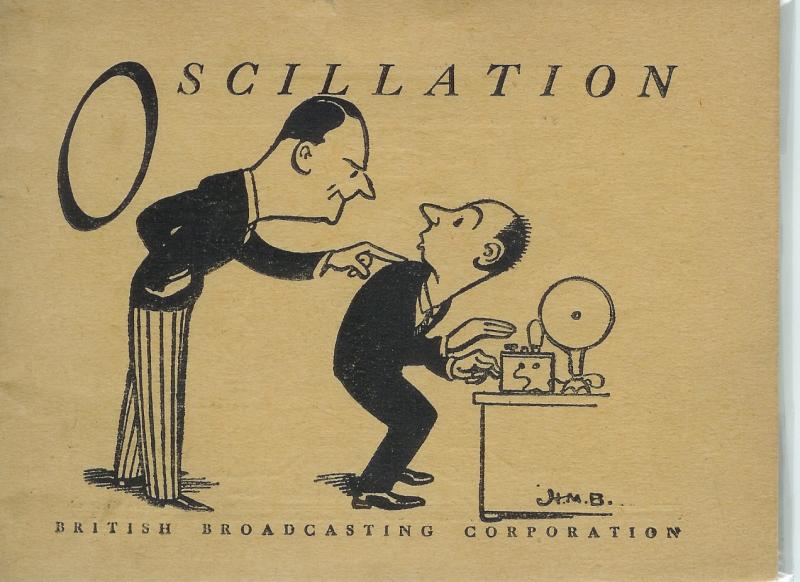
Then again — for this or other reasons — I wasn’t editor for very long. Because the ways to combine the perspectives, or use them creatively against one another, are generally worked out by readers, not least when or if they in turn become writers a few years down the line. An editor’s job is ultimately — in various different ways — to be a kind of idealised reader. And one element of this ideal is the plain fact that readers can enjoy a piece by one writer, and get a lot from — then turn the page and do the same with the first writer’s mortal scornful foe. From the thread discussion that hangs from Tom’s FT review, a theme emerges that I absolutely recognise, summed up by a useful word that hadn’t occurred to me: “oscillation”. Just in the territory the conference covers (but also in my conception of the role of The Wire in the early 90s), there seem to be a proliferation of essential oscillations between this or that or the other opposed cultural ethos*. Not just the way rock rubs against jazz on one side and pop on the other, and punk likewise; not just (as Frank Kogan notes on the FT comments thread) the way critical journalism rubs against investigative journalism, or the way that both rub against history; not just my overall theme of underground and overground, and how inside track and outside pressure work against one another; but the ancient uneasy dances of music with noise, and of order with desire; and of course of age with youth… If “1968-85” is my shorthand for the era of the self-consciously all-encompassing ‘outsider’ magazine [adding: in the UK] — “1968-94” only if you include Richard’s and my time at The Wire — then this is the era when technology and happenstance combined to fashion a clustered territory where readers were encouraged to enjoy and think about conflicting things; to move backwards and forwards between stances and traditions, in and out of close-read trust as they turned pages.
The potential of this world arose from the richness of this dividedness: and the refusal of any of the divisions to map simply onto the economic or racial or gender seperations and hierarchies that structure the larger world. And underneath — or above? — all these is the refusal of the not-quite division of music from the spoken or written world to settle into anything easily summarised, whatever the fashionable pressures of niche-marketing at target demographics. On one hand, all the splintered and shifting currents of music present a map of the real in its infolded complexity; on the other, there’s no music that doesn’t also manifest as a rhetoric of potential utopian togetherness: on one hand, there’s just the fact of the unpredictable constituent shape of any gathered crowd at any show; on the other, the potentially mutable readability of music itself, its last-instance combination of concrete sensuous quiddity and, well, untranslateability. We may occasionally agree what the words of a song mean, but all we can actually agree we agree on in the bits of music that aren’t words (i.e. re the meaning of this harmony, that chord change, this blue note, that grace note, this fill, that grunt…) is that we likely don’t agree. That’s the point: we’re gathered here together in part because we like that we won’t read it the same, and that’s the fun and the risk.
(Unlikely and probably unsustainable analogy: the Bible shared in a shared language you mostly didn’t understand enabled religious unity; however — and Lollardry notwithstanding — the Bible translated into a shared language you DID understand meant a splintering into warring sects…)
The panel I was secretly most pleased to have convened — because it dug into the kinds of backroom work that people who never worked in print-age newspaper or magazine offices rarely understand, however closely they’ve read the output — was the final one on Friday, which Tom ran: The encroachment of professionalisation on a generational playpen — What were the pressures in a music paper’s editorial office, and what was the potential? Half-joking about the working conditions, Cynthia Rose used the term “plantation journalism”: the papers themselves were really make a LOT of money, but little of it reached the editors and stringers, hired to deliver a Stakhanovite output day after day (these were cheaper times to live, for sure, but there was still no margin to put by even a penny of every pound you earned). Tom reaches for a rather different metaphor: “… [T]he sense of the work on an underground or weekly mag – the circus of sheer effort involved in bringing the bastard to land each week, that was grand to hear about, like a hundred years ago you might have heard men talk about life on a whaler…” This was a small, shared world, baffling and perhaps worse to those who come long after, beleaguered by surging pressures but united by task into intense group loyalty, its reward mainly a very local prestige, with (lurking at once just over the horizon but also, unmentionable, within the crowded quarters) the terrific Moby-Dick shaped leviathan of, well, what, exactly? The implicit politics of the craft of this long-vanished music-writing worldlet?
There are plenty of other very smart things that could be quoted in that thread. But this is me writing, so right now instead I’m going to quote myself, because I think this is relevant: “We live in a time of extremes of proximity, not just between cultural blocs formerly more safely distanced (or so it seemed, in the metropole), but also between present and strong representation of elements of the past […]: I think negotiating these proximities has become a *lot* more perilous, but we actually do have to negotiate this situation (and not just wish it away as a symptom); which inevitably means become expert in far more things than we perhaps formerly believed we signed up for.” The internet has collapsed distances, and not just between the many militant faiths and political stances as they exist in the once-wide world today: we are more than ever, every day, hard up against idealised echoes of the past, and more than this echoes of various rival idealised pasts, making very strong demands on us. We castigate those who wish to return us to such-as-such a point in the past — arguing (generally correctly) that they have no strong sense of what it was actually like — and then we turn round and lament that such-and-such an organisation or institution is not what it was, and will only return to relevance when it rediscovers and reanimates its earlier principles and purpose. At which moment, others naturally castigate us. In other words, how we address and draw from the past is as live and tricky an issue as it’s ever been: even “where’s that jetpack I was promised!?” is an appeal to a past mode of futurism. As time passes, revolutionary purists more and more become original-intent reactionaries: one thing we ought to have learned from punk is the inextricable tangle that year-zero vanguardists get themselves into as they thrust us to the future: “rip it up to start again” is an intrinsically conflicted demand…
A conference organised to cover 1968-85 can (just about) get away with being eight panels and roughly 30 people: probably not representative of those involved, but not quite out of sight of it. As Hazel said to me at some point, how would you even begin to select people represent the last 15-odd years? You’d need 20 panels with 50 people on each. An ocean so full of vessels, and indeed wrecks of vessels… In their physical and structural make-up, the seas we sail have changed utterly. To quote myself again (this time from a 2009 essay for a collection on Afrofuturism that rather irritatingly still hasn’t appeared: A Splendidly Elaborate Living Orrery: Transplanetary Jazz: Further Thoughts on Black Science Fiction and Transplanetary Jazz):
With the internet, the discursive cosmos can seem inverted, matter for emptiness, emptiness for matter: a multitude of isolated geocentric bubbleworlds, planets and asteroids dragged into their neutron gravity, the heavens become a dense, grinding press of shattered astral matter… Encounters are still possible: to tunnel to this or that bubble isn’t rocket-science. But no gorgeous sunflare or night glow through velvet dark to call us, magnets to the romantic eye all broiled to cinders. And history — that painstaking reconstitution of real-time fragments — seems harder than ever. Stargazing has become a shuttered archeology of the hardscrabble crystalline sky.

A friend who sat though the whole thing, both days, described it afterwards as being the tale of a long battle utterly lost. And half of me sadly says yes to that; and half of me stubbornly thinks no. In practical terms, of course we can’t reinvent the music-press of the 70s and early 80s: it was never less than a curious serendipity, a confluence of a great many unrepeatable things; it was rooted in technologies that no longer exist and a society that has very much mutated. As a format, it was as highly unstable as it was path dependent: it didn’t make much economic sense, and very few writers made their fortune from it (a few made their fortunes escaping from it). Maybe for a while it was possible for a select few, with the right gifts but also the correct attributes, to make an inexpensive living from it (which I never did; my entire working life I’ve made my living basically correcting other people’s spelling). Many many people were unable to break into that select few — I made a point of inviting some people who were outsiders at the time, even if they momentarily had their foot in the door; who don’t ordinarily get to join in the retrospectives. There’s no dearth of good writers today, that’s not the problem at all (OK don’t get me started on good editors). But we haven’t found a way of making the current set-up pay for itself, in a way that’s remotely fair to the majority of the writers battling their way through it.
But it was also always after all a tale of the belief in the benefits that accrue by unleashing the unlettered urchin glee of the young on the wider world — on cultural legacies till then beyond their ken — and then battling with the problem of how things fell out when this wider world, as it always did and always will, began (a) to return the not-unpoisoned compliment, and (b) to include the past. As for (a), the urchin cheek now flows both ways, and now and then respectful tact flows with it also, and the two are needed, going in both directions, for adult relationships to survive that that aren’t lifeless or toxic reverence.
 But (b) is much tougher to trust in — the past only ever has unbiddable parity when it manifests as a stony unchanging weight, the return of the dead as a forbidding monument. Yes, perhaps the designated crew can journey out to it the way we did with Afropop in the 80s or KPop over the last few years, with care as well as insolence, with fannish fascination as well as straightforward well intentioned inquisitive ignorance — but with Afropop and with KPop at least there was potentially a case that a similar counterflow might push back, to challenge the errors and rude liberties taken. That the implicit problem of “who’s this WE, white man?” could one day dissolve or transform in the encounter, to everyone’s benefit. But how can the past push usefully back in like fashion?
Journalism, including cultural journalism, is of course primarily about the now — it’s called NEWS for a reason. And part of working out what’s actually significant now includes a recognition of the relevant force and quality of the various flows. I’ve paid tribute to these music-magazine and weekly paper offices of long ago because — by the serendipity of the times — they saw a coming together of writers and editors from very different backgrounds, responding to very different calls. And that’s part of the complex, contradictory weave that I value, or mourn, if that’s the appropriate word. But now I think of it, the best of the writing exhibited the same characteristic: every writer’s indiviudal style that I admire from then (and also now, because this hasn’t vanished) was and is a crackling codeshifting weave also, of threads that come from very different sources. (Because good writers are always readers, and these were always wideranging readers, and listeners too…)**
And as codeshifters get older, their involvement to history — the one I’m obscurely worrying at throughout this rambing post — of course grows in and out of their relationship to their own youth; to their memory; to the values they set out with long ago; all this is bound into what they do and who they are. And some people settle into this badly, because they can shift themselves into a place of comfort and shallow complaisance. And others, well, others find they’re always already been embedded in a world that has cultured such negotiations and such oscillations reasonably effectively: they maintain curiosity, self-awareness, self-irony, amusement, kindness, anger, the ability to manage simultaneous contradictory status and pressure and pull. The trapdoors and the timebombs, they’re coded right into us, if we know how to listen — and of course we learn to listen to our inner pirate crew by learning to listen to others; others often not at all like us, insofar as we’re even like ourselves. How we address the popular, how we prioritise the semi-popular, how we respond to the unpopular or the plain unknown, these are ever-more linked into our relationship to the past, recent or deep: and this is not going to change; if anything it’s going to intensify.***

*The world seems to be divided on what a correct plural of the noun ethos is: ethe or ethea or (the incorrect but greeky) ethoi or (the anglicised but silly) ethoses. In the mood of the moment, I choose to take this to be telling…
**I’m going to defend the mixedness of this overall metaphor as further evidence of what it is I value: gallimaufry, salmagundy, macaronics: pie itself gets its name from the mixed jumble of items found in a magpie’s nest…
***There’s a peril in dredging up the carcasses of the vessels of the past, and probably more than one, especially if you do it collectively. Collapsed across the treasures you hoped to re-acquaint yourself with is the bony evidence of crimes you’d hoped perhaps to forget, and so on. But the discussion of all that is for the future, now, when the book starts to be made. For now, I want once again to say a powerful and heartfelt THANK YOU to everyone who participated and attended, and advised or helped in ways large and small. It was what it was, and what it’s going to be, who can say?

 A few weeks back, Marcello asked if I had any thoughts on this TPL post (about, among other things, Johnny Hates Jazz and The Wire as it was in 1986/87). Well, I did and I didn’t: I did because this era of my mentor Richard Cook’s project is very much the making of me, and I absorbed an enormous amount of his sensibility and thought a lot how to advance it best (whether or not I did is for others to judge; sadly he’s no longer with us for his perspective). But I didn’t (at least tactically, for now) because I have for most of this year been organising a conference on UK music-writing in the 60s, 70s and early 80s, trying to focus on how things had evolved from roughly 1968 (and the discussion of rock in the underground press) through to maybe 1985, when (in my judgment) Live Aid hit the inkies hard sideways, and changed their political ecology for good (Geldof’s revenge, you could call it). The serious social potential of pop began to be more and more of a topic for the tabloids and the broadsheets: the inkies began more and more to fold in into their own niche, exploring less and less. In this they were reflecting changes in the world, to be sure — but they were also amplifying and accepting these changes.
Richard’s was (to me, then) the smartest part of the counter-response to these shifts — The Wire considered as a magazine about all possible music and indeed all possible ways to write and think about music, including the free play of the most scholarly anti-philistines against pop’s and punk’s cheerful teenage school’s-out yawp (not to mention a phalanx of more studied anti-music and anti-art stances). Max Harrison alongside Val Wilmer alongside Biba Kopf alongside, well, me.*
Anyway, looking too long and hard at (meaning reassessing) all this right now means not just distracting me from a rolling reassessment of the earlier era — as I chat to the various likely participants in my conference, and recalibrate my understanding of how things were — but probably undermining my entire current provisional grasp of what I need to be grasping. So for now**, you should be boiling what I am (possibly) thinking out of here (where I outline the purpose of the conference and name the participants) or here (a Facebook page you can like and also share) (share it!) or here ( tumblr with some nice pictures and also rolling thoughts on what organising a conference entails) (grief! also joy! so far much more joy luckily… )
Here’s who’s confirmed (reverse alphabetical): Val Wilmer, Richard Williams, Mark Williams, Simon Warner, David Toop, Bob Stanley, Hazel Southwell (nee Robinson), Laura Snapes, Mark Sinker, Cynthia Rose, Penny Reel, Mark Pringle, Tony Palmer, Charles Shaar Murray, Paul Morley, Toby Litt, Esther Leslie, John (aka Jonh) Ingham, Barney Hoskyns, Jonathon Green, Beverly Glick (aka Betty Page), Paul Gilroy, Adam Gearey, Simon Frith, Nigel Fountain, Tom Ewing, Kodwo Eshun.
(Not quite confirmed but definite interest shown: Tony Stewart)
 Panel topics not entirely coalesced yet but will likely include: what the undergrounds knew that the mainstream was missing; rhetorics of outsider style; the changing make-up of bohemia; handling pressures on the playpen, professional and commercial; the rock press as a species of agit-prop samizdat; and legacy and lessons today…
You’ll need to register/book here but it’s free!
*Me (that is) as in the me just today delighted to be in receipt of the intelligence that (OMG LOL) Daphne & Celeste (@Daphne_Celeste) is now following you on Twitter!
**My rule-of-thumb back in the late 80s and early 90s, on ways to ensure The Wire really actually did have the widest possible scope, was to think of it as the mini-arena in early 80s NME jostled with mid-70s MM, allowing strategic space for sensibilities like Musics and Collusion, the late 80s Village Voice (a revelation to me) and even (bcz I have never not been a bit of a goth) Zigzag.