It began in 1977, at second-hand: I knew before I heard a note of it that I’d love Cecil Taylor’s music. In a jazz encyclopaedia I’d already read of a pianist “zipping and unzipping the keyboard” — but first contact came from a sideways leap out of bent chartpop. Across Bowie’s Aladdin Sane, Mike Garson’s cocktail piano clichés mutate towards cancerous splinters, which rock reviewer Charles Shaar Murray approvingly compared to Taylor. I needed to know more.
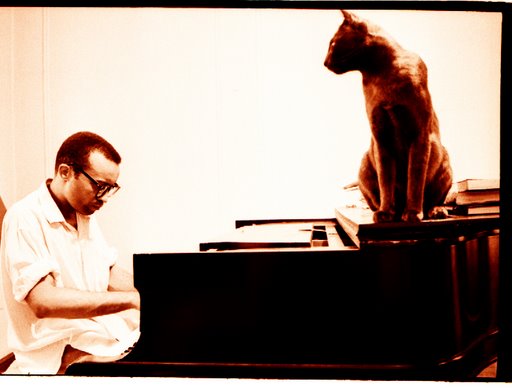
With other princes of the Utterly Out — Ornette, Coltrane, Beefheart — I was, I confess it, puzzled by how tame they seemed against the buzz of advance promo. But Cecil — on Black Lion/Freedom’s 1975 Silent Tongues, his 1974 Montreux Festival solo performance — did not disappoint. Perversely, far more subsequent time was spent addressing Coleman and the good Captain, battling to discover ways to hear their sound as deranged delight, learning tolerance for the well-meant overreactions of enthusiasts. And so my response to these others to this day sometimes seems suspect, post-fabricated out of a need to be wowed, or to seem weird; the pianoman, by contrast, I always knew I could trust, to swoop in, connect instantly, and transfigure. With Cecil, no need to fake it.
So I didn’t visit often, though I dallied with his less demanding children — Von Schlippenbach, Tippett, Crispell, Shipp — and all too soon I was taking him for granted. The affair turned second-hand again, and stalled. Modernism’s dirty secret: avant-garde work requires the survival of the order it first flared against, or its full radicalism no longer properly registers. Mind switched to low, just like those Black Cultural Nationalists who voiced concern about Taylor’s ‘European’ influences — because deep, deep beneath their political bluster, they doubted an African-American artform could wrestle white tradition and win — I projected my own baffled timidity, and even dismay, onto an oeuvre I was no longer regularly checking.
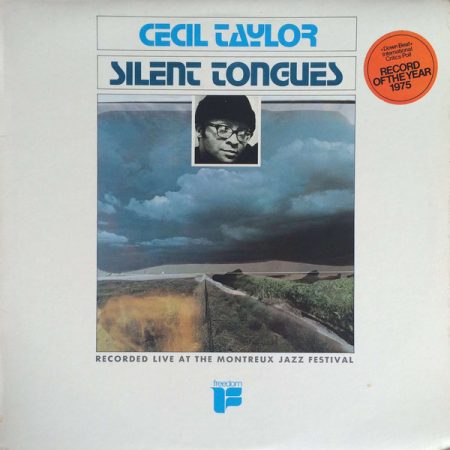
The counter-force epiphany for me came with a CD full of what Stefan Jaworzyn has described as “Teletubbies-style verbal gibberish”: Chinampas (Leo, 1987). At which point, things I’d known for years – but been too nervous to accept – came suddenly clear. Like so many sympathetic yet humour-free interviewers down the years, catching the edge of a Cecil tease but missed its meaning, I’d overlooked countless clues. The cover to Silent Tongues — featuring Cecil, winsome in glasses and woolly hat – I’ve now felt joy towards for some 20 years: in retrospect, the gulf between this absurdly cute sad-little-boy mugshot and the record itself expresses nothing if not irreverent glee. In the sleevenotes to Blue Note’s Unit Structures (1966), dry crypto-Darmstadt analysis mutates into cut-ups, and wicked Burroughsian war on grammar. On Soul Note’s small-orchestra set Winged Serpent (Sliding Quadrants) (1985), on A&M’s impishly superb In Florescence (1990), on Chinampas, Taylor invokes Aztec gods — gorgeous, jagged, murderous deities more outrageously unsuited to worship even than the much-bothered Egyptian pantheon. Their presence among the grunts, rumbles and oblique exclamations punctuating In Florescence suggest a musician whose absolute confidence in his work frees him to kid, to plant the worry that it’s a giant joke. Indeed, this is more than just flirtation — again and again he soars, eagle-god turned trickster gremlin, way out over the abyss of the possible put-on, and never more gloriously than with the high-fired aztèque concrète that makes up the piano-free Chinampas.
Of course, the ‘whitest’ concert-hall piano virtuosos – and the composers that encouraged them – have courted official unrespectability when they became too flamboyant, too romantically individual, too inhumanly extreme or unplayable, from Liszt to Xenakis, from robot-lover Nancarrow to Glenn übernerd Gould. But when piano-play turns into self-absorbed callisthenic work-outs, when the musician presents as some superfit but otherwise daffy street-person, mazed into his own asides, gestures and solo dances, when the compositions are like architectural design-brainstorm sessions for the living city-of-the-future, and this unlikely idiot-savant dervish is busily, dizzily solving every urban conundrum there could ever be, we may begin to realise why most orthodox Cecil-crit favours lulling solemnity. For art-fraud on so titanic a scale – so vastly vivid, so elaborately detailed, so whirlingly learned – is no less startling than the ‘straight’ work it seems to send up. Indeed, it’s far more staggering, and even scary, in its implications — what kind of madman devotes his entire life-energies to the merely unserious? For me, the only works in the avant-garde canon that match Taylor’s serene, omniscient cheek are Finnegans Wake, and Vexations, Satie’s vast day-long hymn to absolute simpleton repetition.
As it was, Coltrane, all bruised earnestness and cosmic quest, became the poster-child for the New Thing, the model for what ‘being taken seriously’ would come to mean. Nobility? Self-denial? Avant-garde transformation as a solemn, lonely, painful, search? Well, yes — yet a glance at the lives of most known questers (knights errant, polar explorers) reveals quests as monuments to anti-domestic panic, with most seekers fleeing as much personal duty as they’re pursuing. All across the slopes of art’s Everests, a great deal of immature selfishness continues to mistake itself for the austere sublime. Much celebrated (rightly celebrated), Coltrane’s natural grace of spirit and vast generosity served mostly to obscure (A) how little imitated this was in Cultural Nationalist circles, and (B) how repressed, repressive and reactionary the CultNat version of radicalism quickly became.
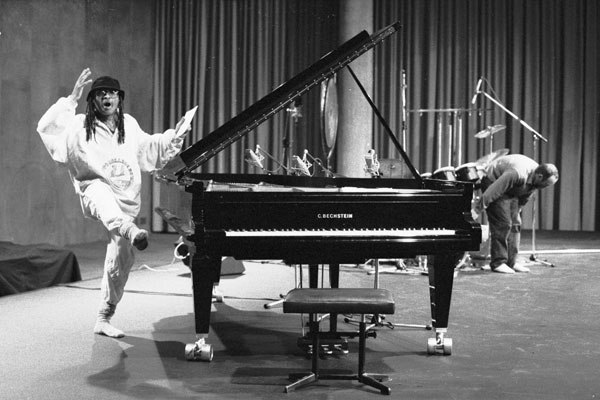
By temperament, Taylor had chosen Out before Ayler, Coltrane or even Coleman, playing free years before this became the term for the play, his example encouraging each of them to take similar steps. He was always already Out; it was always already Play. His work — in its mischief-making badboy totality — has from the outset been not a quest but a masque, wherein the daunting modernist massif and its pervasively silly, naughty, niggling parody coincide. I love this music because it makes me happy — and it makes me happy because it refuses to sidestep, to underrate or even to disrespect the tireless teasing perversity at the core of human behaviour, because even if it wanted to shill for pompous fraudulence, self-seriousness or fast-track fake enlightenment, it just couldn’t.
]]> There are days when passing through London feels like an immense, patient, intricate unwinding of the thread through the labyrinth laid down — without much forethought — years before. I’ve lived here 31 years: there’s a bus strike, I’m going to be walking down roads and clocking buildings I haven’t thought about for decades. More to say one day about this feeling as it applies to my mum, my dad and the town of my birth, but one way and another yesterday was a good day to be casting my mind back.
]]>
There are days when passing through London feels like an immense, patient, intricate unwinding of the thread through the labyrinth laid down — without much forethought — years before. I’ve lived here 31 years: there’s a bus strike, I’m going to be walking down roads and clocking buildings I haven’t thought about for decades. More to say one day about this feeling as it applies to my mum, my dad and the town of my birth, but one way and another yesterday was a good day to be casting my mind back.
]]>
Holiday over and back in London (w/sister et al gone to their home), I have many many excellent friends, and more on-line, but the specific sense of solitude definitely welled up again this last week, especially in the evenings: because it’s not really about company as a cure, it’s about how you process your past — what’s gone and what remains.
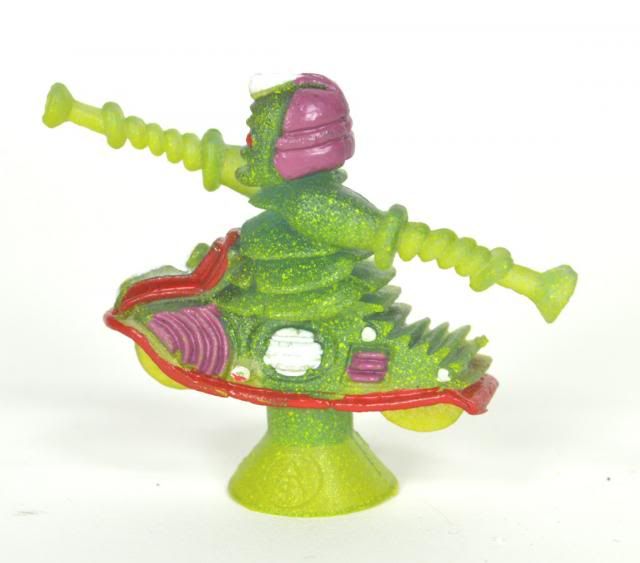
One element of that past, when mum and dad were themselves young still, not yet dauntingly ill, not yet seriously disabled, was, basically, my army of monsters and spacemen, tirelessly gathered from toyshop cheapie shelves and gumball machines and (now and then) rescued off the pavement. Silly and small perhaps, but this is often where the intensity is concentrated.
Family notwithstanding — my sister in particular (we were close as kids and remain so now) — I was a pretty solitary kid: when I wasn’t reading I made my own amusement; fashioned and peopled my own worlds. There was an element here of compensatory activity and self-absorption: my dad was diagnosed with Parkinsons when I was 7; by 12, I was certainly actively/subconsciously distancing myself from committing to certain kinds of emotional bond — because I (half)knew and (semi)anticipated the pain of future loss that is always embedded in such bonds. Safer to stick with my wee rubber guys: at least until punk rock began to glint and beckon (I’m simplifying and cartooning, but not enormously).
So yes, this is a trivial indulgence; and yes, it’s something I evidently needed to do for a brief season — which brief season is probably not ended; and nor (I’m guessing) is this going to be the only manifestation.
(Crossposted at tumblr)
]]> Vast Reuters info-diagram of China and how to understand it: not that I can actually get it to scroll down or anything
(courtesy jamie at blood and treasure, naturally)
]]>