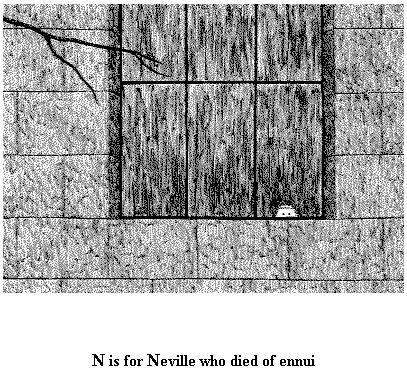
… or what happens when you cross the streams? My good friend Julio emailed me this: I’d come across Richard Taruskin before, many years ago, and been very taken with his work (via an essay on Stravinsky, neo-classicism, recording technology, the idea of authenticity and the Early Music movement, if I’m remembering correctly across nearly 30 years) — and more recently Seth had piqued my interest all over again, from a very different direction. Late on New Year’s Eve, in a pub in King’s Cross, Julio mentioned to me that this 2007 piece discussed Richard Meltzer, and was visibly entertained by how confused and over-excited I got.
Adding: I say the piece discusses Meltzer, but (I’m a bit disappointed to have to note) really all it does is mention him. He’s introduced as a symptom of the failure of the critical conversation round classical music and the compositional avant-garde to interest or excite the best minds of the 60s generation. But Taruskin doesn’t give much sense of what might be interesting about Meltzer as a writer or thinker, which is a pity — or (which is surely relevant) that he was clearly in the process of wriggling out from under Hegel and Quine (both mentioned at best fleetingly in book-version of The Aesthetics of Rock; Quine just once, in the same sentence as one of the Hegels). Over to Frank Kogan for an all-too-brief primer.
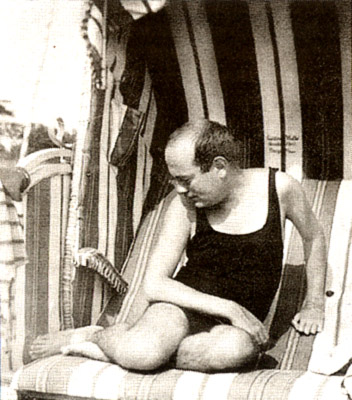
]]>(Norman Malcolm, Ludwig Wittgenstein: A Memoir, pp. 58–59)
Faintly recall from student days long ago that N.Malcolm was hard work and unrewarding as a philosopher (trans.: I was a confused and unsatisfactory philosophy student, esp.as far as Anglo-Am Analytical etc goes). But this is a good story, and — whether or not LW drew the correct conclusions at length — Sraffa’s intervention was strong, and Wittgenstein was right to be impressed and unsettled. I’m tempted to argue that music — all music, from Blobby to Boulez — is making much the same gesture to all other intellectual activity: here’s something you can’t do. That might be too strong — other things are always going on in music (including rapprochement, or attempts at same), and of course the various forces and layers never aggregate to a single decisive intent or content anyway — but it’s definitely an element I value in music, and don’t see well grasped in its discussion.
]]> ]]>
]]>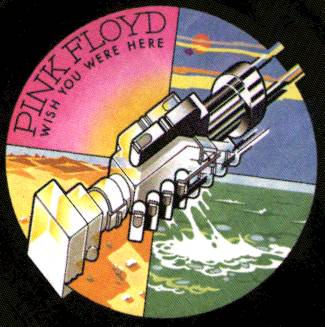 As much as anything as an act of expiation, grief and guilt from safe exile — as if to say ‘Wish you were here’ — Adorno begins his Philosophy of Modern Music (1948) with a long crabbed mouthful of a quote from his dead friend Walter Benjamin, on the history of philosophy “viewed as the science of origins”, as being “that process which, from opposing extremes, and from the apparent excesses of development, permits the emergence of the configuration of an idea as a totality… ” The book that follows unfortunately merely juxtaposes Schoenberg and Stravinsky, only the extremes of development of “modern music” if your view is really quite intellectually parochial — certainly it’s hard to envisage Adorno writing well about (say) Jelly Roll Morton or Bessie Smith, but there you go. Still, the idea of attempting to juxtapose extremes — at least as a technique or habit — is pretty good critical practice, I think. We work with what we know; to get what you need from it, you have to peer through what we pretend it is, and a clear declaration of our own idea of the relevant cultural extremes gives you a not-bad guide to the skew of our interests…
My own first experience of Pink Floyd was almost certainly visual: little stickers from the packaging of the mid-70s LPs suddenly blooming on school noticeboards and fellow pupils’ folders and bags. I was enough out of the loop of pop in my early teens — I’d grown up a very quiet rural backwater — to be fascinated: no such thing as a tabula rasa, of course, but I really wasn’t having to battle against any thickets of borrowed childhood assumption. Within a couple of years, I’d been saturated with DSotM and WYWH: and never — I absolutely admit — been captivated. This wasn’t teenage me reacting against something; this was something simply not reaching me, and it still — in itself — doesn’t. Like Philosophy of Modern Music, Wish You Were Here is an act of expiation and grief and guilt; like PMM, WYWH seems dislikeably flawed to me, or anyway one-sided. But I’m not going to argue (here!) in defence of my intolerance: instead I’m going to point you, with some delight, to Marcello’s use of it as a portal across to music perhaps no one but he would think to juxtapose — music, as he makes entirely clear, linked socially and historically and of course in emotional purpose, but music (at least to my ears) of a very distinct sensibility: Robert Wyatt’s version of Charlie Haden’s “Song for Che”; the Blue Notes’ LP Blues Notes for Mongezi, Michael Mantler celebrating Edward Gorey. Opposing extremes? Only as a means of crystallising a very particular moment, in its potential and its limitations — and this is not Marcello’s aim (at least not in this one review). Obscure and difficult music presents one kind of obstacle to the newcomer: a good deal of music writing muddleheadedly expends the wrong kind of effort to overcome this. But hugely popular and well known music can also congeal on the ear and heart, for bad reasons: and this too needs to be overcome, and in some way that task is a lot harder, and generally more thankless. I don’t always like Marcello’s most-loved music — and doubtless vice versa — but I think his solution to both these problems is often exemplary.
]]>