Quick unedited notes the morning after (on just 4 hrs sleep)
1: the road-testing of the citizens united decision has not developed entirely to the 1%’s advantage
2: TRUMPBOT SMASH *trumpbot falls over on face in puddle of someone else’s vomit*
3: no one ever got rich betting against the continued stupidity of the US pundit class, but — and usually like emerson I am pro creative-transformative intuition and against the soulless bead-counting technocrat where’er he be — but Team Silver has surely helped ding the the current pundit-layer’s crappy jalopy, in a way that a mere unpredicted shock dem win would not have done
4: ratfuck report (relevant internal repug warfare): husted knew — because he could see on his master screen, the one with the knob that technologically flipped the votes — that ohio was gone beyond critical *before* the point where technological vote-flipping could be brought in to save the day; he told the Fox deciders and went home; he pointedly didn’t tell rove bcz FUCK TURDBLOSSOM
First posted at Unfogged, further thoughts at B&T (I had Caro on LBJ in mind here, and the fact that many voting machine companies are Repub-owned): note the Ranter’s response, in particular — my takeaway — the fact that all you need to depress the other guy’s voting (and voters) is for your claim to hold all the cards to be plausible. The loss of this plausibility can be the puncture in the balloon: the hole is small but it doesn’t self-heal. To over-estimate the scope of their control — I think of this as an anarchist failing, but that may just be my age and prejudice showing — is very much to hobble our own options.
]]> Entirely unsurprisingly, the word ‘troll’ now has a politicised range of meanings—all the way from anonymous internet bully to subtly provocative dialectician, with a fractally wriggly continuum linking these extremes—and the comment this is a response to (a) made it reasonably clear which meaning one s/he had in mind* and thus (b) deserved a better (or at least more self-aware) answer than “By using the word X you can only be saying Y about me and I know myself well enough to say this is false.” Of course dsquared was trolling here — and it’s not as if Farrell is historically that good at identifying the motivations of the people he deems trolls by his own over-simplified (which is to say self-exculpatory) definition. The revealed fact of the faultline is an indication that people on both sides are uneasily (=angrily) aware that they too exist within contradiction: “just a lot less so than those OTHER deluded clowns,” the more twerpish partisans on both sides are busy telling themselves.
*And yes, s/he later disappointingly backed away from a good strong usage…
]]>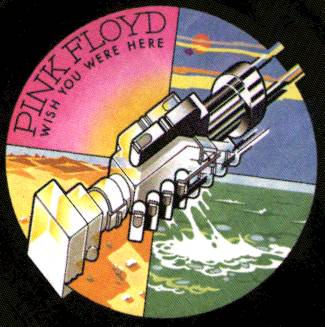 As much as anything as an act of expiation, grief and guilt from safe exile — as if to say ‘Wish you were here’ — Adorno begins his Philosophy of Modern Music (1948) with a long crabbed mouthful of a quote from his dead friend Walter Benjamin, on the history of philosophy “viewed as the science of origins”, as being “that process which, from opposing extremes, and from the apparent excesses of development, permits the emergence of the configuration of an idea as a totality… ” The book that follows unfortunately merely juxtaposes Schoenberg and Stravinsky, only the extremes of development of “modern music” if your view is really quite intellectually parochial — certainly it’s hard to envisage Adorno writing well about (say) Jelly Roll Morton or Bessie Smith, but there you go. Still, the idea of attempting to juxtapose extremes — at least as a technique or habit — is pretty good critical practice, I think. We work with what we know; to get what you need from it, you have to peer through what we pretend it is, and a clear declaration of our own idea of the relevant cultural extremes gives you a not-bad guide to the skew of our interests…
My own first experience of Pink Floyd was almost certainly visual: little stickers from the packaging of the mid-70s LPs suddenly blooming on school noticeboards and fellow pupils’ folders and bags. I was enough out of the loop of pop in my early teens — I’d grown up a very quiet rural backwater — to be fascinated: no such thing as a tabula rasa, of course, but I really wasn’t having to battle against any thickets of borrowed childhood assumption. Within a couple of years, I’d been saturated with DSotM and WYWH: and never — I absolutely admit — been captivated. This wasn’t teenage me reacting against something; this was something simply not reaching me, and it still — in itself — doesn’t. Like Philosophy of Modern Music, Wish You Were Here is an act of expiation and grief and guilt; like PMM, WYWH seems dislikeably flawed to me, or anyway one-sided. But I’m not going to argue (here!) in defence of my intolerance: instead I’m going to point you, with some delight, to Marcello’s use of it as a portal across to music perhaps no one but he would think to juxtapose — music, as he makes entirely clear, linked socially and historically and of course in emotional purpose, but music (at least to my ears) of a very distinct sensibility: Robert Wyatt’s version of Charlie Haden’s “Song for Che”; the Blue Notes’ LP Blues Notes for Mongezi, Michael Mantler celebrating Edward Gorey. Opposing extremes? Only as a means of crystallising a very particular moment, in its potential and its limitations — and this is not Marcello’s aim (at least not in this one review). Obscure and difficult music presents one kind of obstacle to the newcomer: a good deal of music writing muddleheadedly expends the wrong kind of effort to overcome this. But hugely popular and well known music can also congeal on the ear and heart, for bad reasons: and this too needs to be overcome, and in some way that task is a lot harder, and generally more thankless. I don’t always like Marcello’s most-loved music — and doubtless vice versa — but I think his solution to both these problems is often exemplary.
]]>