 more rough thoughts on william mayne
(which i will probably return to shortly and rewrite somewhat — i just wanted to set them down and get them out of my head)
]]>Other things to note:
i: clips of young Fleetwood, a gangly long-hair beanpole pulling goofy faces; clips of young Mcvie, small and compact, stern-faced, focused, always avoiding looking into camera. Compare both to how they are now
ii: the way Fleetwood always speaks for McVie, sat darkly right there beside him, keeping his counsel (“John always felt…”: why can’t John say what he always felt?)
iii: no one seems to get close to the nut of what went awry (money, drugs, sudden vast fame, various semi-related violations of idealised integrity, sex…), nor do they really recognise they’re nowhere near it. As anecdotes, it’s compelling; as self-analysis or wider cultural acuity, really nowhere…
iv: this was a generation who escaped the cramped given futures of their backgrounds into (someone else’s) musical facility rather than (someone else’s) verbal facility. “My” generation of pop-figures trusted music far less; placed far more uncritical trust in borrowed systems of words (tempted to say “college-boy” words). Which is perhaps why the reflection on display here seems so much more open and beguiling, right or wrong. It hasn’t convinced itself it’s “cleverer” than you; it isn’t looking over its shoulder all the time; its insight isn’t something you anxiously need to go away and read up on.
v: With iv in mind, significant perhaps that their “younger-generation commentator” has to be a Gallagher. He doesn’t bring much beyond simply stated fandom — but who might they have invited that allowed themselves even this? (And not clouded it up with second-guessing, I mean.)
vi: “B. B. King (…) said that the only guitarist that sent shivers down his spine was Peter Green…” Don’t read anything pejorative into the word “borrowed” here.
vii: [added a little later] Andy Capp-style flat caps as the fashion accessory of the Thames Delta Blues Kids, 40 years on.
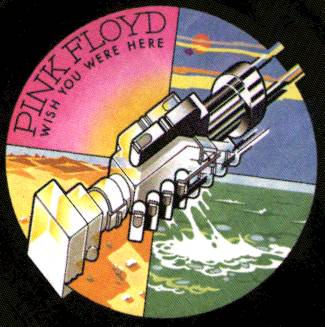 As much as anything as an act of expiation, grief and guilt from safe exile — as if to say ‘Wish you were here’ — Adorno begins his Philosophy of Modern Music (1948) with a long crabbed mouthful of a quote from his dead friend Walter Benjamin, on the history of philosophy “viewed as the science of origins”, as being “that process which, from opposing extremes, and from the apparent excesses of development, permits the emergence of the configuration of an idea as a totality… ” The book that follows unfortunately merely juxtaposes Schoenberg and Stravinsky, only the extremes of development of “modern music” if your view is really quite intellectually parochial — certainly it’s hard to envisage Adorno writing well about (say) Jelly Roll Morton or Bessie Smith, but there you go. Still, the idea of attempting to juxtapose extremes — at least as a technique or habit — is pretty good critical practice, I think. We work with what we know; to get what you need from it, you have to peer through what we pretend it is, and a clear declaration of our own idea of the relevant cultural extremes gives you a not-bad guide to the skew of our interests…
My own first experience of Pink Floyd was almost certainly visual: little stickers from the packaging of the mid-70s LPs suddenly blooming on school noticeboards and fellow pupils’ folders and bags. I was enough out of the loop of pop in my early teens — I’d grown up a very quiet rural backwater — to be fascinated: no such thing as a tabula rasa, of course, but I really wasn’t having to battle against any thickets of borrowed childhood assumption. Within a couple of years, I’d been saturated with DSotM and WYWH: and never — I absolutely admit — been captivated. This wasn’t teenage me reacting against something; this was something simply not reaching me, and it still — in itself — doesn’t. Like Philosophy of Modern Music, Wish You Were Here is an act of expiation and grief and guilt; like PMM, WYWH seems dislikeably flawed to me, or anyway one-sided. But I’m not going to argue (here!) in defence of my intolerance: instead I’m going to point you, with some delight, to Marcello’s use of it as a portal across to music perhaps no one but he would think to juxtapose — music, as he makes entirely clear, linked socially and historically and of course in emotional purpose, but music (at least to my ears) of a very distinct sensibility: Robert Wyatt’s version of Charlie Haden’s “Song for Che”; the Blue Notes’ LP Blues Notes for Mongezi, Michael Mantler celebrating Edward Gorey. Opposing extremes? Only as a means of crystallising a very particular moment, in its potential and its limitations — and this is not Marcello’s aim (at least not in this one review). Obscure and difficult music presents one kind of obstacle to the newcomer: a good deal of music writing muddleheadedly expends the wrong kind of effort to overcome this. But hugely popular and well known music can also congeal on the ear and heart, for bad reasons: and this too needs to be overcome, and in some way that task is a lot harder, and generally more thankless. I don’t always like Marcello’s most-loved music — and doubtless vice versa — but I think his solution to both these problems is often exemplary.
]]>