or how the puffin club
turned me into a punk rocker"]]>
This is a lightly edited extract from a piece I wrote for Frank Kogan’s fanzine WHY MUSIC SUCKS (#11, pub.June 1997). The topic was “My First Record”; some of the tone is me not quite sure at that time who I am as a writer any more, especially in this context. All the square-bracket interpolations and footnoted annotations are new.
[…] The first LP I bought was almost certainly Slapp Happy’s Slapp Happy [in 1976]. It was on bargain offer in a local shop, and I remember the grins on the faces of the shop girls when I took it off their hands. But it was very nearly – which would have been hilarious – Metal Machine Music, which was in the same bargain bin. For some reason I decided against MMM. I think that I decided it was too popular: or – since this makes no sense – that someone I knew would have bought it, so I didn’t need to.
Between these points [i.e. 1967-76], ten years of what? [Footnote 1] Growing up in the depths of England’s rural midlands, isolated from kids my own age [2]. My parents aren’t puritans; I was forbidden nothing [3]; but living in the deep country I had no access, except to books, and no idea of what I was missing. I spent my time reading reading reading, till places like Narnia and Moominvalley seemed real and familiar, and the outside world grey, pale, without energy.
[When I got to secondary school] and began to hang out with kids who talked about rock, my solution to not being up to speed was straight out of Alien Nation [4]. The off-worlder studies the host culture’s ways diligently, committing all trivia to memory, just in case. Soon he can pass as human: or will some ridiculous detail be his downfall?
I bought a book in 1977: The NME Book of Rock, a chubby little pulp-encyclopaedia of pop [5], and read it cover to cover, committed it to memory, and turned myself into a little book-based expert [i.e. on records and in music I wouldn’t actually hear for years]. More importantly, though, I read in it that a man called Tony Palmer (a British TV director in the 60s) who’d heard no rock until 1967, when he read about Sgt Pepper in The (London) Times, had asked a friend for Ten Essential Albums, and become a professional national rock critic within the year. [6]
I decided to do the same. But I went further, polling maybe 30 people. NOT all in my immediate gang, and several not even close to being friends. I ended up with a list of maybe 100 records [7]: all LPs (a fact of significance, though I didn’t yet know this). I had no record player, but my sister did have a little tape-recorder/cassette player. Everyone played tapes then anyway – it was the era of the portable cassette-machine. I borrowed tape after tape, writing careful critical notes — subjective? ignorant? innocent? pure? — marking everything out of five. When they played stuff at school on their little machines, it had to be quiet (it was school). At home, I played things even more quietly. Some of this rock stuff sounded very nice; very little hit me particularly hard (all those touches of classical imitation). Three exceptions: Patti’s Horses, 666 by Aphrodite’s Child, Camembert Electrique by Gong.
Mainly there was a central cluster of Progressive Rock: the gang’s median taste, its mainstream: Pink Floyd, Yes, Genesis, Purple, Rainbow, ELP, Barclay James Harvest, Wishbone Ash. I was also now listening to John Peel – very very quietly – every night (on a tiny little radio, under the bedcovers), and reading the weekly rock papers, as assiduously as Talmud. There were then four in the UK: NME, Melody Maker, Sounds, and Record Mirror [8].
[From the four weeklies and Peel] I learnt that prog rock had gone out of fashion, very suddenly, about six months before I began this project. Just as I began my big daft quest, punk had invaded. Though mostly younger than me, the gang I had till then imagined hipper than me were already beached by history — and I was beginning to exchange this briefly desired companionship, of those to hand at my school, for the idea of a gang I knew was better. A virtual gang, an imagined community: a mass movement without local representatives (except for me, of course). This was easier than it may sound. [9]
Rock-paper language was just then full of praise for punk because it spoke “ordinary language” about “everyday, relevant things”. But urban rage wasn’t ordinary or relevant to my initial gang — nor to me [10]. This was a rhetoric my to-hand gang resisted: you could even say they saw through it. ’ But I loved it for its non-ordinariness, and bought straight into it. I entirely convinced myself that, as Simon Frith would say, reality was what happened elsewhere. [11]
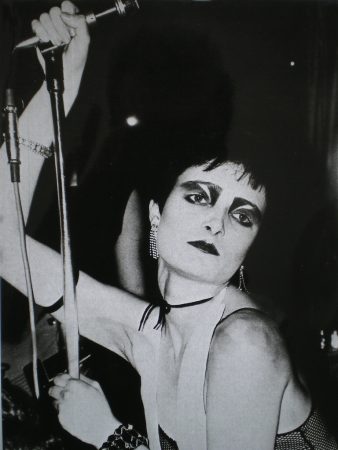
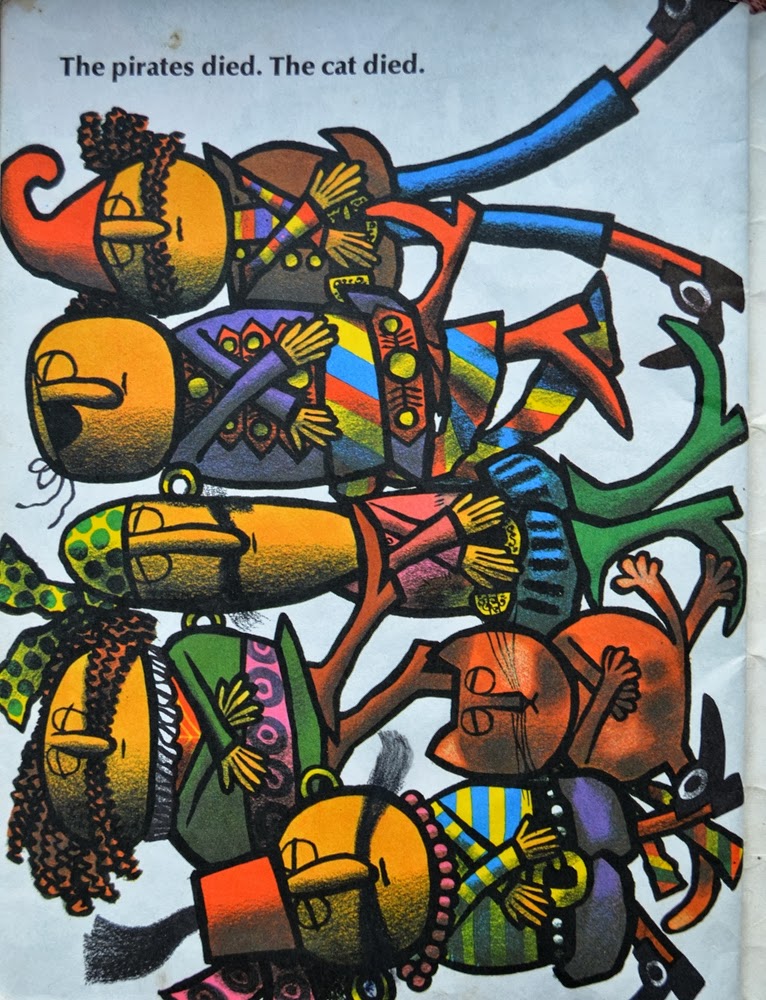
My secret reason for finding punk both comforting and alluring was its yen for absolute moral conflict: when I gazed at grainy photos of dark rooms full of odd-looking people and occasional shiny gleaming things (guitars, mike stands, Siouxsie Sioux’s eyes), I was thrown straight back into a world I was already perfectly familiar with, and happy in. Children’s books are thick with absolute moral conflict, odd-looking people, occasional shiny gleaming things (swords, stars, Lúthien Tinúviel’s eyes).
I loved the idea that somewhere in the world, far away, were people whose “ordinary everyday” shared tone and texture with my utterly personal totally bookish world of moral quest and the innocent but determined defeat of evil, of small bands of small folks against the dark forces. Goblins didn’t exist, but Johnny Rotten did. I might even meet him [12].
However this gang-transfer did not happen immediately. [13] It was preceded, or in fact accompanied, by a failed transfer into a rival virtual community. One established less by reading than by listening; but again one that demanded I gravitate to the real, familiar energy of the imagined, and retreat from the pale grey failure of my immediate surroundings. [14]
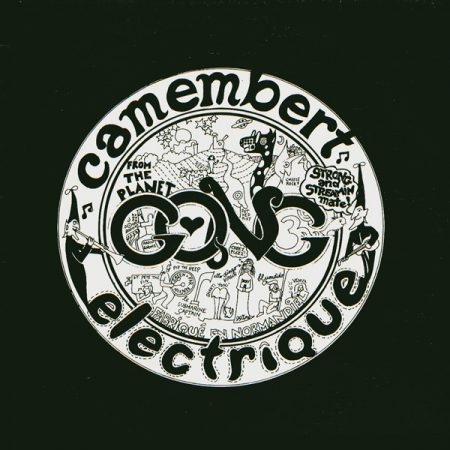
The poll returns that intrigued me most even then were the ones that failed to fall into any pattern, the replies of those without group allegiance, the bands who the rock papers seemed to have little or no [current] attitude towards. Lone votes for Sabbath, Tull, Bethnal [15], Rory Gallagher, the Groundhogs. And beyond this, the eccentric – because so casual and so ill-considered – votes of a guy called Peter, who everyone called Tool. [16] He’d voted for the only three records he knew. He brought them to school, but he didn’t own them; they were his sister Nora’s: In Hearing of by Atomic Rooster, 100 Ton Chicken by Stan Webb’s Chicken Shack, Camembert Electrique by Gong. The first two were very minor BritBluesBoom groups, just as it began shading into Prog Rock (Christine Mcvie, then Christine Perfect, later of Fleetwood Mac, sang for Shack; co-founded by Carl Palmer, Rooster were an offshoot of The Crazy World of Arthur Brown, though Palmer had left for ELP by Hearing-time).
But Gong were completely different. For a while (c. 1971-72) France’s most popular avant-garde free-rock group, they were pluperfect Euro-hippy anarchists, playing disorderly spacerock that would have been jazz-rock if they hadn’t been so out of it. (Indeed, the more time passed, the duller and more jazzrocky Gong became.) They lived in a chateau-commune in rural France (there was a picture on the sleeve: it looked like a shabby mountain farm). They gave themselves cartoon names (sax and fluteplayer Didier Malherbe was Bloomdido Bad de Grasse: the only one I can remember), and there was some elaborate though never-explained mythology involving the moon, Tantric sex, weed, teapots, pixies, and the poet John Donne. Their bossman was an already aging Australian ur-beatnik called Daevid Allen, who had been buddies with minimalist tape-looper Terry Riley and also a founder of Soft Machine. This particular record you could find all over the place in those days: it sold for 99p only, when LPs were £3.99 or £4.99. I didn’t buy it at the time: we just played Pete’s copy (including playing frisbee with it and walking on it).
I never met Pete’s sister Nora. Her taste intrigues me.
With its black-and-white hand-drawn sleeve, handwritten song titles, fuzz of marginal jokes, Camembert Electrique was a fabulous detailed microworld to me: an explosive little 1968 in my own heart. It wasn’t the drug references, which meant nothing to me: it was the sense that this cartoon world was extended and internally consistent (as subsequent exploration proved it wasn’t) [17], that you could leave the beckoning dreary straight world, and make off into this alternative space. I wanted to hang around and do nothing and grow my hair really long and have a funny cartoon name in a Chateau in France. Under the paving stones, the Chateau.
Most of the record was formless, shapeless, draggy wandering, with funny little sound effects (a sort of chuggy clockwork object panned slowly across the stereo-image at one point). Allen couldn’t sing – he kind of spoke ‘poetry’ in a mimsy way. But there was also this one perfectly simple, hypnotic, unforgettable bassline, which I loved then, and love now (everyone loved it who heard it). I gave the record five out of five. No one seemed to understand why. (Even Pete didn’t like it that much. He voted for it because it was his, not because it was good.) I know why, now: I knew that one day I would love and understand as much as I did that bassline all the bits of the record that irritated and puzzled me. I wasn’t ready: but with study this understanding would come.
If people thought this polling project was weird at the time, they never said so. Of course, for years, I thought it was: I never spoke about it, never liked to think about it. It was proof that my rock roots were none too deep, and startlingly inauthentic. [18] The getting of wisdom demands that the mechanism of its attainment be rejected. […]
FOOTNOTES:
1: The 10-ish years covered the time from the first LP that mattered to me, though bought by my dad for my mum: Sergeant Pepper. Here’s a post on that.
2: Isolated by geography, not temperament: welcome to the countryside, where your closest schoolfriend lives 10 miles away.
3: This seems an odd thing to say: like they always inatantly bought me a pony and a sportscar and every double album I desired. What I mainly meant was they they didn’t at any point seem to disapprove of my interests and sense of life-direction as a writer. (And for “aren’t” read “weren’t”: mum died in 2005, dad in 2010, and I miss them.)
4: lol does anyone even remember this TV series, once salient and much-discussed? Probably a more exact reference for the thing I’m talking about is The Man Who Fell to Earth — at least people have actually seen it in living memory.
5: There were three editions of the NME Book of Rock: 1975 (Star Books, ed.Nick Logan and Bob Finnis); Feb.1977 (Star, ed.Logan and Bob Woffinden); Nov.1977 (Salamander, large format, ed.Logan and Woffinden). I own the second and third, now in terrible condition (no covers, some outer pages vanished). The late Bob Woffinden had a fascinating and exemplary second act to his career as a rock journalist.
6: Tony graciously agreed to participate in my Birkbeck conference in 2015, on an entertaining panel with Jonathon Green and Mark Pringle about how well or badly mainstream media tackled rock culture in the 1960s.
7: I wish I still had the documentation that went with this poll, not to mention the results, but it went missing long ago. A hundred seems a lot!
8: Those four weeklies in order of my engagement with them:
A: NME every week from August 1977 — I ended up writing for it and only stopped when I angrily quit in 1988 (a story I’ll tell properly another time) .
B: Sounds most weeks 1977-79: I was driven off by reviewers who seemed not to get post-punk, as it wasn’t yet called: mainly Garry Bushell and his quasi-political thuggishness, then still nominally leftwing, but also Dave McCullough’s bad review of the first Raincoats LP (grrrr). McCullough was actually an interesting writer, generally simpatico with things I liked then — The Fall — and I often wonder what became of him.
C: Melody Maker: dipped in for a while in 1977, only very occasionally thereafter. It was regarded as the most grown-up and serious, but to be honest (aged 17) I found it a bit of a chore, and its page design was pretty terrible. Bascially it had a bad punk wars and I largely missed its late 70s reflowering under Richard Williams.
D: Record Mirror: this by contrast I felt at the time was a little young for me and hardly ever looked at, which I now regret.
9: If this essay has a moral, it’s that this kind of identification can be much deeper, and more life-shaping, than the impact of the seemingly more immediate world around you (your school, your town).
10: We were rural or small-town middle-class kids. Not all my friends were middle-class — but the ones that weren’t mostly weren’t at that school.
11: This phrase was from memory, and as a result misquoted in this piece. It’s the final sentence of Simon Frith’s ‘Playing with Real Feeling: Making Sense of Jazz in Britain’ (collected in both Music for Pleasure and Taking Popular Music Seriously). The full passage is worth quoting: “To understand why (and how) the worlds of jazz (and rock) are young men’s worlds we have, for example, to understand what it means to grow up male and middle-class; the understand the urgency to ‘authenticity’ we have to understand the strange fear of being ‘inauthentic’. In this world, American music — black American music — stands for a simple idea: that everything real is happening elsewhere.” I knew this quote (and was alluding to it, even if I got it slightly wrong) because Frank Kogan had explored it in an earlier issue of Why Music Sucks. Versions of this discussion can be found in his book Real Punks Don’t Wear Black: Music Writing by Frank Kogan, in the three-page essay ‘The Trouble with the Sociology of Pop’ but also at the start of the epic 47-page (nearing 30,000-word) essay-memoir ‘Roger Williams in America / The What Thing’. Where too many present-day music-writers jump to scorn the notion of authenticity (as risible goal and reliable index of bad music), Kogan explores how the fear could be social and artistically useful and fruitful, and hence not “strange” all. There’s a reason we can’t shed it as a topic, and a reason it seems constantly to return in new form (see also footnote 18).
12: So far I never met him.

13: Since age 10 I had been a member on the distant edges of the Puffin Club. If I now began scouring NME and Sounds for details of how punk worked as group I belonged to, I was simply switching my habit away from Puffin Post, a magazine run by a children’s publisher, a monthly full of interviews and stories and competitions you could enter, and club picnics for members (which never took place in Shropshire). There was an extensive reviews section, in which insider kids got to detail in print the upcoming paperbacks they’d been given to enthuse about. I very badly wanted to be one of these insiders, and tell the world why a book I liked was good.
14: “pale grey failure…” With hindsight I’m a bit out of sympathy with this back-projecting sorry-for-myself flourish. I didn’t feel a failure as a teenager at all — I was excited and stubborn and quietly driven — and now I distrust this attempt at self-deprecation. I want to say that the late 90s is when I most felt a failure: certainly much more than the mid-70s. Probably I’ll change my mind about this too though.
15: Bethnal were a low-tier, now-forgotten pop-punk band, featuring one George Csapo on vocals and violin. Pete Townshend-approved, they made two LPs, Dangerous Times and Crash Landing. The voter in my poll also played violin.
16: This sounds mean, and how I continued it in the original makes it worse: “(because he was one”). In fact he was a sweet friendly somewhat dozy kid whose main defence mechanism was playing the clown. He was teased ruthlessly and seemed not to mind. I hope he actually genuinely didn’t mind.
17: In other words the kind of conceptual continuity that pulls people into Zappa’s world, or Pedro Bell’s cartoons on the Parliament and Funkadelic sleeves — though I never warmed to Zappaworld when I later encountered it.
18: “Startlingly inauthentic”. But startling to who? Inauthentic how? Looking back — halfway across my writing life, I guess — it’s maybe telling that this is the phrase I wave uneasily: “lol authenticity, lol young me?” What exactly is bundled up into it? What was the “unrealness” of musical and/or writerly understanding that I was claiming to find about my early anxious self, in this late-90s stab at describing my mid-80s anxieties about my 70s (teenage) self.
To wander off into a minefield of thinking aloud, it’s two things: the extent of my knowledge, and the mode of its arrival — as in, do writers ever actually understand anyone else?
(A): Was I the kind of obsessive record-collecting scholar I was surrounded by in the mid-80s? Well, no (impostor syndrome klaxon): I knew a lot, almost all gained by reading.
(B): how was this way into and what it means not just entirely at odds with the world of the cap-p Proper pop or rock or soul or jazz fan (black or white). Who had surely somehow directly absorbed the relevant language from their own local community or anyway their older siblings, or else from some bewitched engagement with “the music itself” on radio or (sometimes) TV? Or via obsessive gathering of 45s and 33s (despite 33s at this juncture being somewhat deprecated) 33?
In fact, of course (C): most strong music writers come to writing by reading. By my late teens something about it — the access it gave to something, something I still haven’t quite worked out — it had evolved into a passion, a commitment I couldn’t and didn’t sidestep. Aged 20 or so, it seemed all too belated, but being slow to get things (or to accept things?) isn’t something I’m faking, that’s for sure. In small doses with big gaps and often poor access, I’ve been listening to pop all my life.
As a teen, I wanted to know what it was about music that bound my acquaintances into groups, and could it work for me? In retrospect running a poll seems to me like a pretty smart way of tackling the not-knowing-much aspect — and as a one-off also not the worst stab at critical practice. Evidence if any were needed that being some sort of analyst of matters pop-cultural was already baked in — that it was actually what I was always meant to be. If I felt I was the wrong kind of person from the wrong kind of place back then, I stopped thinking this long ago: this is just who I am.
(D): The key for me here and now is the degree to which music-listening (and collecting and whatever other interaction is involved) bumps sideways into a world shaped by words and refashions it. A lot, a little? Does it challenge it or firm it up? Thee days I prefer always to argue for the former — the disjunction is what a critic shd be hunting for — but the latter remains common (because it seems more normal?) and this (for non-writers?) functions as “the real”. Of course Kogan’s argument here would be the value of the feeling of fakeness — the worry that as a rockwriter I’m not a real rockwriter — is that wrestling with it is what helps drive you towards superior work.
How real is “superior work” though?
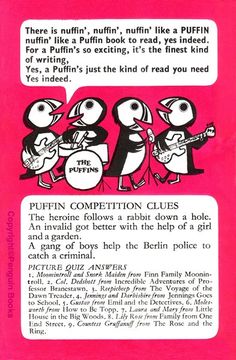
No amount of politics or philosophy or theory or backstory or practical musical experience — knowing how to play the changes for ‘Giant Step’s, knowing what they “mean” — are going to resolve the issue of the Correctness the Mix you hit on realness (the genuine emotional or intellectual effects) versus imagined cosplay potential, in yr stance or method or self-presentation. After all punk really did exist, albeit not as I hoped, and ditto Gong and the puffineers. And they’d gone by the time I arrived on any relevant scene. But my dream version stuck around long after, affecting all kinds of other stuff. The abiding panic that you’re getting the mix WRONG is what helps the writer to be smarter or better or deeper or more _ or more _
(Puffin Club artwork and lettering is largely and very memorably by the late Jill MacDonald… )
[If you like this post, please support my PATREON which will help me write more! Also let other people know that you think might enjoy it… ]
]]>(I wrote this up to place somewhere grown-up and get some traction, but no joy for one reason or another — the Camelot theme not entirely inapposite, esp.if you’ve read The Once and Future King. Kickstarter is still and closes Wednesday 27 July at 4.26pm UK time.)
We have an idea of the UK music press in the 70s — a notion of great names engaged in earthy debate about rock and pop, of fearless mockery of foolish or pretentious stars, of a generation of self-taught giants walking the earth in those golden black-and-white days. We can list names: Murray and Kent, Parsons and Burchill, Penman and Morley, Danny Baker, Garry Bushell, Jon Savage… With satisfaction (or amusement), we note that some of them have clambered up to the sustainably rewarded end of public chatter — which if nothing else suggests that their first professional gigs must have been an effective proving ground.
 It’s a picture distorted with hindsight, though. At the time, it was for the most part a much wider, quieter, almost invisible world. A cluster of titles that you engaged with as an intense subcultural doorway away from the routines of life: yes, there’d be a pop-star on the cover, major or rising or weird, but inside… well, inside you found all kinds of things. It reached a lot of people — sometimes as many as a million a week — and, unlike official culture, it didn’t shut them out. As writer-agitator and one-time label boss Liz Naylor puts it on one of the promo vids, “It was very difficult to access information in the 70s! The music press was my education…”
 The four weeklies were NME, Melody Maker, Sounds and Record Mirror. Echoes (sometimes Black Echoes) was a bi-weekly for black music — especially good on soul and reggae. There were several monthlies: Zigzag and Let It Rock and the superb, short-lived, much-lamented Street Life: precursors of Q or Mojo, you could say, but much much more than just this. Because — aside from the endless underfelt of free and alt.listings magazines — the music press had been where the spirit of the underground press had ended up: the brief strange countercultural spark of Oz, IT, Frendz, Ink, when late 60s youth had revolted against war and the technocracy, against racism, against timidity and prudishness, and for unfettered (yes chaotic, yes naive) expression. Writers and editors and designers — some extremely talented, but without a hope of rising far in the then-mainstream media — had crossed over out of this fervid, para-political subculture into the music press, partly because rock was the soundtrack of the counterculture, so that to make sense of rock you had to grasp the language and ideals and utopias of this teenage revolt, if only to wrangle with them, to rescue the good from the bad. And as a consequence this was a world full of curiosity about comics and cult films, liminal and radical politics, about musics and activities of communities and undergrounds from all over the world, America, the Caribbean, Europe, Africa — about everything in the world you couldn’t routinely access, which television skimped and normal newspapers didn’t remotely understand.
 Last year I ran a conference at Birkbeck, to explore some of this crossover and how it turned out, called Underground Overground: The Changing Politics of UK Music-Writing 1968-85 (scroll down for more). This year I’m running a kickstarter for a book called A Hidden Landscape Once a Week (subtitle “How UK music-writing became a space for unruly curiosity, in the words of those who made it happen”), which will anthologise extracts from last year’s panels with critical essays exploring issues raised — including the day-to-day practical backroom aspect of putting such a paper together. Panellists and contributors include Charles Shaar Murray, Val Wilmer, Richard Williams, Paul Gilroy, Paul Morley, Simon Frith, David Toop, Cynthia Rose and Penny Reel — people from a wide variety of backgrounds and perspectives and obsessions, which bohemian mix was key to the sensibility in question; “a conversation,” to quote the kickstarter blurb, “that musician, writer and reading fan all joined… a cheerful collective wrangling that echoes the crackles of dissent and tension in the songs it explores: the disputatiousness as well as the joy.” Alongside the hype and silliness, there was always a care and a fascination with possibility, with portals into all manner of other spaces hinted at in the music, and beyond it. For a decade and more, in a wider culture of stifled parochialism, this was a world of serendipity and surprise encounter. This will be a book that explores this world’s values and flaws, how it was established and maintained, and where its echoes can be found today — or rebuilt, in a very different, noisier, information-saturated context.
[ADDING: the “warring flaws” sub-head wasn’t on the piece I submitted — it didn’t have a heading at all — and only popped into my mind as I was fiddling with a framing to go here. What exactly do I mean by it (since it probably changes the tone and even the meaning of what follows)? Something like this: that what I think became dispersed — by all kinds of pressures, some extremely hard to fight — was a cast of mind in editing, which was, for a while, able to corral the impatience and rivalry and cattiness and worse that you always find among talented writers, into something unexpectedly collectively rich and generous. The mystery of where this came from — whose the design was, if design there was, and what the accident was, if it was accident — is one of the mysteries that brings me back to the subject. The Arthurian image implies that its virtues and its flaws are intextricably tangled: but I don’t know that this is actually so… ]
]]> A few weeks back, Marcello asked if I had any thoughts on this TPL post (about, among other things, Johnny Hates Jazz and The Wire as it was in 1986/87). Well, I did and I didn’t: I did because this era of my mentor Richard Cook’s project is very much the making of me, and I absorbed an enormous amount of his sensibility and thought a lot how to advance it best (whether or not I did is for others to judge; sadly he’s no longer with us for his perspective). But I didn’t (at least tactically, for now) because I have for most of this year been organising a conference on UK music-writing in the 60s, 70s and early 80s, trying to focus on how things had evolved from roughly 1968 (and the discussion of rock in the underground press) through to maybe 1985, when (in my judgment) Live Aid hit the inkies hard sideways, and changed their political ecology for good (Geldof’s revenge, you could call it). The serious social potential of pop began to be more and more of a topic for the tabloids and the broadsheets: the inkies began more and more to fold in into their own niche, exploring less and less. In this they were reflecting changes in the world, to be sure — but they were also amplifying and accepting these changes.
Richard’s was (to me, then) the smartest part of the counter-response to these shifts — The Wire considered as a magazine about all possible music and indeed all possible ways to write and think about music, including the free play of the most scholarly anti-philistines against pop’s and punk’s cheerful teenage school’s-out yawp (not to mention a phalanx of more studied anti-music and anti-art stances). Max Harrison alongside Val Wilmer alongside Biba Kopf alongside, well, me.*
Anyway, looking too long and hard at (meaning reassessing) all this right now means not just distracting me from a rolling reassessment of the earlier era — as I chat to the various likely participants in my conference, and recalibrate my understanding of how things were — but probably undermining my entire current provisional grasp of what I need to be grasping. So for now**, you should be boiling what I am (possibly) thinking out of here (where I outline the purpose of the conference and name the participants) or here (a Facebook page you can like and also share) (share it!) or here ( tumblr with some nice pictures and also rolling thoughts on what organising a conference entails) (grief! also joy! so far much more joy luckily… )
Here’s who’s confirmed (reverse alphabetical): Val Wilmer, Richard Williams, Mark Williams, Simon Warner, David Toop, Bob Stanley, Hazel Southwell (nee Robinson), Laura Snapes, Mark Sinker, Cynthia Rose, Penny Reel, Mark Pringle, Tony Palmer, Charles Shaar Murray, Paul Morley, Toby Litt, Esther Leslie, John (aka Jonh) Ingham, Barney Hoskyns, Jonathon Green, Beverly Glick (aka Betty Page), Paul Gilroy, Adam Gearey, Simon Frith, Nigel Fountain, Tom Ewing, Kodwo Eshun.
(Not quite confirmed but definite interest shown: Tony Stewart)
 Panel topics not entirely coalesced yet but will likely include: what the undergrounds knew that the mainstream was missing; rhetorics of outsider style; the changing make-up of bohemia; handling pressures on the playpen, professional and commercial; the rock press as a species of agit-prop samizdat; and legacy and lessons today…
You’ll need to register/book here but it’s free!
*Me (that is) as in the me just today delighted to be in receipt of the intelligence that (OMG LOL) Daphne & Celeste (@Daphne_Celeste) is now following you on Twitter!
**My rule-of-thumb back in the late 80s and early 90s, on ways to ensure The Wire really actually did have the widest possible scope, was to think of it as the mini-arena in early 80s NME jostled with mid-70s MM, allowing strategic space for sensibilities like Musics and Collusion, the late 80s Village Voice (a revelation to me) and even (bcz I have never not been a bit of a goth) Zigzag.