 Quite apart from anything else, the past — even the very recent past, maybe especially the very recent present — is a mass of detail that’s hard to take in and process (not least because you have to push away the immediate present to do so). My conference produced a little over 12 hours of conversation in one large (often quite hot, by the end quite airless) room, and the discussion has continued elsewhere, in nearby pubs or bars after the two days of debates; also here at ilm, here at Freaky Trigger, and here and here on tumblr. Resonance 104.4FM broadcast it nearly in full on 25 May and have put the eight extracts up on their mixcloud site here (I don’t know how long for).
If I say the commentaries so far have been partial, I mean three things. First, that several of the commentators (Tom Ewing and Hazel Southwell in particular) are very good friends, co-conspirators even; they’re partial to me! Second, that with a couple of exceptions, almost no one commenting attended the whole thing: I actually agree with plenty Laura Snapes says, but she was only in attendance for her own session; purely as a description her account can only reflect that final 100 or so minutes (and the fact that she definitely had the pointy end of the Q&A, in the jaded final minutes of a long tiring day). And third, so much seemed to be touched on over the two days that wasn’t pursued, as is the nature of these events; certainly it’s going to take me a long time to dig down into what I actually now feel, less about the conference than about the era it claimed to explore, what this era meant and means, and why (or indeed if) it still matters at all. On the whole, I’m enormously pleased with how it turned out, just because I think such a lot has been gathered together and set down for future scholars and scoundrels to play with. (Transcripts of the panels are to be gathered into a book along with further memoir and commentary by those who attended and those who couldn’t: this is the plan, anyway. Though I’m taking a bit of a break first.)
Here’s an extract from the report I wrote for Birkbeck:
Underground/Overground:
The Changing Politics of UK Music-Writing 1968-85
This was a two-day symposium (15-16 May) at London’s Birkbeck Institute for the Humanities, consisting of panel discussions and Q&As. Run by Mark Sinker, former editor of The Wire, it brought together writers, editors and readers of the underground and trade music presses of the 1970s and 80s, to explore their own experiences academics and other media commentators. The first day looked at the period when UK rockwriting emerged out of the conflict between a rising generation’s counterculture and the embattled establishment in the late 60s and early 70s. Through the witness testimony of participants, and the overview of historians of the era, panels examined the evolution of a critical outsider voice in the UK, as inflected through the rock papers between these dates. We learned what the underground press felt like to write for, how the mainstream press responded to rock music and its social penumbra, and how the trade press reached out for some of these writers — notably Charles Shaar Murray, who had written for the notorious schoolkids issue of Oz as a schoolkid — and what it was like moving over to the trade press. We heard from those in the editorial backroom about what it felt like being on a weekly responding to stories in pop and politics, how decisions were made and what the pressures were: Cynthia Rose noted that this was a time when striking miners’ wives from Kent came to the NME office to discuss stories run on them.
On day two, we heard more from voices outside these offices and these times, as a kind of counterpoint to the more canonic stance perhaps established on the first day. Val Wilmer, a veteran of the music papers in the 60s, recounted what it was like as a woman — in the very male milieu of jazz writing— bringing back stories from the radical black underground. There was a panel exploring punk’s often difficult relationship to the underground that helped birth it, and another on those constituencies not so well served by the music papers at this time, looking at black music and dance music especially. Finally a somewhat turbulent panel attempted to answer the tricky question of legacy — how much does this history help or even affect writers today?
In the course of the two days, we heard from well known voices but also from people who have not often had the chance to enlarge on their perspective. An enormous amount was touched on that will be of interest to scholars in various fields, from popular music and media studies to sociology and political aesthetics. Some myths were exploded, others perhaps further entrenched.

One thing I always hoped to do as an editor — and it turns out being a conference runner is not dissimilar, in its joys as well as its frustrations — is to bring voices together that didn’t normally get converse in the same space: as at The Wire in the early 90s for a couple of years, so at Birkbeck in mid-May 2015 for a couple of days. In both cases, I was especially keen — as discussed in this earlier post — that the past and the present creatively encounter one another, perhaps on slightly different terms than they do ordinarily, in music-writing or anywhere else. So as well on critical writing on the various contemporary streams, rock and pop and soul and rap and dance and the electronic avant-garde, blah blah blah, I following my predecessor Richard Cook in deliberately encouraging contributions from the best voices from the old guard, voices talking about (at that point) some 70 years of jazz, and some nine centuries of composed music.
Did I succeed? At the time I thought no: I felt that this particular exchange, between the best of the present and the best of the past, was still a dialogue of the deaf. Few in the various territories I was yoking together seemed at that time curious enough to explore the interests of rivals sympathetically or insightfully. And of course in practice The Wire had a super-tiny budget, and our bat-signal was primarily attended to by those with nowhere else to go when they wrote on x or y, the high quality of their commentary notwithstanding. Writers who are experts in their own specific (sometimes small and embattled) fields tend to hunker down and play defence when they encounter enthusiasts for very different fields and tendencies and perspectives.
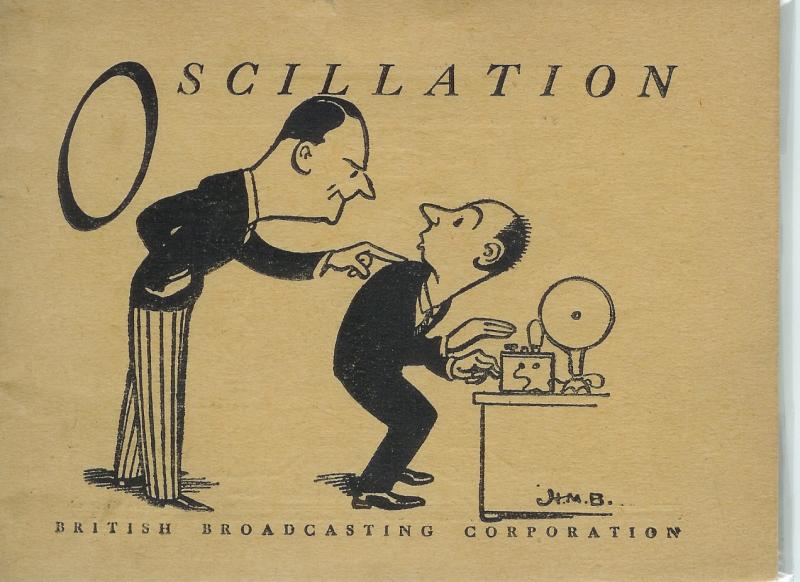
Then again — for this or other reasons — I wasn’t editor for very long. Because the ways to combine the perspectives, or use them creatively against one another, are generally worked out by readers, not least when or if they in turn become writers a few years down the line. An editor’s job is ultimately — in various different ways — to be a kind of idealised reader. And one element of this ideal is the plain fact that readers can enjoy a piece by one writer, and get a lot from — then turn the page and do the same with the first writer’s mortal scornful foe. From the thread discussion that hangs from Tom’s FT review, a theme emerges that I absolutely recognise, summed up by a useful word that hadn’t occurred to me: “oscillation”. Just in the territory the conference covers (but also in my conception of the role of The Wire in the early 90s), there seem to be a proliferation of essential oscillations between this or that or the other opposed cultural ethos*. Not just the way rock rubs against jazz on one side and pop on the other, and punk likewise; not just (as Frank Kogan notes on the FT comments thread) the way critical journalism rubs against investigative journalism, or the way that both rub against history; not just my overall theme of underground and overground, and how inside track and outside pressure work against one another; but the ancient uneasy dances of music with noise, and of order with desire; and of course of age with youth… If “1968-85” is my shorthand for the era of the self-consciously all-encompassing ‘outsider’ magazine [adding: in the UK] — “1968-94” only if you include Richard’s and my time at The Wire — then this is the era when technology and happenstance combined to fashion a clustered territory where readers were encouraged to enjoy and think about conflicting things; to move backwards and forwards between stances and traditions, in and out of close-read trust as they turned pages.
The potential of this world arose from the richness of this dividedness: and the refusal of any of the divisions to map simply onto the economic or racial or gender seperations and hierarchies that structure the larger world. And underneath — or above? — all these is the refusal of the not-quite division of music from the spoken or written world to settle into anything easily summarised, whatever the fashionable pressures of niche-marketing at target demographics. On one hand, all the splintered and shifting currents of music present a map of the real in its infolded complexity; on the other, there’s no music that doesn’t also manifest as a rhetoric of potential utopian togetherness: on one hand, there’s just the fact of the unpredictable constituent shape of any gathered crowd at any show; on the other, the potentially mutable readability of music itself, its last-instance combination of concrete sensuous quiddity and, well, untranslateability. We may occasionally agree what the words of a song mean, but all we can actually agree we agree on in the bits of music that aren’t words (i.e. re the meaning of this harmony, that chord change, this blue note, that grace note, this fill, that grunt…) is that we likely don’t agree. That’s the point: we’re gathered here together in part because we like that we won’t read it the same, and that’s the fun and the risk.
(Unlikely and probably unsustainable analogy: the Bible shared in a shared language you mostly didn’t understand enabled religious unity; however — and Lollardry notwithstanding — the Bible translated into a shared language you DID understand meant a splintering into warring sects…)
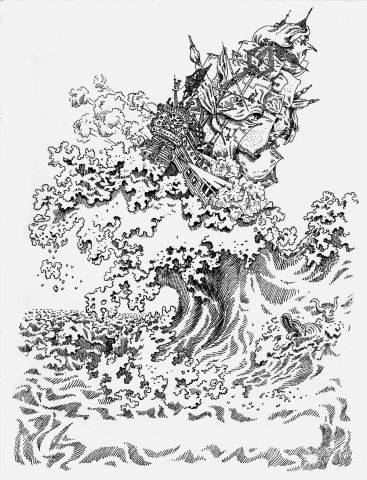
The panel I was secretly most pleased to have convened — because it dug into the kinds of backroom work that people who never worked in print-age newspaper or magazine offices rarely understand, however closely they’ve read the output — was the final one on Friday, which Tom ran: The encroachment of professionalisation on a generational playpen — What were the pressures in a music paper’s editorial office, and what was the potential? Half-joking about the working conditions, Cynthia Rose used the term “plantation journalism”: the papers themselves were really make a LOT of money, but little of it reached the editors and stringers, hired to deliver a Stakhanovite output day after day (these were cheaper times to live, for sure, but there was still no margin to put by even a penny of every pound you earned). Tom reaches for a rather different metaphor: “… [T]he sense of the work on an underground or weekly mag – the circus of sheer effort involved in bringing the bastard to land each week, that was grand to hear about, like a hundred years ago you might have heard men talk about life on a whaler…” This was a small, shared world, baffling and perhaps worse to those who come long after, beleaguered by surging pressures but united by task into intense group loyalty, its reward mainly a very local prestige, with (lurking at once just over the horizon but also, unmentionable, within the crowded quarters) the terrific Moby-Dick shaped leviathan of, well, what, exactly? The implicit politics of the craft of this long-vanished music-writing worldlet?
There are plenty of other very smart things that could be quoted in that thread. But this is me writing, so right now instead I’m going to quote myself, because I think this is relevant: “We live in a time of extremes of proximity, not just between cultural blocs formerly more safely distanced (or so it seemed, in the metropole), but also between present and strong representation of elements of the past […]: I think negotiating these proximities has become a *lot* more perilous, but we actually do have to negotiate this situation (and not just wish it away as a symptom); which inevitably means become expert in far more things than we perhaps formerly believed we signed up for.” The internet has collapsed distances, and not just between the many militant faiths and political stances as they exist in the once-wide world today: we are more than ever, every day, hard up against idealised echoes of the past, and more than this echoes of various rival idealised pasts, making very strong demands on us. We castigate those who wish to return us to such-as-such a point in the past — arguing (generally correctly) that they have no strong sense of what it was actually like — and then we turn round and lament that such-and-such an organisation or institution is not what it was, and will only return to relevance when it rediscovers and reanimates its earlier principles and purpose. At which moment, others naturally castigate us. In other words, how we address and draw from the past is as live and tricky an issue as it’s ever been: even “where’s that jetpack I was promised!?” is an appeal to a past mode of futurism. As time passes, revolutionary purists more and more become original-intent reactionaries: one thing we ought to have learned from punk is the inextricable tangle that year-zero vanguardists get themselves into as they thrust us to the future: “rip it up to start again” is an intrinsically conflicted demand…
A conference organised to cover 1968-85 can (just about) get away with being eight panels and roughly 30 people: probably not representative of those involved, but not quite out of sight of it. As Hazel said to me at some point, how would you even begin to select people represent the last 15-odd years? You’d need 20 panels with 50 people on each. An ocean so full of vessels, and indeed wrecks of vessels… In their physical and structural make-up, the seas we sail have changed utterly. To quote myself again (this time from a 2009 essay for a collection on Afrofuturism that rather irritatingly still hasn’t appeared: A Splendidly Elaborate Living Orrery: Transplanetary Jazz: Further Thoughts on Black Science Fiction and Transplanetary Jazz):
With the internet, the discursive cosmos can seem inverted, matter for emptiness, emptiness for matter: a multitude of isolated geocentric bubbleworlds, planets and asteroids dragged into their neutron gravity, the heavens become a dense, grinding press of shattered astral matter… Encounters are still possible: to tunnel to this or that bubble isn’t rocket-science. But no gorgeous sunflare or night glow through velvet dark to call us, magnets to the romantic eye all broiled to cinders. And history — that painstaking reconstitution of real-time fragments — seems harder than ever. Stargazing has become a shuttered archeology of the hardscrabble crystalline sky.

A friend who sat though the whole thing, both days, described it afterwards as being the tale of a long battle utterly lost. And half of me sadly says yes to that; and half of me stubbornly thinks no. In practical terms, of course we can’t reinvent the music-press of the 70s and early 80s: it was never less than a curious serendipity, a confluence of a great many unrepeatable things; it was rooted in technologies that no longer exist and a society that has very much mutated. As a format, it was as highly unstable as it was path dependent: it didn’t make much economic sense, and very few writers made their fortune from it (a few made their fortunes escaping from it). Maybe for a while it was possible for a select few, with the right gifts but also the correct attributes, to make an inexpensive living from it (which I never did; my entire working life I’ve made my living basically correcting other people’s spelling). Many many people were unable to break into that select few — I made a point of inviting some people who were outsiders at the time, even if they momentarily had their foot in the door; who don’t ordinarily get to join in the retrospectives. There’s no dearth of good writers today, that’s not the problem at all (OK don’t get me started on good editors). But we haven’t found a way of making the current set-up pay for itself, in a way that’s remotely fair to the majority of the writers battling their way through it.
But it was also always after all a tale of the belief in the benefits that accrue by unleashing the unlettered urchin glee of the young on the wider world — on cultural legacies till then beyond their ken — and then battling with the problem of how things fell out when this wider world, as it always did and always will, began (a) to return the not-unpoisoned compliment, and (b) to include the past. As for (a), the urchin cheek now flows both ways, and now and then respectful tact flows with it also, and the two are needed, going in both directions, for adult relationships to survive that that aren’t lifeless or toxic reverence.
 But (b) is much tougher to trust in — the past only ever has unbiddable parity when it manifests as a stony unchanging weight, the return of the dead as a forbidding monument. Yes, perhaps the designated crew can journey out to it the way we did with Afropop in the 80s or KPop over the last few years, with care as well as insolence, with fannish fascination as well as straightforward well intentioned inquisitive ignorance — but with Afropop and with KPop at least there was potentially a case that a similar counterflow might push back, to challenge the errors and rude liberties taken. That the implicit problem of “who’s this WE, white man?” could one day dissolve or transform in the encounter, to everyone’s benefit. But how can the past push usefully back in like fashion?
Journalism, including cultural journalism, is of course primarily about the now — it’s called NEWS for a reason. And part of working out what’s actually significant now includes a recognition of the relevant force and quality of the various flows. I’ve paid tribute to these music-magazine and weekly paper offices of long ago because — by the serendipity of the times — they saw a coming together of writers and editors from very different backgrounds, responding to very different calls. And that’s part of the complex, contradictory weave that I value, or mourn, if that’s the appropriate word. But now I think of it, the best of the writing exhibited the same characteristic: every writer’s indiviudal style that I admire from then (and also now, because this hasn’t vanished) was and is a crackling codeshifting weave also, of threads that come from very different sources. (Because good writers are always readers, and these were always wideranging readers, and listeners too…)**
And as codeshifters get older, their involvement to history — the one I’m obscurely worrying at throughout this rambing post — of course grows in and out of their relationship to their own youth; to their memory; to the values they set out with long ago; all this is bound into what they do and who they are. And some people settle into this badly, because they can shift themselves into a place of comfort and shallow complaisance. And others, well, others find they’re always already been embedded in a world that has cultured such negotiations and such oscillations reasonably effectively: they maintain curiosity, self-awareness, self-irony, amusement, kindness, anger, the ability to manage simultaneous contradictory status and pressure and pull. The trapdoors and the timebombs, they’re coded right into us, if we know how to listen — and of course we learn to listen to our inner pirate crew by learning to listen to others; others often not at all like us, insofar as we’re even like ourselves. How we address the popular, how we prioritise the semi-popular, how we respond to the unpopular or the plain unknown, these are ever-more linked into our relationship to the past, recent or deep: and this is not going to change; if anything it’s going to intensify.***

*The world seems to be divided on what a correct plural of the noun ethos is: ethe or ethea or (the incorrect but greeky) ethoi or (the anglicised but silly) ethoses. In the mood of the moment, I choose to take this to be telling…
**I’m going to defend the mixedness of this overall metaphor as further evidence of what it is I value: gallimaufry, salmagundy, macaronics: pie itself gets its name from the mixed jumble of items found in a magpie’s nest…
***There’s a peril in dredging up the carcasses of the vessels of the past, and probably more than one, especially if you do it collectively. Collapsed across the treasures you hoped to re-acquaint yourself with is the bony evidence of crimes you’d hoped perhaps to forget, and so on. But the discussion of all that is for the future, now, when the book starts to be made. For now, I want once again to say a powerful and heartfelt THANK YOU to everyone who participated and attended, and advised or helped in ways large and small. It was what it was, and what it’s going to be, who can say?

 A few weeks back, Marcello asked if I had any thoughts on this TPL post (about, among other things, Johnny Hates Jazz and The Wire as it was in 1986/87). Well, I did and I didn’t: I did because this era of my mentor Richard Cook’s project is very much the making of me, and I absorbed an enormous amount of his sensibility and thought a lot how to advance it best (whether or not I did is for others to judge; sadly he’s no longer with us for his perspective). But I didn’t (at least tactically, for now) because I have for most of this year been organising a conference on UK music-writing in the 60s, 70s and early 80s, trying to focus on how things had evolved from roughly 1968 (and the discussion of rock in the underground press) through to maybe 1985, when (in my judgment) Live Aid hit the inkies hard sideways, and changed their political ecology for good (Geldof’s revenge, you could call it). The serious social potential of pop began to be more and more of a topic for the tabloids and the broadsheets: the inkies began more and more to fold in into their own niche, exploring less and less. In this they were reflecting changes in the world, to be sure — but they were also amplifying and accepting these changes.
Richard’s was (to me, then) the smartest part of the counter-response to these shifts — The Wire considered as a magazine about all possible music and indeed all possible ways to write and think about music, including the free play of the most scholarly anti-philistines against pop’s and punk’s cheerful teenage school’s-out yawp (not to mention a phalanx of more studied anti-music and anti-art stances). Max Harrison alongside Val Wilmer alongside Biba Kopf alongside, well, me.*
Anyway, looking too long and hard at (meaning reassessing) all this right now means not just distracting me from a rolling reassessment of the earlier era — as I chat to the various likely participants in my conference, and recalibrate my understanding of how things were — but probably undermining my entire current provisional grasp of what I need to be grasping. So for now**, you should be boiling what I am (possibly) thinking out of here (where I outline the purpose of the conference and name the participants) or here (a Facebook page you can like and also share) (share it!) or here ( tumblr with some nice pictures and also rolling thoughts on what organising a conference entails) (grief! also joy! so far much more joy luckily… )
Here’s who’s confirmed (reverse alphabetical): Val Wilmer, Richard Williams, Mark Williams, Simon Warner, David Toop, Bob Stanley, Hazel Southwell (nee Robinson), Laura Snapes, Mark Sinker, Cynthia Rose, Penny Reel, Mark Pringle, Tony Palmer, Charles Shaar Murray, Paul Morley, Toby Litt, Esther Leslie, John (aka Jonh) Ingham, Barney Hoskyns, Jonathon Green, Beverly Glick (aka Betty Page), Paul Gilroy, Adam Gearey, Simon Frith, Nigel Fountain, Tom Ewing, Kodwo Eshun.
(Not quite confirmed but definite interest shown: Tony Stewart)
 Panel topics not entirely coalesced yet but will likely include: what the undergrounds knew that the mainstream was missing; rhetorics of outsider style; the changing make-up of bohemia; handling pressures on the playpen, professional and commercial; the rock press as a species of agit-prop samizdat; and legacy and lessons today…
You’ll need to register/book here but it’s free!
*Me (that is) as in the me just today delighted to be in receipt of the intelligence that (OMG LOL) Daphne & Celeste (@Daphne_Celeste) is now following you on Twitter!
**My rule-of-thumb back in the late 80s and early 90s, on ways to ensure The Wire really actually did have the widest possible scope, was to think of it as the mini-arena in early 80s NME jostled with mid-70s MM, allowing strategic space for sensibilities like Musics and Collusion, the late 80s Village Voice (a revelation to me) and even (bcz I have never not been a bit of a goth) Zigzag.
 Over at Popular, Tom’s reached 1997 and Elton and Lady Di — his essay is of course excellent, and so are many of the (currently) 120+responses, especially Phil Sandifer’s, which is all about Blake and a haunted political unconcious. I’ve been superbusy all week, so my (very late, very long) comment is way down the pack; so I’m reposting it here also.
PˆNK S LORD SÜKRÅT CUNCTØR ON 30 MAR 2014:
“Queen Queen Caroline washed her hair in turpentine”
I don’t at all buy that strong emotional response to the death of someone you didn’t personally know is *necessarily* fake or silly. To jump sideways into it, here’s something I wrote on another website when the mass social-media lament for the death of Steve Jobs was being discussed, similarly scornfully:
“My mum wept when Willie Rushton died. She never remotely knew him, except as a face on telly or a voice on radio she enjoyed; he was a few years younger than her, a celebrity of a fairly niche type — and his death hit home.
“I was puzzled at the time, as I found him vaguely annoying, but afterwards it seemed pretty obvious she was weeping — as much as anything — for her own youth; for the bright cast of a particular hoped-for world she’d envisioned when young, and this was as much as anything a lament for the way things hadn’t turned out the way she imagined, for her and for the world. Rushton — in some small, almost private way — was bound up in this (memories of she and my dad when first married, bright semi-innocent young things reading Private Eye in its very early day and caught up in the early 60s notion that things were moving on away from the dreary stifling past, opening up, changing… something like this).
“Seems to me the Apple story can easily be fitted into a similar narrative, on a larger scale: a widely shared naive utopianism that felt like the air you were breathing at a particular time — and now, with the death of someone apparently central to it, you suddenly face not only your own mortality (that happens with any death), but also the sense of the foolishness of the optimism with which you set out on your current journey long ago; the degree to which, yes, you’ve wised up since (you’ve had to) and you recognise how much more flawed and perhaps even empty were the things you once invested so much in than you saw at the time; and above all you see the contrast with where you’ve ended up; where — if you have this kind of empathy — we’ve all ended up, given how abrupt the recent economic pull-up will have been, for many. Obviously there’s a lot more actually being mourned than simply this guy; it’s a public outlet for endless private griefs — hence its inchoate, oversimplified intensity — but also I think for a kind of vague youthful solidarity of outlook and temperament and hope; a recognition that it’s gone, and that it was maybe never worth as much as you hoped, and that nevertheless you preferred yourself when caught up in its fevers and deliriums than yourself today.”
I was awake and watching the story of Diana’s death unfold in real time on TV in the early hours of that sunday: a friend had called to let me know, and we stayed on the phone as we watched, wrapped in blankets and talking it through. She had been awakened by an acquaintance who slept with the telly blaring (an acquaintance who had something of an annoying and obsessive crush on my friend; rather than stay talking to her, or sitting through it alone, she’d thought “Mark is a journalist, he needs to know…”). This meant I knew very early, and then missed most of the daylight sunday you’ve all described (I went back to bed and slept in). It also meant that the news was marked with dreamstate oddity and even unreality for me — and nothing about it afterwards surprised me. I was in Amsterdam on holidaythe rest of the week, away from even Dutch TV; Dutch newspaper billboards were the closest I came to enduring blanket coverage, and actually it was far from blanket, just a few screamer posts on kiosks, and headlines on magazine covers on shop counters.
Two people I knew well were really upset — I was already in the process of terminally falling out with one (for unrelated reasons) and never got to quiz her on it. The other is someone who’s unusually self-aware and self-critical: when I interrogated her, she was straightforward: “It’s not really about Diana, Mark, really I think I’m mourning myself.” (Actually this is probably where the insight for the Rushton quote comes from, if insight it is.) I’m hesitant to generalise about the two of them — quite apart from anything else, they disliked each other intensely — but I suspect a complicated and fraught sense of who they were in relationship to their own families and backgrounds is part of the story; there was a lot of anger there. If Di’s luck in the early 80s had been the very opposite of meritocracy, this too might have its attractions: after all, happiness of all things shouldn’t actually be something you have to EARN, via superior mind or talent. Everyone deserves it; this I take to be a root for some of the vague shared idealism apparently torrented onto her, however contorted the connection seems. It surely can’t be very surprising that a family relentlessly presented to us as a social and political symbol of cohesion and continuity gets a fvckton of private symbol projected onto it — and that apparent rifts in that unity and continuity take on intensely personal meaning.
Nor are such vast events at all a new thing. I’m old enough to remember my dad travelling to London in 1965 to be part of the (vast) crowd for Winston Churchill’s funeral. I watched it on (black and white) TV and painted a picture of it — all dark brown smeary colours as I recall (I was five). Typically — this very much fit in with family lore — Dad had arrived in London only to realise he had flu; so he spent the day itself feeling sorry for himself in bed at my grandparents’ house. Thirty-odd years before that they had taken him out to view the parades for the coronation of Edward VIII — oddly enough, since I’m pretty sure they were both still in the communist party at that point — and he had spent the entire time squatted on the ground putting gravel into his cap, and missed the horse and the carriages and everything (he was five).
But more to the point, two centuries ago, another Prince of Wales set aside a wife, Caroline of Brunswick — and relentlessly smeared and scorned her in order to force a divorce. At his coronation, in 1820 (he became George IV), she arrived on the steps to claim her crown. Security barred her from entering the ceremony; she died three weeks later (of grief or exhaustion or disappointment or possibly just ordinary pre-modernity illness). During all this time enormous public sympathy, among the middle and artisanal classes, swelled and swelled — to the point that she was functioning as a symbolic rallying point for radical anti-establishment voices like Cobbett. Absurdly enough, no doubt — I doubt she much admired the Jacobins, though the prince’s pet press often laid this charge. Her woeful tale — or lurid versions thereof — was excitedly taken up the nascent yellow press based round Seven Dials…
A little while after Diana’s funeral, the writer Christopher Hitchens made a TV polemic mocking Dianamania. It wasn’t a good programme: for a start, TV never really suited him, he always seemed stiff and anxious and sweaty, and his undeniable gift for a sentence on the page rarely translates — said out loud it could come across orotund and pompous. He didn’t really trust or respect the medium, and inevitably it turned this contempt back on him. I’d always liked him as a writer because he seemed strong on ambiguous subjects, in particular the subtle complexities of the reliably middlebrow — on Larkin’s private politics for example, or on the former leftist and intellectual turncoat Conor Cruise O’Brien. He was never great on popular culture (my personal theory here was that Hitchens always relied on his pal Martin Amis for insight into UK popular culture; Amis being a man whose entire body is made of tin ear). But this — to me, as someone who had admired him — was worse; scornfully simplistic and hectoring and smug in its mockery of the phenomenon of public emotion: a shock and a foreshadowing. Of course, the “stiff upper lip” is a semi-modern invention itself, a device fashioned in dozens of efficiently ghastly schools up and down the land, to firm up the maintenance and management of a vast empire — to demonstrate “our” fitness to govern the world’s chaotic masses. Seriously, there was no stiff upper lip in 17th or 18th century Britain; quite the opposite. And sure enough, four years later, Hitch would accelerate his transition across the political spectrum and gleefully throw himself into the cheerleading for all-out war; a lurch back into empire-think, the self-regard of the idea of a heroically civilised “we” put here in the world to punish the barbarians; to violently force on them the gift of civilisation. This too was an atavism, whatever its more-rational-than-thou demeanour and complacent mansplainy privilege.
All of which is perhaps a way of saying we live in a strange and ancient land — with several peoples and languages and all kinds of subterranean currents and blockages surging through its history and across its terrains. I’m prepared to accept that mass delusions and folk panics are a social fact, and sometimes a scary one, which we should try and sidestep — but I also believe that sat goblinish among them is the idea that we educated moderns at least have made our way out onto the calm cool uplands of reason and sensible ordered life. Of course we haven’t: quite apart from anything else we are all of us still battling family demons; and of course we respond to subterrean historical forces as we would to a book or film: we’re genuinely moved by things that aren’t at all present in our physical lives, which nevertheless have enormous force in our inner landscapes. In the 1930s, when the civilised European space as he saw it was threatened by the rise of fascism, T.H.White wrote The Sword in the Stone, a book about the soon-to-be King Arthur being trained in anachronistic democratic theory by Merlin, a wizard who lived backwards through time; White based much of his story on a romance written by one Thomas Malory, in the last ghastly decades of the Wars of the Roses. The fragile just and chivalrous space that Malory imagined Arthur creating was called Camelot; it would be shattered in later books by Arthur’s vengeful bastard son Mordred forcing a legalistic war with Arthur’s best friend, Lancelot. White doesn’t call this land England or Albion or Britain: he calls it Gramarye (as in “Merlin’s Isle of Gramarye”, from the last verse of Kipling’s poem “Puck’s Song”). Gramarye is a strange old english word which has given us the modern words grammar and grimoire (meaning a texbook of magic) and — of course, bringing it all back to Diana — GLAMOUR. White’s books would be gathered in 1958 into a single volume, called The Once and Future King; the fourth book, bleak and poetic and never published separately, in which Arthur dies and Camelot falls and Malory steps into view, is called The Candle in the Wind.
]]>
