… and we both agreed it’s bad and here’s why
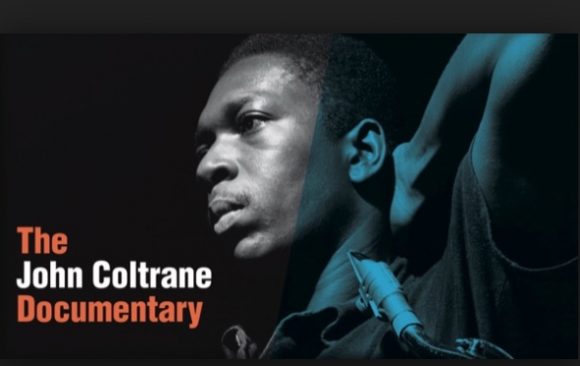 it does the usual documentary thing, of hunting out a bunch of talking heads — family, professional, the commentatative pundit — and then merely stitching them together with stills and live footage into the same version of the story we always already know… anything odd or interesting that pops out of someone’s mouth is not returned to or dwelt on or even apparently noticed
the shape it offers is utterly conventional: beginning times (where from, where first played); times with miles (interrupted by drugs); GIANT STEPS; break-up of marriage; A LOVE SUPREME; final tour of japan and sad early death
these mounting avant-garde milestones are all routinely invoked, but really no attempt is made to say what made them milestones — nearly a dozen musicians are present yabbing away, but nearly none of them say anything whatever about the changing content of the music, coltrane’s technique, his approach, what was concretely at stake in the choices being made, on-stage or in the studio. there was no glimpse AT ALL abt what it is that JC actually did, that was new to and impressed other musicians — or bothered them. wayne shorter for example, a shrewd and highly intelligent man (as well as player), is on-screen for a little. I interviewed him once and got him to talk abt the effect the arrival of the beatles had on the scene in c.1964: he was funny and interesting abt how much they divided jazzers, how some pricked their ears up and others just said “more nonsense from whitey”. we know that jazz in the early 60s wasn’t a collegiate love-in, anything but… but JC has undergone retrospective MLK-ification, and the fights and fears are forgotten in the haze of blissed-in pro forma sanctification
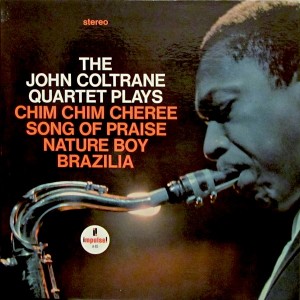 (i’m not really dissing shorter, sonny rollins, mccoy tyner, benny golson or jimmy heath here — the latter two, as perhaps not-stellar-musicians who were JC’s friends and colleagues in the early days, did give good backstage anecdote, even if mainly abt the junk-ambience everyone was battling with, and the first three were either asked dull questions or — as likely? — had their interesting answers consigned to the cutting-room floor)
(here’s who I am somewhat dissing however: carlos santana, wynton marsalis, cornel west, BILL fkn CLINTON)
(tho west clearly knows little abt music in the sense I’m thinking abt, and somewhat gave that away in a performance of twinkly down-with-the-streets bullshitting that was at least somewhat signalling that he knew this doc was trash and was playing along, for you to spot and the director not to)
(and santana and also john densmore were at least talking as fans responding to something on the way to their own music and sensibility: the former a notorious spiritual-hat guitarwank bore after his early records, the latter apparently a massive elvin jones nut as a teen)
(cue for santana, the claim — do I believe this, I am not sure — that when he’s on tour he “purifies” every hotel room by burning incense and playing the whole of a love supreme) (cue for densmore lots of stills of JIM MORRISON, surely coltrane’s purest equivalent in the rock universe)

(also there were some historian-biographers and some embarrassed-seeming family members, who obviously love their dad but feel somewhat squinky abt this tin-eared project — their dad who I am happy to continue to believe was an unusually lovely and generous man, especially for a working musician) (scope for an ingenious approach: present JC as the anti-miles, and deal w/their journeys in compare-contrast parallel)
so yes, i was hoping at least to learn something or see or hear something that that wd help inch me in a little past my long-term JC-sceptic status: I get that people adore him and that he is considered important, but this very highly important contribution that none of us can put into words bores me, I find his tone entirely unappealing, and ditto the fetishisation of granite-hard everests of effort in the journey, like some kind of saxophonic rich piana. PEOPLE ONLY EVER TALK LIKE THIS ABOUT HIM — or if they don’t, they either weren’t selected for this doc or the relevant passages ending up unused
and I have no yen to push back on ppl’s veneration (much), but NOBODY TALKS ABOUT HIM WELL and I wish that could change: huckster-pundits clinton west and WYNTON FKN MARSALIS worst offenders in this respect. until the peerlessly maddening moment — my friend and and I p much turned to each other and shouted #SMDH — when EINSTEIN no less was wheeled out to explain and explore what GENIUS is, what it does and and how it work, completely with equations and everything floating past in the edit-collage.
of course they didn’t actually deploy the equations in any coherent or speculative or provocatising way, but they DID display them. the publisher’s motto is: every equation included in a popular science-writing book halves the readership…
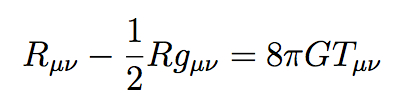 well, here we do get THIS —->> but nothing abt chords or scales or what gitler meant by “sheets of sound” or the west african sound of JC’s soprano in “naima”, or the various things (political, “spiritual”) that the search for FREE actually meant to ppl, to coltrane or to anyone else…
(minor side issue: has relativity special or general even been used intelligibly to illuminate music? I think likely NO: i’d kind of love to see it pulled off somewhere, if only in the form of trolling, but — as an actual semi-credentialed mathematician w/a degree and everything, this was just halfwit piffle)
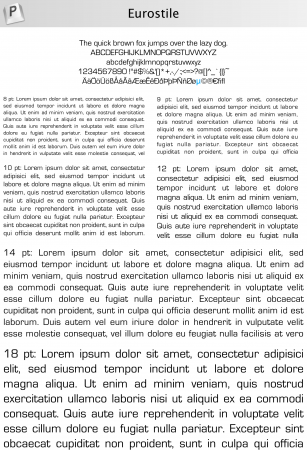 in general — and the einstein moment entirely fits here — the interstitial work was just lazy garbage. it was an era of strong photography, so it could hardly help looking OK from the stills angle, despite very few pictures you hadn’t seen 30 times before (and every photo was panned and zoomed in the same dull way): some of the live footage was genuinely new (at least to me; tho I very much doubt to an actual hard-seeking fan). it rested a lot too on some (I thought) quite bad mystical afro-futurist art as the backdrop point of rest. whenever they recreated a newspaper splash w/headline and photo, if you looked carefully you could see that the paragraphs of text too small to read were ALL just lorem ipsum fkn dolor, which wtf you half-measures cheapskates (obviously the recent TSwift hommage to same was witty and cheeky in comparison)
(scope for a second ingenious approach: shape the whole thing round lorem ipsum dolor, and the idea that the blow-the-top-of-yr-head-off playing of ascension is designed — lol like metal machine music — to reach a plateau of buzzing calm… )
and a final bad decision: denzel washington reading as coltrane’s actual voice, which just took away any quirky sense of the man himself and replaced it with humbug hollywood gravitas
(tbf this^^^ is a super-tough ask for any actor I think: but I’d almost have preferred — since we’re anyway in wynton-propinquity — something more outrageously ken burnsy as a v/o. something that gave a sense of past times and lost sensibilities: a courteous gentlemanly black north carolinan at sea in the turbulent city) (one of the takeaways from the stream of stills is how melancholy and also how gawky he often looked; his ungainly country-boy goofiness: he was no dapper hipster, quite the opposite)
so the move ppl use to dodge talking abt the music is donning the spiritual hat by proxy: and then — having invoked spirituality — say nothing whatever about it, what it means, how coltrane deployed it (as mask, as weapon, as balm, as what the fuck ever). closest to achieving actual concrete comment is sonny rollins, gnomic as ever and resplendent in an amazing crimson suit: for a start he substitutes the word “celestial” for the word “spiritual”, and does so in a context that implies the JC’s self-constructed pan-faith religiosity was a way to step away — away away far far away — from planet earth’s grief and crimes and conflict, and explore how to see and sketch and perhaps fashion shared samenesses among the belief-systems and cultural sonics of the many warring clans. “the big picture,” rollins calls it, simply and directly enough: and of course the doc sweeps past this and makes no connections, and hints at no sense that they just heard what they heard…
 of course the word celestial (as slyboots rollins well knows) takes us to the jazz einstein who could (IMO) crack open all these issues, but we sweep past him entirely: this would be sun ra, whose chief sideman john gilmore is said to have inspired JC to exclaim “he’s got it! John’s got the concept!” ra is dead and so is gilmore, but marshall allen is (at time of posting) still alive and well and active!! why not get him in front of the camera? this film is after all clumsily named for a piece inspired by gilmore’s sound. “space music is an introductory prelude to the sound of greater infinity,” says ra. “it is a order of sounds synchronised to the different order of being”
yes this is opaque and riddling — hallo and welcome to the heliocentric worlds! — but ra’s sense of vaster hierarchies or orders and layered geometries as a recalibration of mere mundane perspective is at least a well enough trod approach to see coltrane’s journey somewhat from a side elevation: and ra’s bleak pessimism is also a help I think. instead of the somewhat numbing glad-hand positivity of (allegedly) achieved lovely oneness — which is what I’m most allergic to in the backward-looking coltrane discourse — there’s SR’s often-stated belief that the human race haven’t got the concept and won’t get it and it’s already after the end of the world, brother. i don’t believe JC believed this — or anyway couldn’t bear to concede it to himself — and all of his sound is a FIGHT against it, on the exact same battle, and a fight (I assume) against the elements in himself which were drawn to ra’s scornful (and invigorating) anti-humanism.

instead of course we get wynton, riding the reverence trane with total chutzpah, given his known views on free: and — despite his endless ability to grab up his horn and demonstrate the rhythms of a king oliver joint — again saying nothing (good OR bad) abt the musical choices trane was making [EDIT: no, he says that the earliest recording of trane’s playing, from the late 40s, while he was still in the army i think, demonstrates he couldn’t really play yet — but we’re just supposed to be able to hear why they’re saying so, nobody stops to say “this bit is why it’s bad”]. It somewhat occurred to me to wonder whether his condition of involvement was the non-discussion of ra (who his mentor stanley crouch has dismissed as a pure charlatan). at least — speaking of charlatans, or anyway trickster-figures enjoying playing them on TV — cornel west has the grace to say of ASCENSION that he has no idea what the fuck is going on, but he’s happy to be long for the ride bcz no doubt one day he will (in other words, I’m kinda glad someone voice this sentiment and that it was someone embracing it not denouncing it) (I might as well say here that west is someone I’m super-ambivalent about, as observer and as troll)
(plus I quite like imagining how grumpy CW probably was at the screening to find himself alongside fellow huckster-pundit clinton, doing his own — different but equal — version of a similar hustle for would-be-woke but unwakaeble northern urban whitey)
so anyway it ends in a crazily aggravating place which (A) exactly — if timidly — approaches the pan-cultural sense of mourning and bearing witness, JC in japan on his final tour, visiting the temples at hiroshima and so on: and hunting for a celestial language that translates the feels and the meaning of this for him to lie interweaved with every other mode cultural expression, and then (B) inflects the entire story through the self-regarding narrative of an insane japanese collector-fan who lives in a room that’s a cave-shrine to the commodity god coltrane, just jam-packed with every single gatherable object. the fact of this guy at all is a tell; a symptom: except he of all people is the worst person to be telling it
(i mean, imaginably not: he might have had insightful perspective, it’s just that he very evidently — after just a few moments in his presence — doesn’t. meanwhile we’re watching JC touring and already — tho it’s not clear if he knows it yet — mortally ill: which is simultaneously moving and maddening)
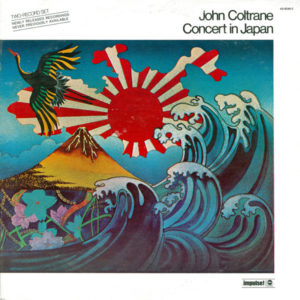
two last points (good moments thrown away):
• there was a colour shoot from the early 60s I’d never seen before where the photographer had directed him to look about in portentous male-model style in some backstage space full of ropes and ladders, which made me grin, bcz you can see his ugh-this-is-dumb look as he does it (this may be why the pictures aren’t well known of course)
• the tale of trane and miles feels thrice-told and yet the evident interesting friction of it feels to me endless sidestepped and elided: so of course the “how do you stop? just take the horn our of your mouth!” story is trotted out, but of course it’s also referred to as joke and in-studio banter, miles being incrutable his non-corny self, and not at all explored as an actual real aesthetic flashpoint between the two. there’s even revealing live 1959 footage of miles side of stage while trane solos in (apt title) “so what” and you can absolutely tell he’s thinking GET ON WITH IT JOHN
(originally created on THIS ILX POST. cross-posted at freaky trigger)
]]> There are days when passing through London feels like an immense, patient, intricate unwinding of the thread through the labyrinth laid down — without much forethought — years before. I’ve lived here 31 years: there’s a bus strike, I’m going to be walking down roads and clocking buildings I haven’t thought about for decades. More to say one day about this feeling as it applies to my mum, my dad and the town of my birth, but one way and another yesterday was a good day to be casting my mind back.
]]>
There are days when passing through London feels like an immense, patient, intricate unwinding of the thread through the labyrinth laid down — without much forethought — years before. I’ve lived here 31 years: there’s a bus strike, I’m going to be walking down roads and clocking buildings I haven’t thought about for decades. More to say one day about this feeling as it applies to my mum, my dad and the town of my birth, but one way and another yesterday was a good day to be casting my mind back.
]]> Robin Carmody messaged me on FB to say he’d just been reading my le carré rereads on ilx, and enjoyed and agreed with them. Since one of my projects here is I guess to begin to centralise my boringly dispersed and rhizomatic self, I thought I’d link them here. This is the original, inset in a longer ilx thread: liveblogging Tinker Tailor Soldier Spy. This is the same excerpted at FT (i.e. all the rest of the entertaining ilx chatter cut away). This was intended as a liveblog of a reread of Smiley’s People, except things ran away with themselves and I ended up just posting some thoughts (on an ilx thread no one else ever contributed to).
]]>
Robin Carmody messaged me on FB to say he’d just been reading my le carré rereads on ilx, and enjoyed and agreed with them. Since one of my projects here is I guess to begin to centralise my boringly dispersed and rhizomatic self, I thought I’d link them here. This is the original, inset in a longer ilx thread: liveblogging Tinker Tailor Soldier Spy. This is the same excerpted at FT (i.e. all the rest of the entertaining ilx chatter cut away). This was intended as a liveblog of a reread of Smiley’s People, except things ran away with themselves and I ended up just posting some thoughts (on an ilx thread no one else ever contributed to).
]]> Over at Popular, Tom’s reached 1997 and Elton and Lady Di — his essay is of course excellent, and so are many of the (currently) 120+responses, especially Phil Sandifer’s, which is all about Blake and a haunted political unconcious. I’ve been superbusy all week, so my (very late, very long) comment is way down the pack; so I’m reposting it here also.
PˆNK S LORD SÜKRÅT CUNCTØR ON 30 MAR 2014:
“Queen Queen Caroline washed her hair in turpentine”
I don’t at all buy that strong emotional response to the death of someone you didn’t personally know is *necessarily* fake or silly. To jump sideways into it, here’s something I wrote on another website when the mass social-media lament for the death of Steve Jobs was being discussed, similarly scornfully:
“My mum wept when Willie Rushton died. She never remotely knew him, except as a face on telly or a voice on radio she enjoyed; he was a few years younger than her, a celebrity of a fairly niche type — and his death hit home.
“I was puzzled at the time, as I found him vaguely annoying, but afterwards it seemed pretty obvious she was weeping — as much as anything — for her own youth; for the bright cast of a particular hoped-for world she’d envisioned when young, and this was as much as anything a lament for the way things hadn’t turned out the way she imagined, for her and for the world. Rushton — in some small, almost private way — was bound up in this (memories of she and my dad when first married, bright semi-innocent young things reading Private Eye in its very early day and caught up in the early 60s notion that things were moving on away from the dreary stifling past, opening up, changing… something like this).
“Seems to me the Apple story can easily be fitted into a similar narrative, on a larger scale: a widely shared naive utopianism that felt like the air you were breathing at a particular time — and now, with the death of someone apparently central to it, you suddenly face not only your own mortality (that happens with any death), but also the sense of the foolishness of the optimism with which you set out on your current journey long ago; the degree to which, yes, you’ve wised up since (you’ve had to) and you recognise how much more flawed and perhaps even empty were the things you once invested so much in than you saw at the time; and above all you see the contrast with where you’ve ended up; where — if you have this kind of empathy — we’ve all ended up, given how abrupt the recent economic pull-up will have been, for many. Obviously there’s a lot more actually being mourned than simply this guy; it’s a public outlet for endless private griefs — hence its inchoate, oversimplified intensity — but also I think for a kind of vague youthful solidarity of outlook and temperament and hope; a recognition that it’s gone, and that it was maybe never worth as much as you hoped, and that nevertheless you preferred yourself when caught up in its fevers and deliriums than yourself today.”
I was awake and watching the story of Diana’s death unfold in real time on TV in the early hours of that sunday: a friend had called to let me know, and we stayed on the phone as we watched, wrapped in blankets and talking it through. She had been awakened by an acquaintance who slept with the telly blaring (an acquaintance who had something of an annoying and obsessive crush on my friend; rather than stay talking to her, or sitting through it alone, she’d thought “Mark is a journalist, he needs to know…”). This meant I knew very early, and then missed most of the daylight sunday you’ve all described (I went back to bed and slept in). It also meant that the news was marked with dreamstate oddity and even unreality for me — and nothing about it afterwards surprised me. I was in Amsterdam on holidaythe rest of the week, away from even Dutch TV; Dutch newspaper billboards were the closest I came to enduring blanket coverage, and actually it was far from blanket, just a few screamer posts on kiosks, and headlines on magazine covers on shop counters.
Two people I knew well were really upset — I was already in the process of terminally falling out with one (for unrelated reasons) and never got to quiz her on it. The other is someone who’s unusually self-aware and self-critical: when I interrogated her, she was straightforward: “It’s not really about Diana, Mark, really I think I’m mourning myself.” (Actually this is probably where the insight for the Rushton quote comes from, if insight it is.) I’m hesitant to generalise about the two of them — quite apart from anything else, they disliked each other intensely — but I suspect a complicated and fraught sense of who they were in relationship to their own families and backgrounds is part of the story; there was a lot of anger there. If Di’s luck in the early 80s had been the very opposite of meritocracy, this too might have its attractions: after all, happiness of all things shouldn’t actually be something you have to EARN, via superior mind or talent. Everyone deserves it; this I take to be a root for some of the vague shared idealism apparently torrented onto her, however contorted the connection seems. It surely can’t be very surprising that a family relentlessly presented to us as a social and political symbol of cohesion and continuity gets a fvckton of private symbol projected onto it — and that apparent rifts in that unity and continuity take on intensely personal meaning.
Nor are such vast events at all a new thing. I’m old enough to remember my dad travelling to London in 1965 to be part of the (vast) crowd for Winston Churchill’s funeral. I watched it on (black and white) TV and painted a picture of it — all dark brown smeary colours as I recall (I was five). Typically — this very much fit in with family lore — Dad had arrived in London only to realise he had flu; so he spent the day itself feeling sorry for himself in bed at my grandparents’ house. Thirty-odd years before that they had taken him out to view the parades for the coronation of Edward VIII — oddly enough, since I’m pretty sure they were both still in the communist party at that point — and he had spent the entire time squatted on the ground putting gravel into his cap, and missed the horse and the carriages and everything (he was five).
But more to the point, two centuries ago, another Prince of Wales set aside a wife, Caroline of Brunswick — and relentlessly smeared and scorned her in order to force a divorce. At his coronation, in 1820 (he became George IV), she arrived on the steps to claim her crown. Security barred her from entering the ceremony; she died three weeks later (of grief or exhaustion or disappointment or possibly just ordinary pre-modernity illness). During all this time enormous public sympathy, among the middle and artisanal classes, swelled and swelled — to the point that she was functioning as a symbolic rallying point for radical anti-establishment voices like Cobbett. Absurdly enough, no doubt — I doubt she much admired the Jacobins, though the prince’s pet press often laid this charge. Her woeful tale — or lurid versions thereof — was excitedly taken up the nascent yellow press based round Seven Dials…
A little while after Diana’s funeral, the writer Christopher Hitchens made a TV polemic mocking Dianamania. It wasn’t a good programme: for a start, TV never really suited him, he always seemed stiff and anxious and sweaty, and his undeniable gift for a sentence on the page rarely translates — said out loud it could come across orotund and pompous. He didn’t really trust or respect the medium, and inevitably it turned this contempt back on him. I’d always liked him as a writer because he seemed strong on ambiguous subjects, in particular the subtle complexities of the reliably middlebrow — on Larkin’s private politics for example, or on the former leftist and intellectual turncoat Conor Cruise O’Brien. He was never great on popular culture (my personal theory here was that Hitchens always relied on his pal Martin Amis for insight into UK popular culture; Amis being a man whose entire body is made of tin ear). But this — to me, as someone who had admired him — was worse; scornfully simplistic and hectoring and smug in its mockery of the phenomenon of public emotion: a shock and a foreshadowing. Of course, the “stiff upper lip” is a semi-modern invention itself, a device fashioned in dozens of efficiently ghastly schools up and down the land, to firm up the maintenance and management of a vast empire — to demonstrate “our” fitness to govern the world’s chaotic masses. Seriously, there was no stiff upper lip in 17th or 18th century Britain; quite the opposite. And sure enough, four years later, Hitch would accelerate his transition across the political spectrum and gleefully throw himself into the cheerleading for all-out war; a lurch back into empire-think, the self-regard of the idea of a heroically civilised “we” put here in the world to punish the barbarians; to violently force on them the gift of civilisation. This too was an atavism, whatever its more-rational-than-thou demeanour and complacent mansplainy privilege.
All of which is perhaps a way of saying we live in a strange and ancient land — with several peoples and languages and all kinds of subterranean currents and blockages surging through its history and across its terrains. I’m prepared to accept that mass delusions and folk panics are a social fact, and sometimes a scary one, which we should try and sidestep — but I also believe that sat goblinish among them is the idea that we educated moderns at least have made our way out onto the calm cool uplands of reason and sensible ordered life. Of course we haven’t: quite apart from anything else we are all of us still battling family demons; and of course we respond to subterrean historical forces as we would to a book or film: we’re genuinely moved by things that aren’t at all present in our physical lives, which nevertheless have enormous force in our inner landscapes. In the 1930s, when the civilised European space as he saw it was threatened by the rise of fascism, T.H.White wrote The Sword in the Stone, a book about the soon-to-be King Arthur being trained in anachronistic democratic theory by Merlin, a wizard who lived backwards through time; White based much of his story on a romance written by one Thomas Malory, in the last ghastly decades of the Wars of the Roses. The fragile just and chivalrous space that Malory imagined Arthur creating was called Camelot; it would be shattered in later books by Arthur’s vengeful bastard son Mordred forcing a legalistic war with Arthur’s best friend, Lancelot. White doesn’t call this land England or Albion or Britain: he calls it Gramarye (as in “Merlin’s Isle of Gramarye”, from the last verse of Kipling’s poem “Puck’s Song”). Gramarye is a strange old english word which has given us the modern words grammar and grimoire (meaning a texbook of magic) and — of course, bringing it all back to Diana — GLAMOUR. White’s books would be gathered in 1958 into a single volume, called The Once and Future King; the fourth book, bleak and poetic and never published separately, in which Arthur dies and Camelot falls and Malory steps into view, is called The Candle in the Wind.
]]>(Via Geeta D on twitter, see you soon d00d)
ps apologies for non-presence here, i’ve been writing writing writing all summer: some blogging turned into an idea for a book, a chapter of which has escaped and all on its own turned back into a (book-length) blogpost… MORE SOON I THINK
]]> Bashed-out notes on Wilko, Feelgood, Temple, collage, wives, mums and fans…
(link now works)
]]> Ramsay’s
 Neo-Leninist
Micro-Party Nightmares
As my friend
RT said:
“would watch”
i: you embrace it — and build yr worldview round the fact of the embrace — bcz you believe it will deliver us from bother
ii: But then the bother arrives anyway, and is itself primarily fashioned around this fact of yr embrace
iii: And if you ever think to reach for it, to dispel this bother, you well know you simply affirm the logic of your foes and redouble their will to bother you…
iv: … which is the very model of an enraging positive-feedback pickle.
When I began, “it” was something like the “right to carry” or “gun culture”, and I was niggling idly away at the sheer baffling venom of the discussion in the US [edit: baffling as seen from anywhere else]. Except gradually it struck me that plenty of other “its” somewhat fit this bill: for example, “critical theory” engenders similarly over-reactive defensiveness when fingered as a symptom, as indeed does “rationalism”. But I don’t think the wars that bubble up out of such self-arming and the reactions against it are — at least straightforwardly — proxies for class politics as we ordinarily understand it (or indeed for religious or “philosophical” conflicts as we’d loosely sketch them).
]]> I guess I actually quite like it that Aaron Bady reps for Corey Robin when (a) Bady’s much better at the things Robin is supposed to be good at than Robin is, and
(b) Bady’s much MUCH better
at the things Robin is rubbish
at. Maybe he doesn’t know
(I know Robin doesn’t know). ]]>
(Norman Malcolm, Ludwig Wittgenstein: A Memoir, pp. 58–59)
Faintly recall from student days long ago that N.Malcolm was hard work and unrewarding as a philosopher (trans.: I was a confused and unsatisfactory philosophy student, esp.as far as Anglo-Am Analytical etc goes). But this is a good story, and — whether or not LW drew the correct conclusions at length — Sraffa’s intervention was strong, and Wittgenstein was right to be impressed and unsettled. I’m tempted to argue that music — all music, from Blobby to Boulez — is making much the same gesture to all other intellectual activity: here’s something you can’t do. That might be too strong — other things are always going on in music (including rapprochement, or attempts at same), and of course the various forces and layers never aggregate to a single decisive intent or content anyway — but it’s definitely an element I value in music, and don’t see well grasped in its discussion.
]]>